
Overview
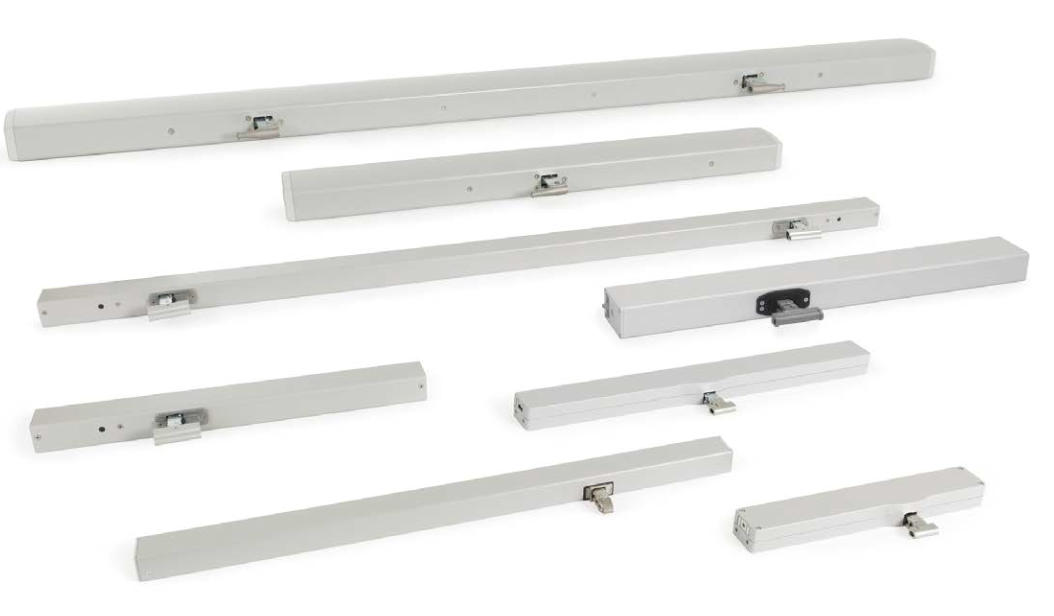
Chain drives are compact electric window drives used to open and close compatible awning windows, casement windows, skylight windows, roof windows and selected façade openings. They are commonly used where windows need to be opened and closed automatically for natural ventilation, smoke control, occupant convenience, high-level / remote access or integration with a wider building control strategy.
EBSA NZ supplies D+H chain drive solutions across residential, light commercial and commercial applications. The correct drive family depends on the window type, sash size, required opening distance, drive force, control technology, mounting arrangement, field cabling and the wider control system.
Explore chain drive series
Use the series links below as a starting point for selecting a suitable chain drive family. Final drive selection should be confirmed against the window arrangement, required opening distance, control panel, field wiring and project-specific performance requirements.
| Drive series | Typical positioning | Common applications |
|---|---|---|
| VCD Chain Drives | Compact ventilation drives for residential and light commercial applications. | Awning windows, skylight windows, roof windows and selected high-level windows. |
| CDC Chain Drives | Quiet commercial chain drives with advanced control options. | Commercial awning windows, façade openings and concealed or frame-integrated applications. |
| KA Chain Drives | Standard commercial chain drives for general window automation applications. | Commercial awning windows, roof windows and general automated window openings. |
| CDM Chain Drives | Larger chain drives for heavier window and skylight applications. | Oversized windows, roof windows and larger automated openings. |
| CDP Chain Drives | Heavy-duty commercial chain drives for demanding applications. | Heavy commercial façades, large skylights and demanding window automation applications. |
Choosing the right chain drive family
The drive family should be selected to suit the window type, sash size, required opening distance, drive force, control requirements and installation arrangement. The series pages above provide more detailed product information, model options and technical guidance for each drive family.
Selection notes
- VCD: best suited to smaller ventilation applications where a compact drive is required for residential or light commercial windows.
- CDC: consider where a quiet commercial chain drive, ACB-capable solution or concealed / frame-integrated installation is required.
- KA: consider where a standard commercial chain drive arrangement is suitable for general window automation applications.
- CDM: consider where smaller drives are not suitable for the required window size, weight or opening force.
- CDP: consider where high force, chain stability or heavy-duty commercial operation is required.
Ventilation and smoke control applications
Chain drives are used across both natural ventilation and smoke control applications, depending on the drive family, controller, window arrangement and project requirements.
VCD chain drives are best positioned for residential and light commercial ventilation applications such as awning windows, skylights and roof windows. CDC, KA, CDM and CDP drives are more commonly used in commercial window automation projects and can be used for natural ventilation and smoke control systems when selected with a suitable controller and project-specific design.
A window drive does not operate on its own. It requires a compatible controller, field cabling, suitable switching or sensor inputs, and project-specific wiring and commissioning to achieve the required open and close operation. Where the opening is used for smoke control, the complete system must also be coordinated with the project fire strategy, control interface, installation, commissioning and approval pathway.
Chain drive control technologies
D+H chain drives are available across several control technologies. The correct technology depends on the drive family, controller, window arrangement and project requirements.
- PLP: power line programming for compatible drive and controller arrangements.
- BSY+: used where synchronisation of multiple drives is required, such as selected wider or heavier window arrangements.
- ACB: digital communication technology used with compatible ACB control systems, such as suitable CPS-M panels, for two-way, real-time communication, addressing and feedback.
Control technology should be confirmed before drive selection. Selecting an ACB-capable drive does not by itself provide ACB functionality unless the controller and system architecture support it.
Drive and controller selection
The functionality of a chain drive system is determined by the selected drive, controller, field cabling and programmed control strategy. The drive provides the mechanical opening and closing force, but the available control functions depend on how the drive is connected, configured and commissioned.
Different combinations of drive and controller provide different capabilities. For example, an ACB-capable drive only provides the benefit of digital two-way communication when it is connected to a compatible ACB control system, such as a suitable CPS-M panel. When an ACB drive is connected to a conventional RZN panel, the ACB communication features are not utilised.
Drive selection should therefore be coordinated with the control panel selection at the start of the project, particularly where the system requires smoke control, synchronised operation, BMS interfacing, diagnostic feedback, grouped window control or project-specific operating logic.
Technical notes for specifiers
- Confirm the window type before selecting a chain drive.
- Confirm sash size, sash weight, required opening distance and opening angle.
- Confirm whether the application is residential, light commercial, commercial or heavy-duty commercial.
- Confirm whether the project requires single-chain, twin-chain or synchronised operation.
- Confirm whether PLP, ACB, BSY+ or another control technology is required.
- Confirm voltage, current draw, cable length and control panel capacity.
- Confirm the number of drives per window and the number of windows per control group.
- Confirm whether the system is for natural ventilation, smoke control or general window automation.
- Confirm whether the selected drive family is compatible with the proposed control panel, switching method, sensors, BMS interface or fire interface.
- EBSA NZ has its own Masterspec work section / code and can prepare project-specific specification content for inclusion in the project documentation, covering the selected drive family, control panel, operating strategy, interfaces and coordination requirements.