EBSA New Zealand
Window Automation and Control Systems
Automated window drives, control panels, sensors and system integration support for New Zealand building projects.
EBSA NZ Ltd designs, supplies and supports window automation and control systems for buildings across New Zealand. These systems are used to operate compatible awning windows, casement windows, roof windows, skylights, façade openings and operable louvre systems for natural ventilation, smoke control, high-level access and building integration.
A successful window automation system is more than a drive fitted to a window. It requires the correct actuator, control panel, field wiring, switches, sensors, control logic, interface requirements, installation coordination and commissioning approach.
Our role is to support architects, engineers, builders, façade contractors, aluminium joiners, electrical contractors and building owners with practical system selection, technical coordination and project-specific control solutions.
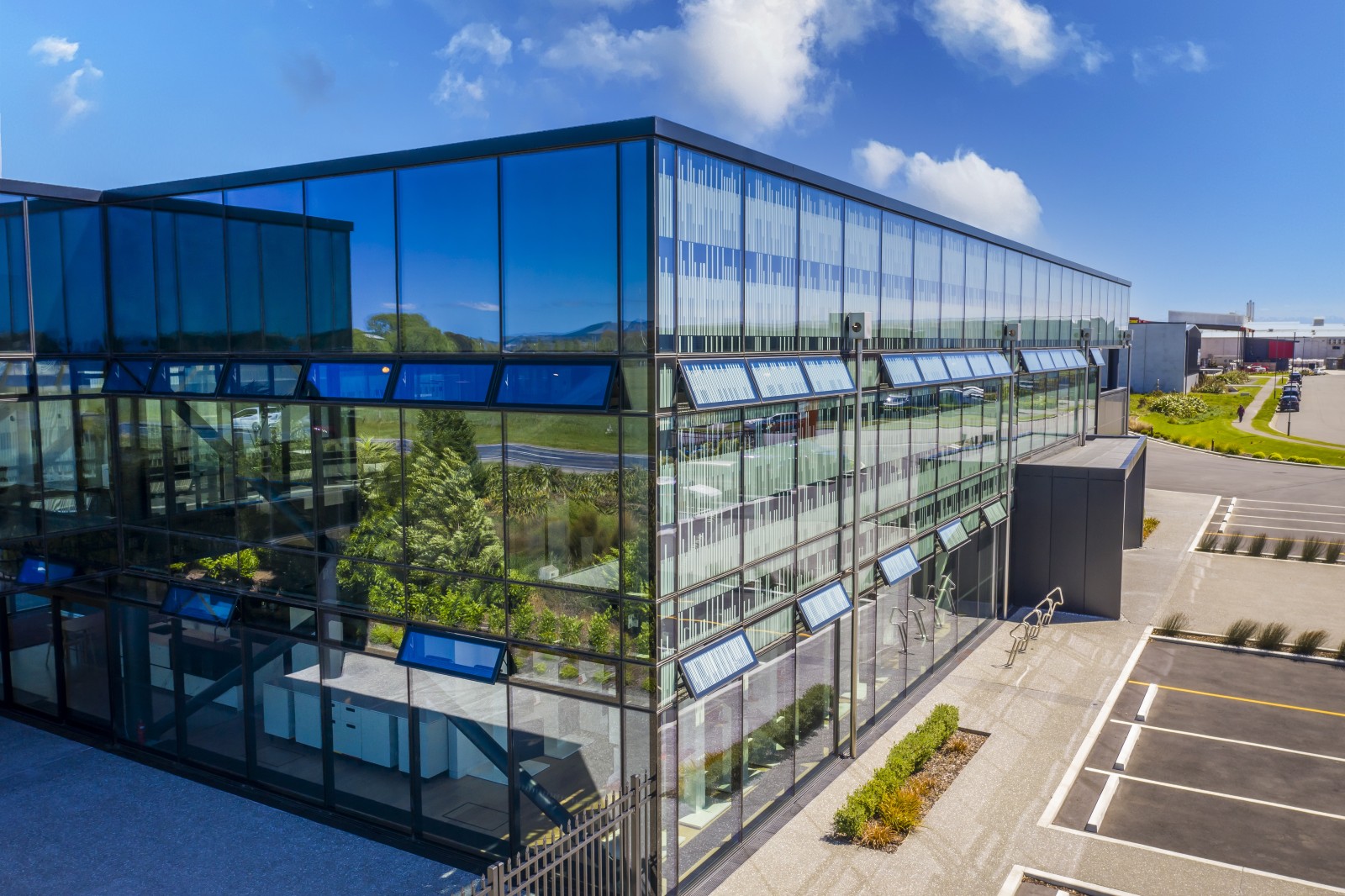
Window automation is more than fitting a motor to a window
Window automation depends on the correct combination of hardware, control equipment, field cabling, bracketry, installation coordination and commissioning. The window type, opening geometry, sash weight, required stroke, number of openings, control zones, power supply and interface requirements all influence the final system.
EBSA can assist with reviewing the opening type, project requirements and control strategy before products are selected, specified or ordered.
Early coordination helps reduce late design changes, unresolved field cabling issues, unsuitable bracket arrangements and unclear trade responsibilities during installation and commissioning.
What a window control system includes
Window control systems typically include a combination of electric window drives, control panels, switches, sensors and project-specific control interfaces. The final arrangement depends on the required function, number of windows, operating strategy and whether the system is used for natural ventilation, smoke control or both.
Window drives
Electric drives provide the mechanical opening and closing movement for compatible windows, skylights, roof windows, façade openings or louvre systems.
Control panels
Control panels supply power to the drives, manage control inputs and provide the operating strategy for the system.
Switches and sensors
Switches, rain sensors, wind sensors, temperature sensors and room sensors support local operation and automated response where supported by the selected controller.
BMS, fire alarm and mechanical services interfaces can also be included where the project requires the window automation system to respond to third-party signals, subject to the selected control architecture and commissioning strategy.
Natural ventilation functionality
Natural ventilation systems use automated openings to support day-to-day ventilation, occupant comfort and building operation. Depending on the building design and selected control system, automated windows or louvres may be operated by wall switches, room temperature sensors, CO2 sensors, rain sensors, wind sensors, time schedules or BMS inputs.
Common natural ventilation functions
- Basic open and close control
- Local or grouped window operation
- Temperature-based ventilation
- CO2 or indoor air quality response
- Rain and weather response
- Time schedule control
- BMS interface where specified
Advanced control options
- Window modulation where supported by the selected drive and controller
- Night purge ventilation where weather, security and building use allow it
- Mixed-mode ventilation interfaces with mechanical systems
- Project-specific grouping and sequencing
- Elevation-based control strategies where supported by the panel and sensor arrangement
The available functionality depends on the selected drive, control panel, sensors, wiring arrangement and programmed control strategy. A compact controller may provide basic switching and sensor response, while a project-specific CPS-M control panel can support advanced sequencing, feedback, grouping and integration requirements.
Smoke ventilation and smoke control functionality
Automated windows, louvres and façade openings can form part of a smoke ventilation or smoke control strategy where they are coordinated with the project fire engineering design, mechanical services design, control interfaces, installation requirements and approval pathway.
Smoke control applications require careful system review. The drive, opening element, control panel, power supply, fire alarm interface, wiring, commissioning process and cause-and-effect strategy must be considered as part of the complete system.
Smoke control-related functions
- Smoke ventilation opening control
- Stair pressurisation relief openings
- Make-up air opening control
- Smoke exhaust or relief air openings
- Fire alarm interface
- Cause-and-effect operation
- Battery-backed smoke ventilation control where required by the project strategy
Project-specific review
EBSA can supply and support automated opening systems used as part of smoke ventilation, stair pressurisation relief, make-up air or smoke control strategies.
Final suitability must be reviewed against the project fire strategy, mechanical services design, control interfaces, installation, commissioning and approval requirements.
EBSA works with the project team to coordinate the complete automated opening system, including actuator selection, control-panel architecture, field cabling, interfaces, cause-and-effect implementation and commissioning support.
Typical window control system arrangement
The diagram below shows a typical high-level arrangement for a window automation system, including drives, control panels, sensors, user controls and third-party interfaces. Final system design is project-specific and should be coordinated with the window system, control panel selection, field cabling, interface requirements and commissioning strategy.
The schematic is a general arrangement only. Actual project requirements may differ depending on the selected control panel, actuator technology, fire or mechanical interfaces, ventilation strategy and commissioning requirements.
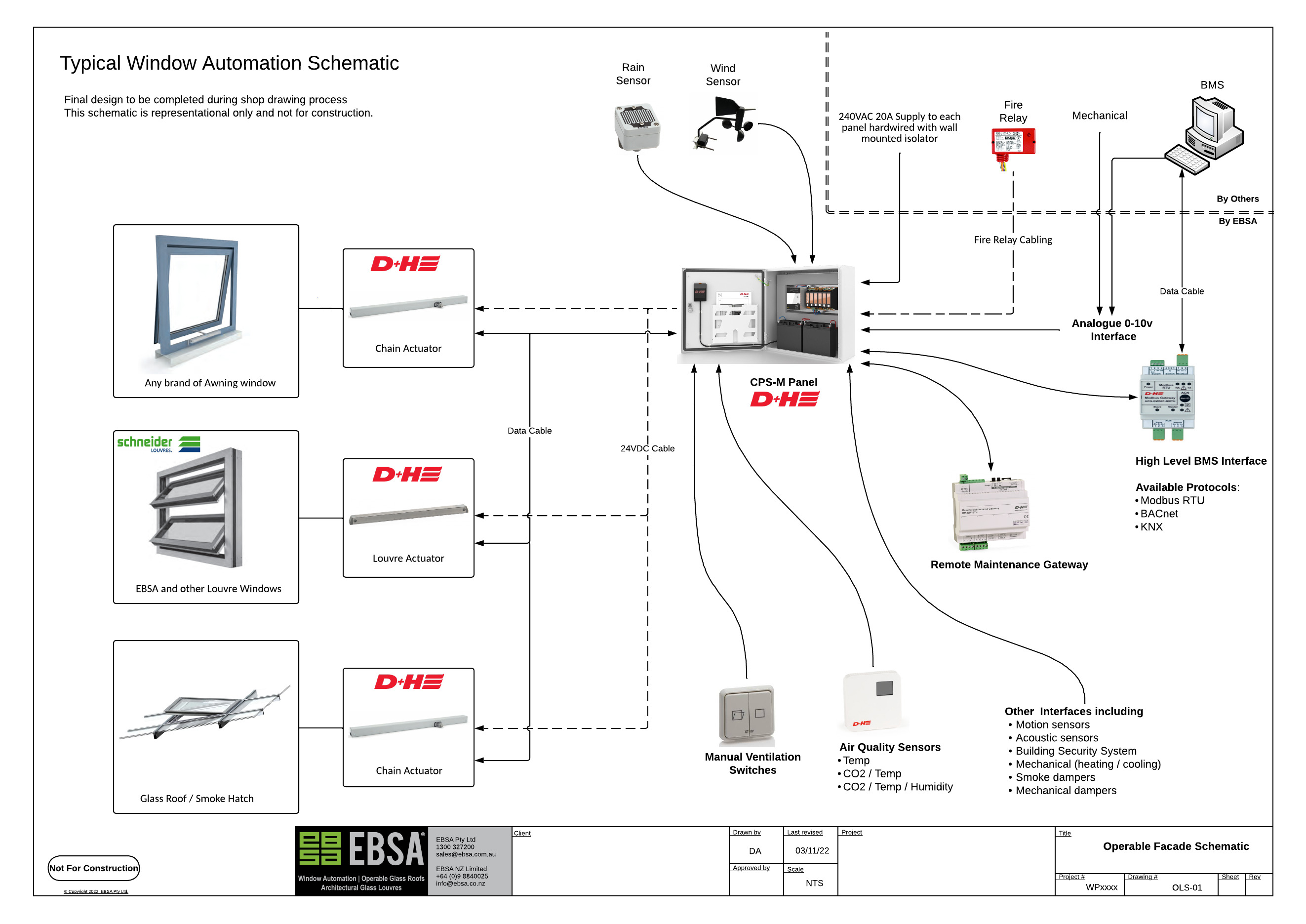
Control panels, drives and sensors
Different projects require different levels of control. A small natural ventilation system may only require a compact control panel, a few drives, switches and a rain sensor. A larger commercial project may require multiple ventilation groups, smoke control interfaces, BMS inputs, ACB-capable drives, modular CPS-M control panels and project-specific commissioning support.
EBSA NZ supplies and supports a range of D+H and EBSA control solutions, including PS-VFM1, PS-VE and GVL natural ventilation controls, RZN, CPS-B and CPS-P smoke-control panels, CPS-M modular project panels, chain drives, rack and pinion drives, louvre drives, switches and environmental sensors.
Common applications
- Commercial natural ventilation systems
- School and education building ventilation
- High-level window and skylight automation
- Automated façade openings
- Operable louvre control
- Smoke ventilation and smoke control opening systems
- Stair pressurisation relief openings
- Make-up air openings for smoke control systems
- BMS, fire alarm and mechanical services interfaces
- Rain, wind, temperature and CO2-responsive control strategies
Project coordination considerations
Window automation should be coordinated early in the project. The window type, opening geometry, sash weight, required stroke, bracket arrangement, cable route, control panel location, number of drives, sensor locations and interface requirements can all affect the final system selection.
For New Zealand projects, EBSA can assist with reviewing:
- Window type, sash size, sash weight and opening angle
- Drive selection, force, stroke and bracket requirements
- Control panel type, actuator load and grouping
- Natural ventilation, smoke control or combined operating requirements
- Rain, wind, temperature, CO2, BMS, fire alarm or mechanical interfaces
- Field cabling, rough-in requirements and access for installation
- Future service and maintenance access
- Commissioning requirements and control strategy coordination
- Project specification content, including EBSA NZ’s Masterspec work section or code where applicable
Explore related product groups
| Product group | Typical use |
|---|---|
| Window Control Panels | Natural ventilation, smoke-control and project-specific panel families, including PS-VFM1, PS-VE, GVL, RZN, CPS-B, CPS-P and CPS-M. |
| Natural Ventilation Systems | Automated opening systems for daily ventilation, night purge, weather response, indoor-air-quality control and mixed-mode operation. |
| Smoke-Control Systems | Automated openings, control panels, fire-mode logic, make-up air, pressure relief, interfaces and commissioning coordination. |
| D+H Window Drives | Chain drives, rack drives and other actuator options for compatible windows, roof openings, louvres and façade openings. |
| Legacy D+H Product Support | Identification, replacement and upgrade support for older D+H drives, control panels and related window automation equipment. |
| Sensors and Switches | Wall switches, rain sensors, wind sensors, room sensors and control inputs used in window automation systems. |
| Specialty Drives | Specialist or project-specific drive solutions, including louvre drive options, where the application does not suit a standard chain drive or rack and pinion drive. |
Frequently asked questions
What is a window automation system?
A window automation system uses electric drives, control panels, switches, sensors and interface equipment to open and close compatible windows, louvres, skylights or façade openings. The system may be used for everyday ventilation, smoke control, high-level access or integration with other building systems.
Can EBSA help before the window system is finalised?
Yes. EBSA can review the proposed opening type, actuator requirements, bracket arrangement, field cabling, control panel location, sensor requirements and interface strategy before equipment is selected. Early involvement is particularly important where field cabling needs to be roughed in before walls and ceilings are sheeted.
Can window automation be used for both natural ventilation and smoke control?
In some projects, automated openings may support both natural ventilation and smoke control functions, subject to the project design, control panel arrangement, fire strategy, interface requirements and commissioning process. These applications are coordinated as complete systems, including the openings, drives, control panels, field cabling, interfaces, fire-mode logic and commissioning requirements.
Does EBSA supply D+H window automation equipment?
Yes. EBSA NZ Ltd directly imports, supplies, installs and supports D+H Mechatronic window automation equipment in New Zealand. EBSA NZ has supported D+H products in New Zealand since 2019, including chain drives, rack and pinion drives, louvre actuators, control panels, sensors, switches and related control equipment. EBSA also has a long-standing D+H relationship through the wider EBSA group.
Can EBSA help identify or replace older D+H window automation equipment?
Yes. EBSA can review product labels, photographs, control-panel information, wiring details and the existing window arrangement to help identify older D+H equipment and assess suitable replacement, repair or upgrade pathways.
View legacy D+H product identification and replacement support.
Talk to EBSA about window automation
Correct window automation selection depends on the opening type, required function, control method, project environment, fire or mechanical interface requirements and commissioning strategy.
EBSA can assist with reviewing the system arrangement before products are selected, specified or ordered.



© 2026 EBSA | All Rights Reserved. | Developed by Procloud
EBSA and the EBSA logo are both registered trademarks of EBSA Holdings Pty Ltd