
Overview
Window control panels form the control centre of an automated window system. They receive signals from switches, sensors, fire interfaces, BMS inputs or other control devices, then operate connected window drives according to the selected control strategy.
EBSA NZ supplies D+H control panel solutions for natural ventilation, smoke ventilation and project-specific window automation applications. The correct panel family depends on the intended function, number and type of drives, operating zones, standby power requirements, control inputs, monitoring requirements and the wider building services strategy.
Explore window control panel ranges
Use the panel ranges below as a starting point for selecting the appropriate control platform. Final panel selection should be coordinated with the selected window drives, required operating logic, fire strategy, natural ventilation requirements, field cabling, commissioning requirements and project-specific interfaces.
| Control panel range | Typical positioning | Common applications |
|---|---|---|
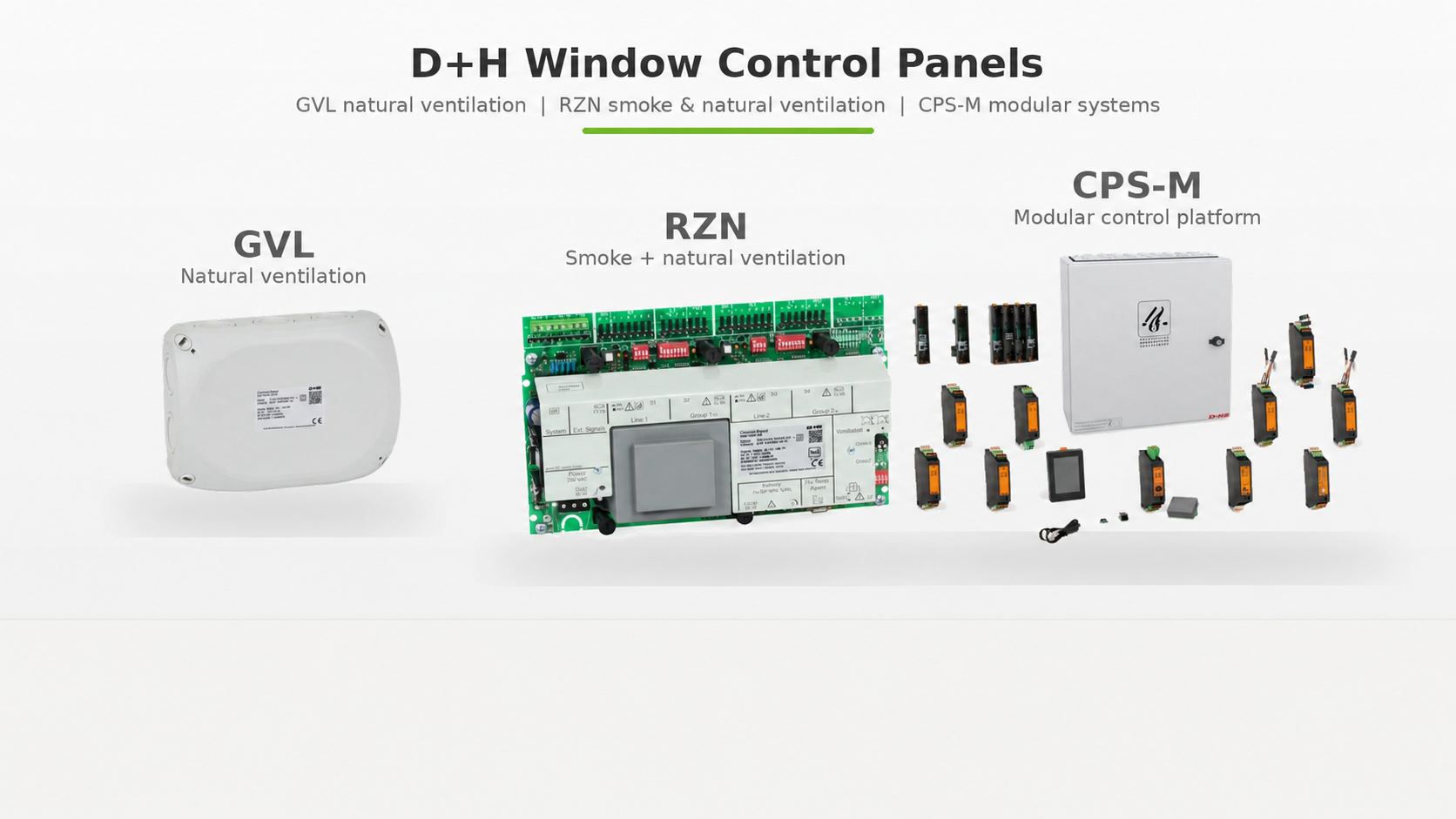
| GVL Natural Ventilation Control Panels | Natural ventilation control panels for day-to-day automated window operation. | Residential, light commercial and commercial natural ventilation systems where smoke ventilation control is not required. |
| RZN Smoke and Natural Ventilation Control Panels | Smoke and natural ventilation control panels, also suitable for natural ventilation applications where automatic close on loss of mains power is required. | Smoke ventilation systems, fire interface operation, weather-protected natural ventilation, night purge ventilation and automated windows or skylights that must close during a mains power failure. |
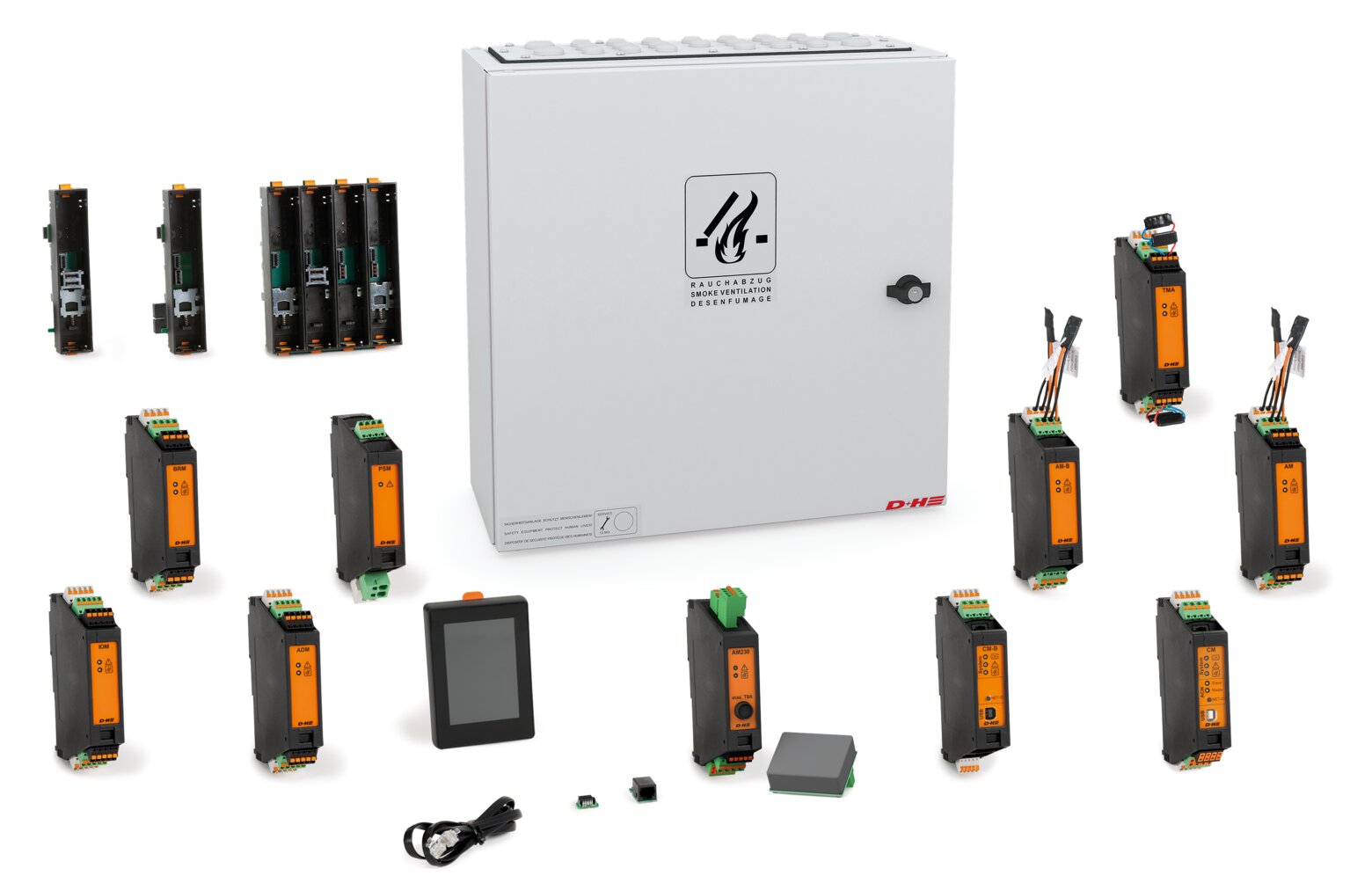
| CPS-M Modular Smoke and Natural Ventilation Control Panels | Modular project-specific control panel platform for larger, more complex or highly integrated systems. | Commercial smoke and natural ventilation systems requiring modular configuration, ACB-capable drive networks, feedback, diagnostics, BMS integration or project-specific control logic. |
GVL natural ventilation control panels
GVL control panels are used for natural ventilation and general automated window operation. They are suited to applications where windows are opened and closed for occupant comfort, purge ventilation, high-level access or environmental control, but where the window system is not required to perform a smoke ventilation function.
GVL panels may be used with suitable switches, sensors and compatible window drives as part of a natural ventilation control strategy. They should not be selected as a substitute for a smoke ventilation control panel where the opening is required to operate as part of a fire or smoke control system.
| GVL panel | Typical use | Panel output / grouping |
|---|---|---|
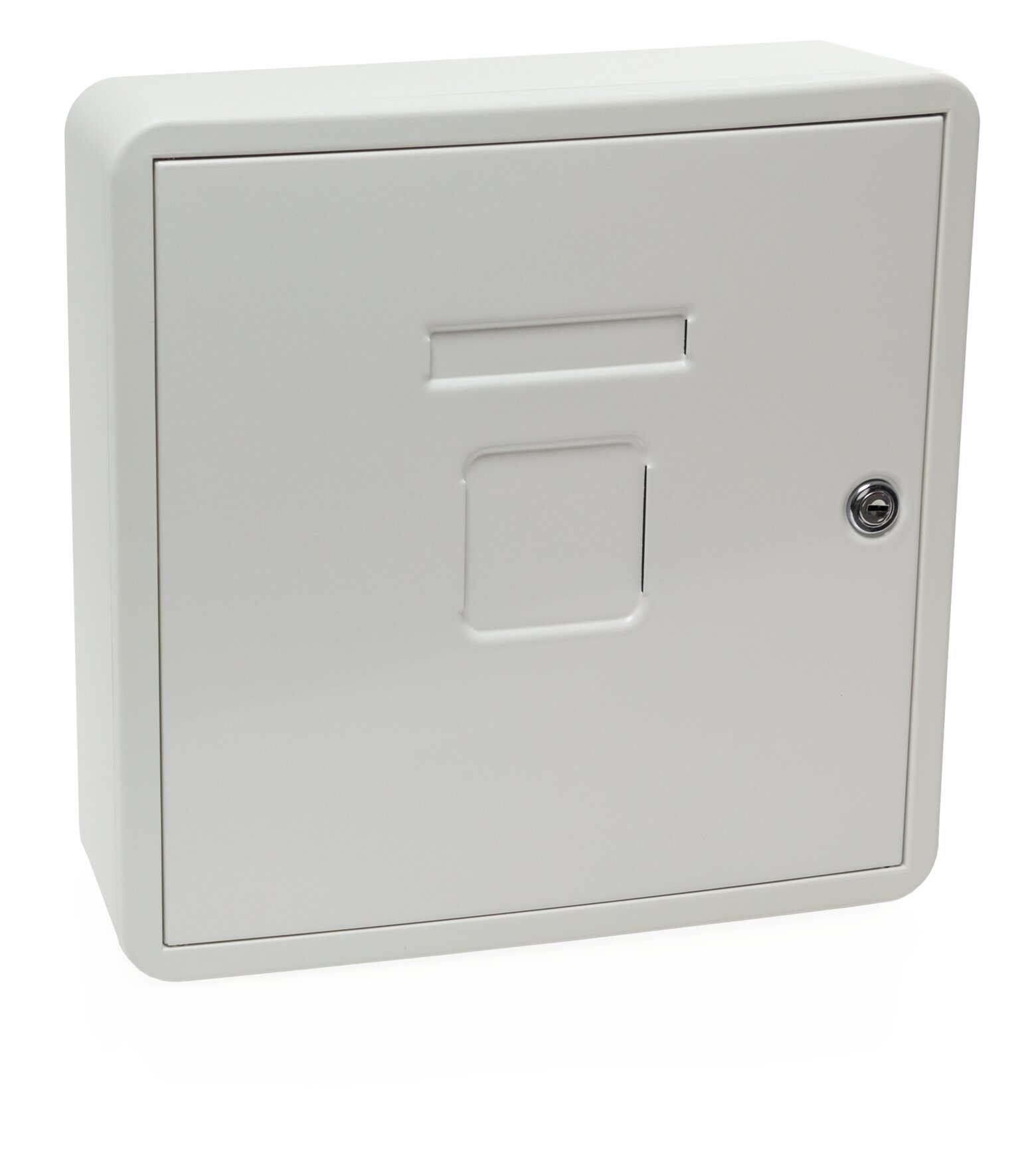
| D+H GVL 8301-K V2 Natural Ventilation Control Panel | Small single-zone natural ventilation systems. | 24 V DC / 1 A total output; 1 ventilation group; rain sensor input. |
| D+H GVL 8304-K Natural Ventilation Control Panel | Small to medium natural ventilation systems requiring more capacity than the GVL 8301-K V2. | 24 V DC / 4A total output; 1 ventilation group; rain sensor input. |
| D+H GVL 8408-M Natural Ventilation Control Panel | Medium natural ventilation systems with multiple grouped windows or louvres. | 24 V DC / 8 A total drive current; up to 5 ventilation groups as standard; rain sensor input. |
RZN smoke and natural ventilation control panels
RZN control panels are used where smoke ventilation control is required, and where connected openings need to respond to a smoke control or fire interface as part of the project-specific smoke ventilation strategy.
RZN panels may also support day-to-day natural ventilation operation in addition to smoke ventilation control. This can allow the same automated windows, louvres or skylights to provide normal ventilation functions while remaining available for smoke ventilation operation when required by the project design.
RZN panels are also an important option for natural ventilation-only systems where automatic close on loss of mains power is required. Without this function, an open window or skylight may remain open during a power failure. This can be a significant issue in exposed or weather-sensitive applications, especially where windows are used for night purge ventilation or where a storm event may occur after mains power has already been lost.
RZN panel selection should consider standby battery backup, drive load, control zones, fire interface requirements where applicable, power-loss close behaviour, manual override requirements, field wiring, status indication, commissioning and maintenance access.
| RZN panel | Typical use | Panel output / grouping |
|---|---|---|
| D+H RZN 4404-M Smoke and Natural Ventilation Control Panel | Small to medium smoke and natural ventilation systems. | 24 V DC / 4 A total drive current; up to 2 ventilation groups and 2 fire zones / lines. |
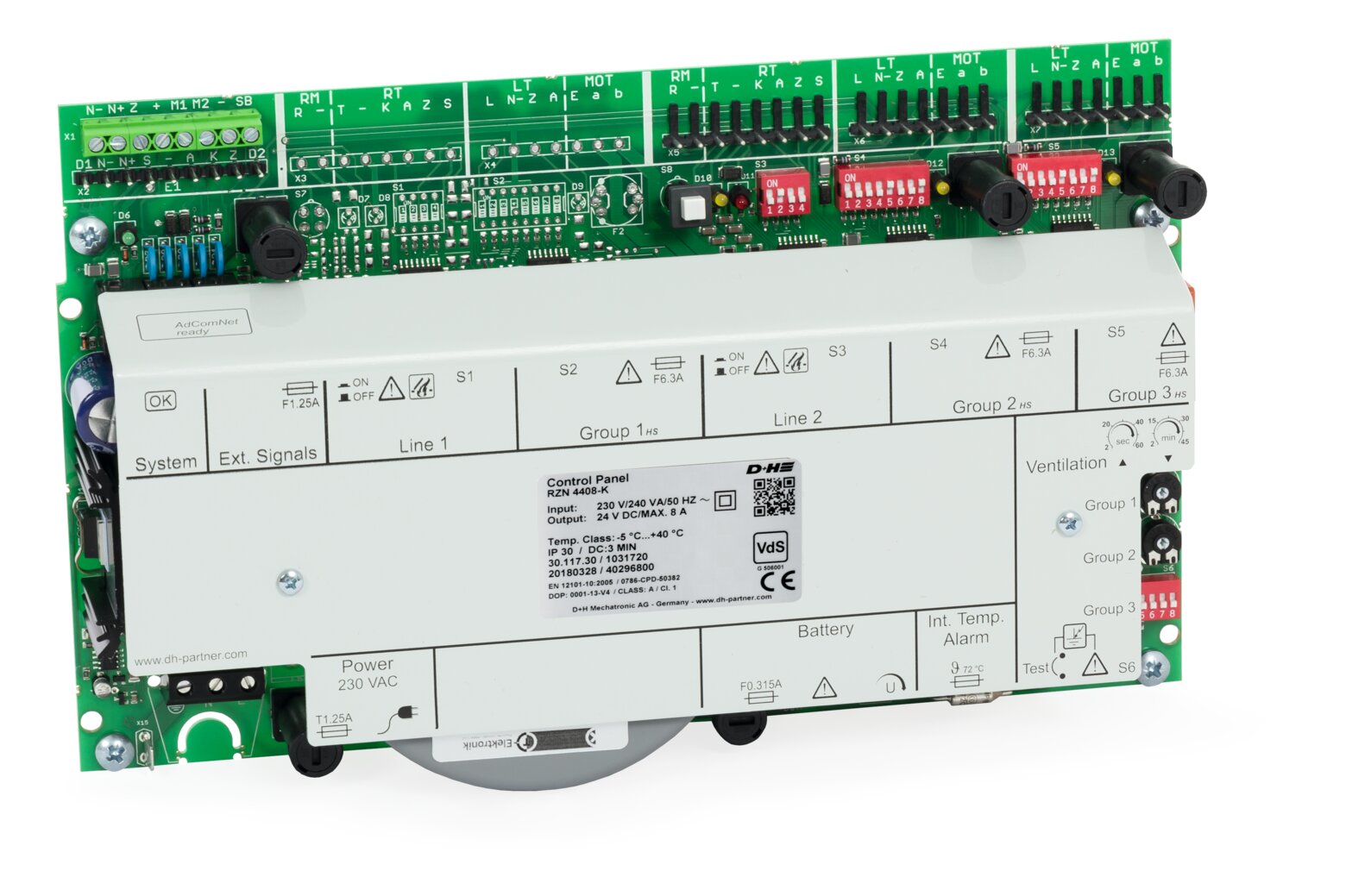
| D+H RZN 4408-K Smoke and Natural Ventilation Control Panel | Medium smoke and natural ventilation systems requiring increased actuator capacity. | 24 V DC / 8 A total drive current; up to 2 ventilation groups and 1 fire zone / line. |
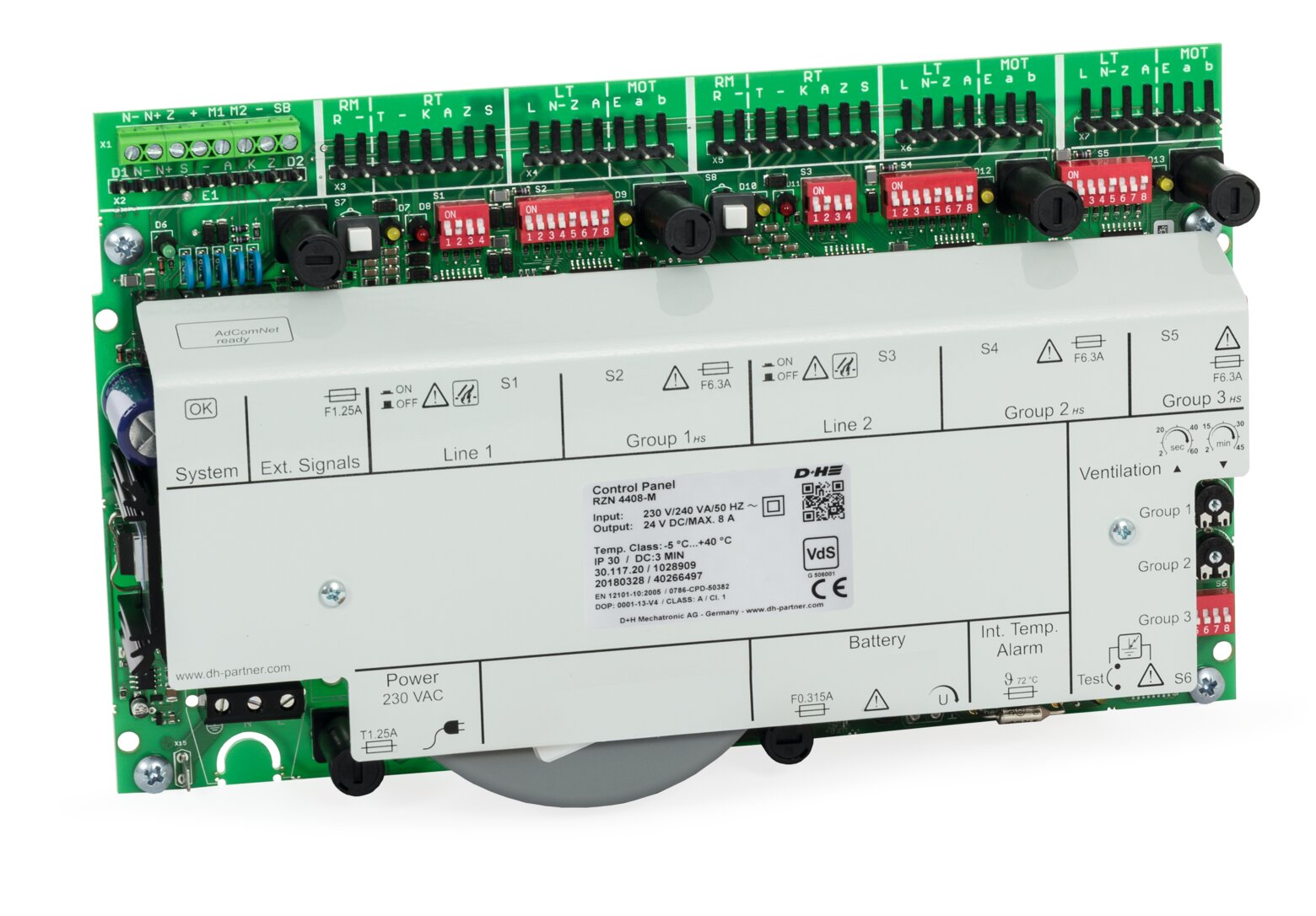
| D+H RZN 4408-M Smoke and Natural Ventilation Control Panel | Medium smoke and natural ventilation systems requiring multiple ventilation groups and fire lines. | 24 V DC / 8 A total drive current; up to 3 ventilation groups and 2 fire zones / lines. |
| D+H RZN 4416-M Smoke and Natural Ventilation Control Panel | Larger smoke and natural ventilation systems requiring higher total drive current. | 24 V DC / 16 A total drive current; up to 3 ventilation groups and 2 fire zones / lines. |
CPS-M modular smoke and natural ventilation control panels
CPS-M is EBSA NZ’s advanced D+H modular control panel platform for larger or more complex commercial window control systems. It is suited to projects requiring a project-specific panel configuration, multiple operating zones, high-level interfacing, diagnostic feedback, ACB-capable drive networks or more detailed integration with the building control strategy.
CPS-M panels can be configured for smoke ventilation, natural ventilation or combined control strategies when selected and commissioned as part of a suitable project-specific system. They are typically used where a standard GVL or RZN control panel does not provide the required flexibility, capacity, monitoring or integration pathway.
| CPS-M panel | Typical use | Configuration |
|---|---|---|
| D+H CPS-M Modular Smoke and Natural Ventilation Control Panel | Project-specific commercial smoke control, natural ventilation and façade automation systems. | Modular D+H CPS-M platform configured to suit the approved project requirements. |
Natural ventilation vs smoke ventilation control
Natural ventilation control is generally used to improve comfort, provide purge ventilation, support automated high-level window operation or integrate window openings with sensors and building controls. These systems may use switches, timers, rain sensors, wind sensors, temperature inputs or BMS commands to open and close compatible windows.
Some natural ventilation systems require windows or louvres to close automatically if mains power is lost. Where this behaviour is required, an RZN panel may be more appropriate than a GVL natural ventilation-only panel, even where the system is not being used for smoke ventilation.
Smoke ventilation control is a life safety related system function and must be coordinated with the project fire strategy, relevant design documentation, fire interface, commissioning process and approval pathway. Where a window opening forms part of a smoke control system, the control panel, drive selection, cabling, inputs, standby power and maintenance requirements need to be considered as part of the complete system.
Automatic close on loss of mains power
Automatic close on loss of mains power is a critical selection point for many automated window and skylight systems. If a natural ventilation system does not include suitable standby power and power-loss close behaviour, any windows or skylights that are open when mains power fails may remain open until power is restored.
This is particularly important for night purge ventilation, high-level windows, skylights and weather-exposed openings. For example, if windows are open for purge ventilation and a storm approaches, a mains power failure before the rain event may prevent a basic natural ventilation system from closing the openings. A rain sensor alone cannot close the windows if the control system has no available power.
Where automatic close on loss of mains power is required, EBSA NZ will typically review an RZN or CPS-M control panel solution rather than a GVL natural ventilation-only panel. The correct selection depends on actuator load, required control groups, standby battery requirements, interfaces, commissioning requirements and the wider project control strategy.
Choosing the right control panel family
The control panel should be selected to suit the building function, drive load, required operating sequence, control inputs and coordination requirements. A simple natural ventilation system may only need daily open / close control from switches, sensors or BMS inputs. However, where natural ventilation openings must close on loss of mains power, an RZN or CPS-M solution should be reviewed rather than assuming a GVL natural ventilation-only panel is suitable.
Panel selection should be considered early in the project because it affects field cabling, drive compatibility, number of control zones, battery backup requirements, interfacing, commissioning and future maintenance access.
Drive and panel compatibility
A window control panel should not be selected in isolation. The selected panel must be compatible with the window drives, required voltage, current draw, number of drives, number of zones, control technology and operating sequence.
Some systems only require basic open and close control. Others may require synchronised drive operation, ACB communication, position feedback, diagnostic information, BMS interfacing, fire interface inputs or separate operating modes for natural ventilation and smoke ventilation. These requirements should be confirmed before final panel selection.
Control inputs and interfaces
Window control panels may be connected to a range of input devices and interfaces depending on the selected system design. These may include wall switches, key switches, rain sensors, wind sensors, room sensors, BMS inputs, fire system interfaces, mechanical services signals and manual override controls.
The interface strategy should be confirmed during design so the correct panel capacity, modules, field wiring and commissioning process can be allowed for. EBSA NZ can assist with control panel selection, system design input and project-specific coordination for commercial window control systems.
Technical notes for specifiers
- Confirm whether the system is for natural ventilation, smoke ventilation or combined operation.
- Do not use a GVL natural ventilation-only panel where smoke ventilation operation or automatic close on loss of mains power is required.
- Confirm the selected window drive family, voltage, current draw and number of drives per control group.
- Confirm the number of control zones and required operating sequences.
- Confirm whether failsafe battery backup is required for smoke control operation.
- Confirm whether automatic close on loss of mains power is required for natural ventilation operation.
- Confirm whether manual override, fire interface, BMS interface, mechanical services interface or local switching is required.
- Confirm whether the system requires PLP, BSY+, ACB or another compatible control technology.
- Confirm field cabling requirements before installation.
- Coordinate control panel access for installation, commissioning, maintenance and future testing.
- Where openings are used for smoke ventilation, coordinate the control panel selection with the project fire strategy, approval pathway and commissioning requirements.
EBSA NZ support
EBSA NZ can assist with control panel selection, project-specific system design input, D+H product coordination, wiring strategy, interface planning and commissioning coordination. For commercial projects, EBSA NZ can also prepare project-specific specification content for inclusion in the project documentation, covering the selected panel family, window drives, control strategy, interfaces and coordination requirements.