Current product remains available
Where the original model or a compatible current configuration remains available, EBSA can confirm the required product code and installation considerations.

Identification, replacement planning and upgrade support for older D+H window actuators, smoke control panels and associated control components.
D+H products are known for long service life. EBSA continues to receive current enquiries for drives and control equipment manufactured well over a decade ago, including actuators approaching 20 years in service.
A clear photograph of the product label usually allows EBSA to identify the installed model, establish its approximate age and determine whether it remains available or requires a current replacement pathway.
Replacement may involve a direct successor, a current equivalent, revised frame or sash brackets, wiring checks, control compatibility review or a broader panel upgrade. EBSA can coordinate the appropriate pathway for the installed system.
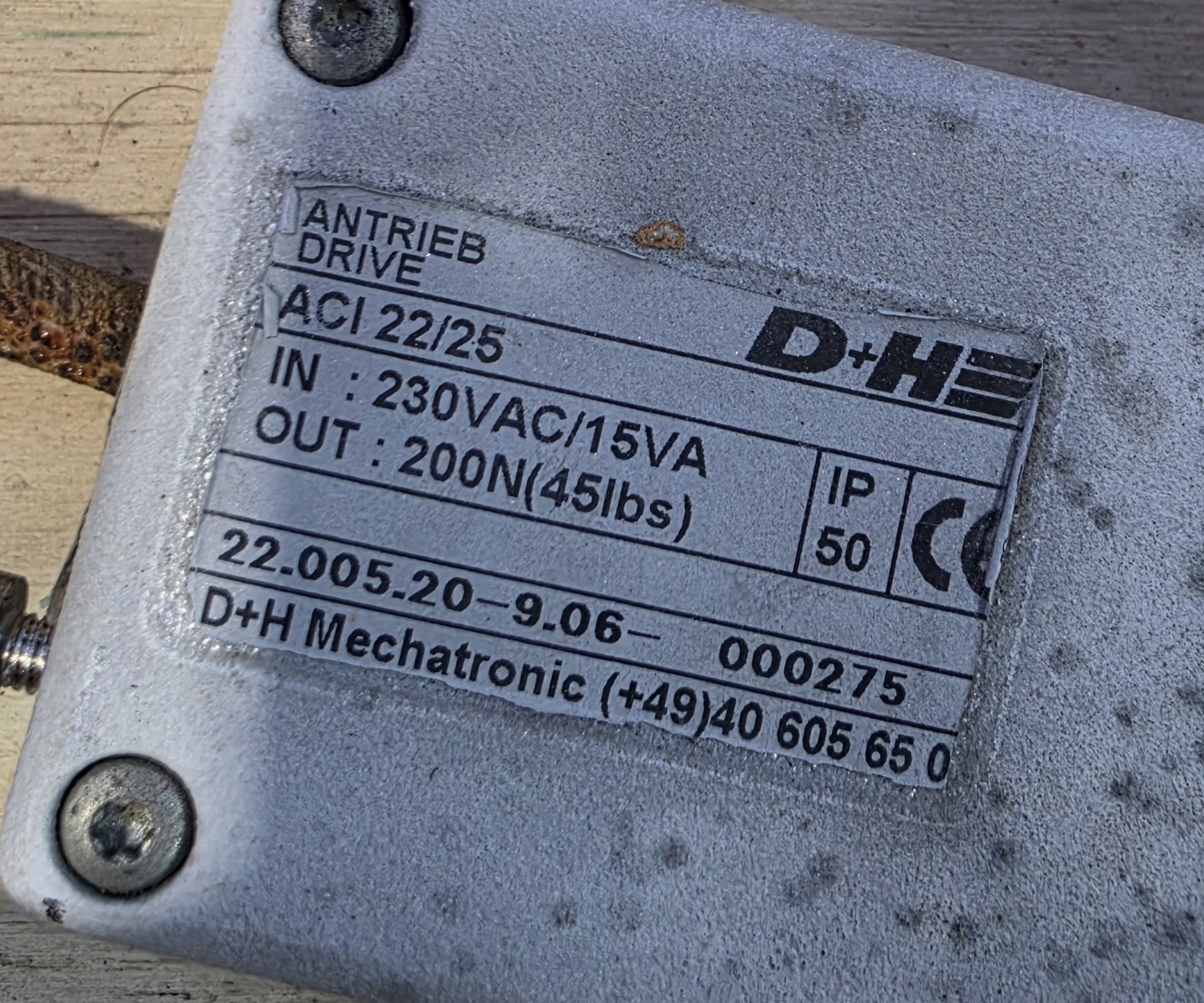
Recent enquiries received by EBSA have included D+H drives, smoke control panels and control components manufactured between 2006 and 2014. These are live service and replacement enquiries received within approximately the last 12 months, rather than historic archive examples.
The examples demonstrate the long installed life that can be achieved by properly selected and installed D+H equipment. Some of the actuators are now approaching 20 years in service, substantially beyond their original warranty period.
Product age alone does not determine whether equipment should remain in service. EBSA reviews the label, condition, application, operating history and connected controls before recommending continued service, repair, upgrade or replacement.
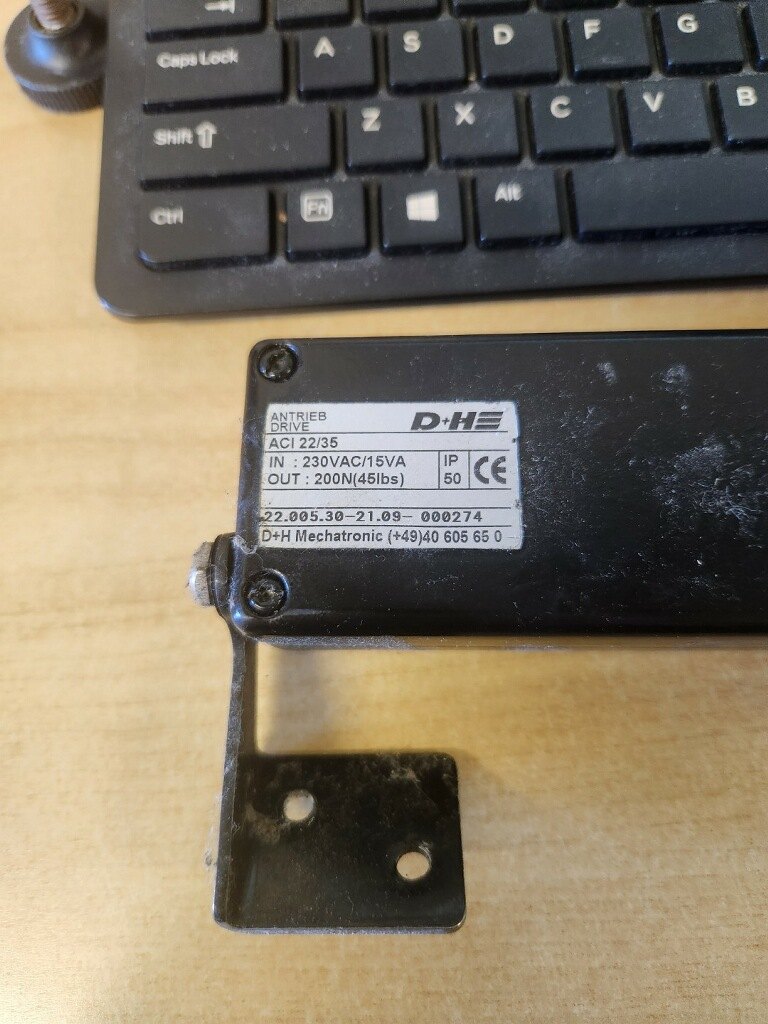
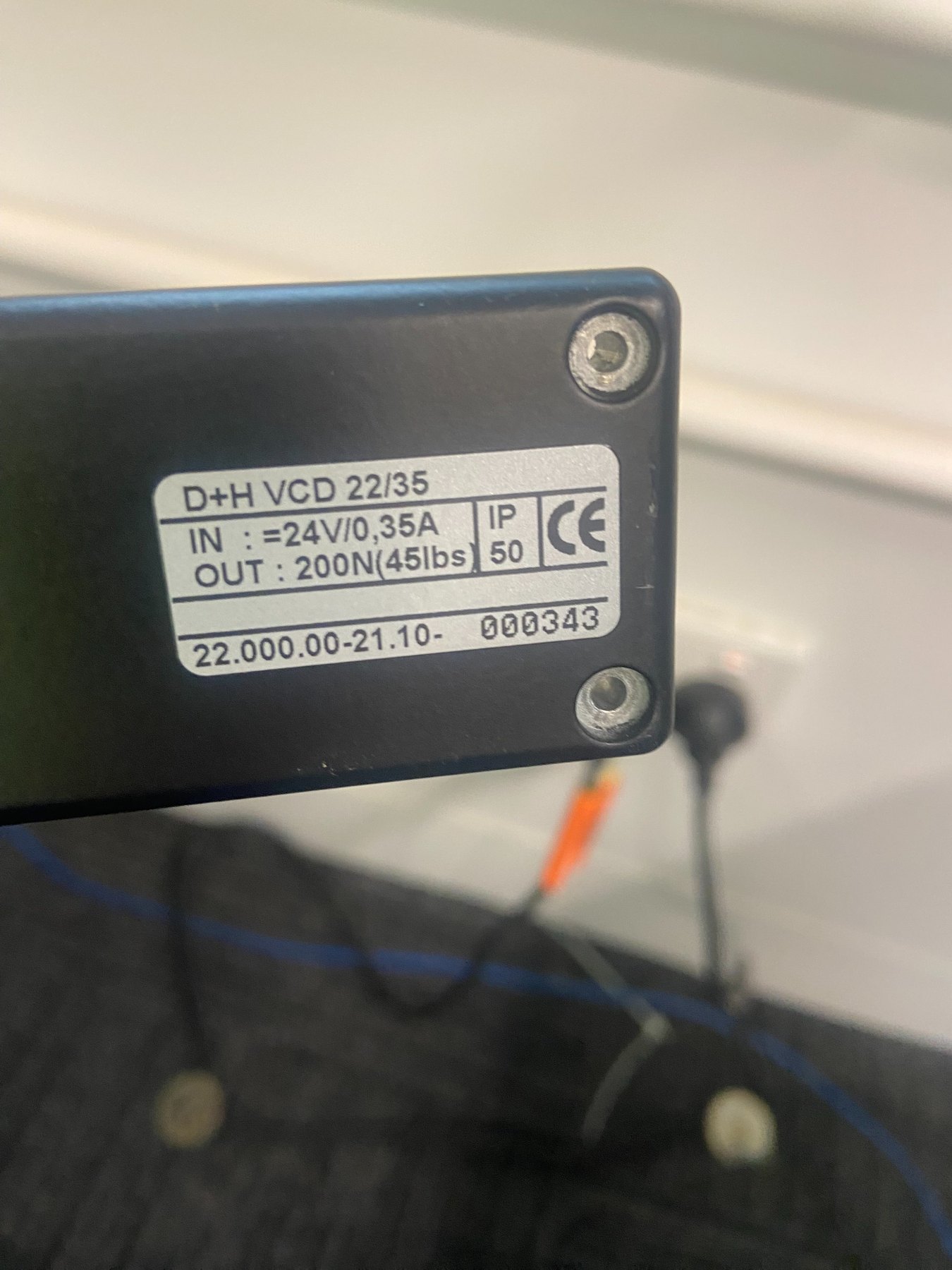
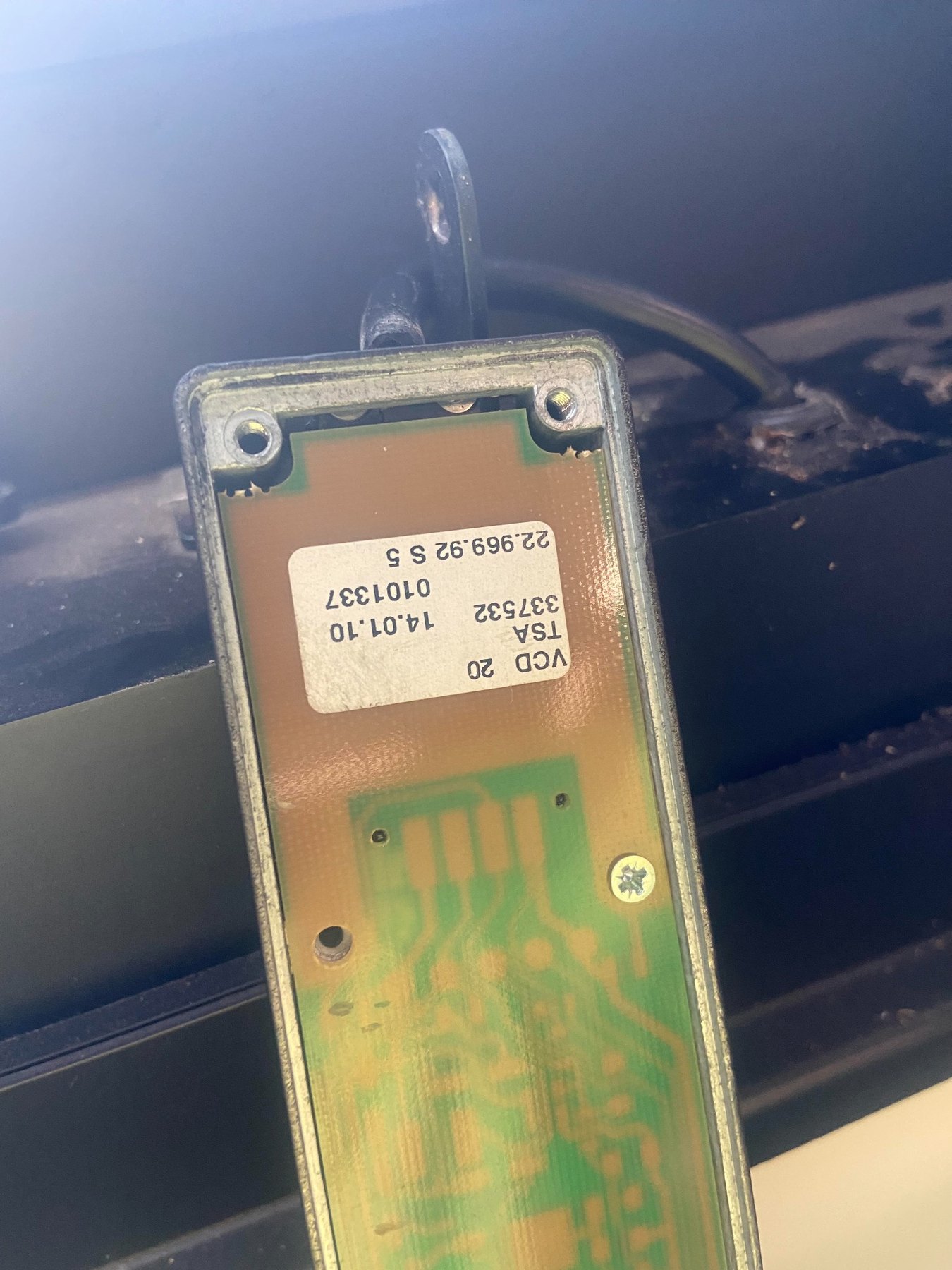
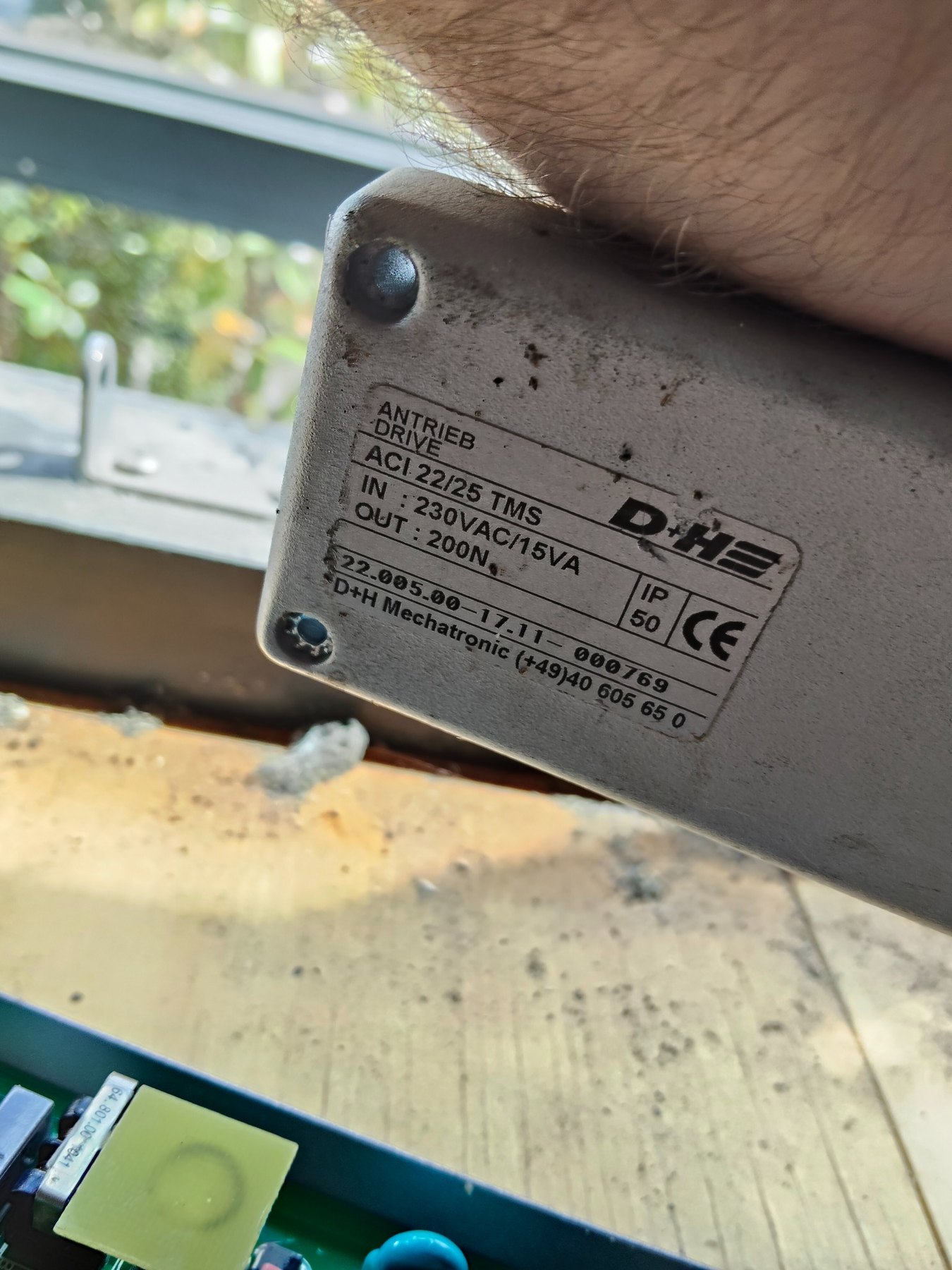
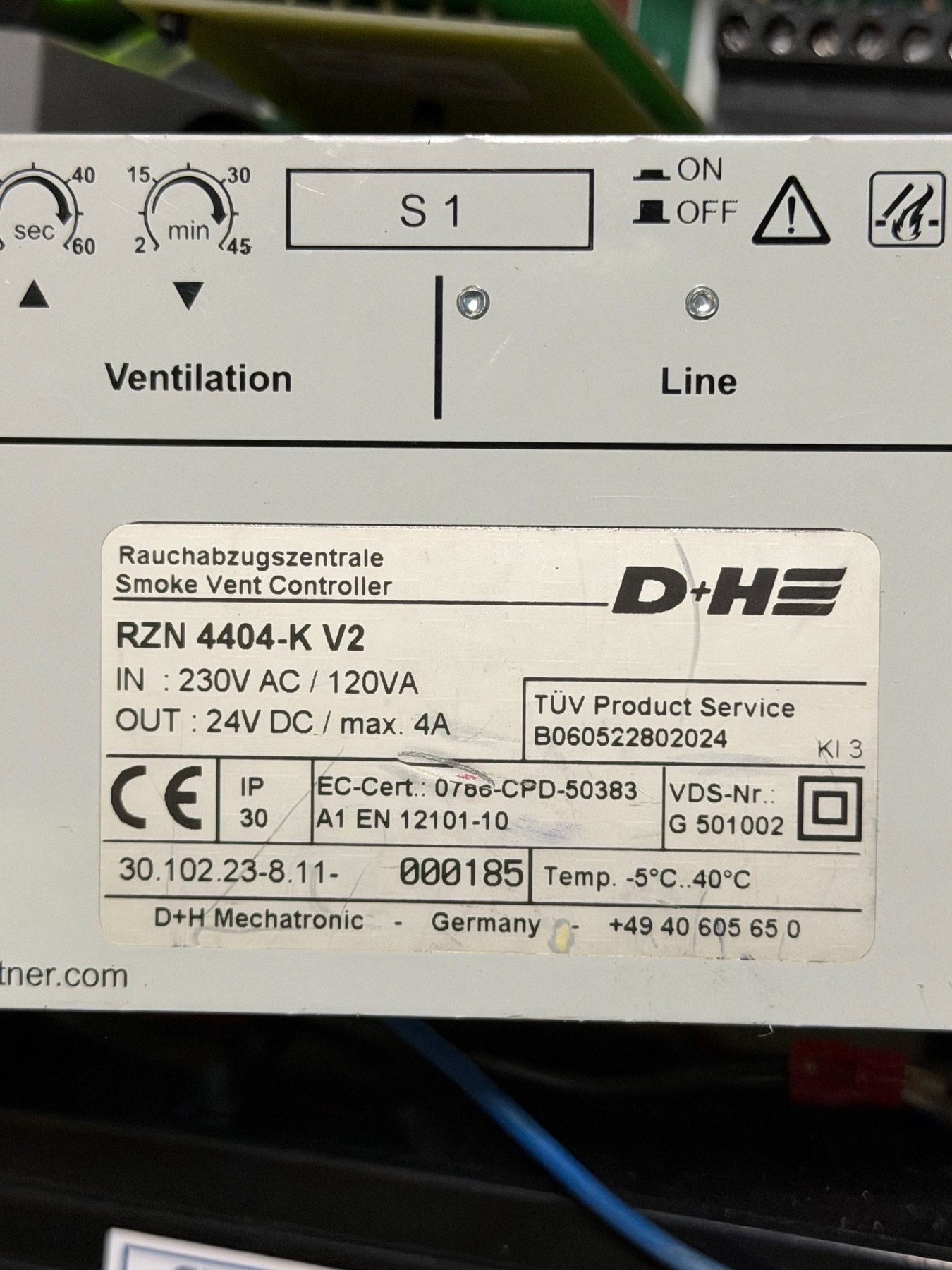
The D+H ACI 22/25 is an older 230 V AC chain drive that is no longer available. A current replacement pathway generally uses a suitable 230 V VCD chain drive.
This is not normally a housing-for-housing substitution. The replacement will require new frame brackets and may also require a new sash bracket, depending on the installed window, chain connection and fixing arrangement.
A clear product label is the best starting point. EBSA can use the label information to determine the product generation, approximate age and likely replacement pathway. The year is not determined simply from the final digits visible on every label; the complete product and production information must be interpreted together.
| Photo or information | Why it is required |
|---|---|
| Complete product label | Identifies the model, voltage, force, article or production information and product generation. |
| Complete actuator or panel | Confirms the housing, installed orientation, configuration and general condition. |
| Frame and sash brackets | Shows whether the current replacement can reuse the installation geometry or needs new brackets. |
| Window in the closed and open positions | Helps establish opening type, required stroke, chain direction and available clearances. |
| Control panel label and interior | Identifies panel capacity, controller generation, internal cards, interfaces and connected drive voltage. |
| Number of drives per opening | Identifies single-drive, paired-drive or synchronised operating arrangements. |
| Description of the fault or intended work | Helps distinguish service, repair, replacement, upgrade and recommissioning enquiries. |
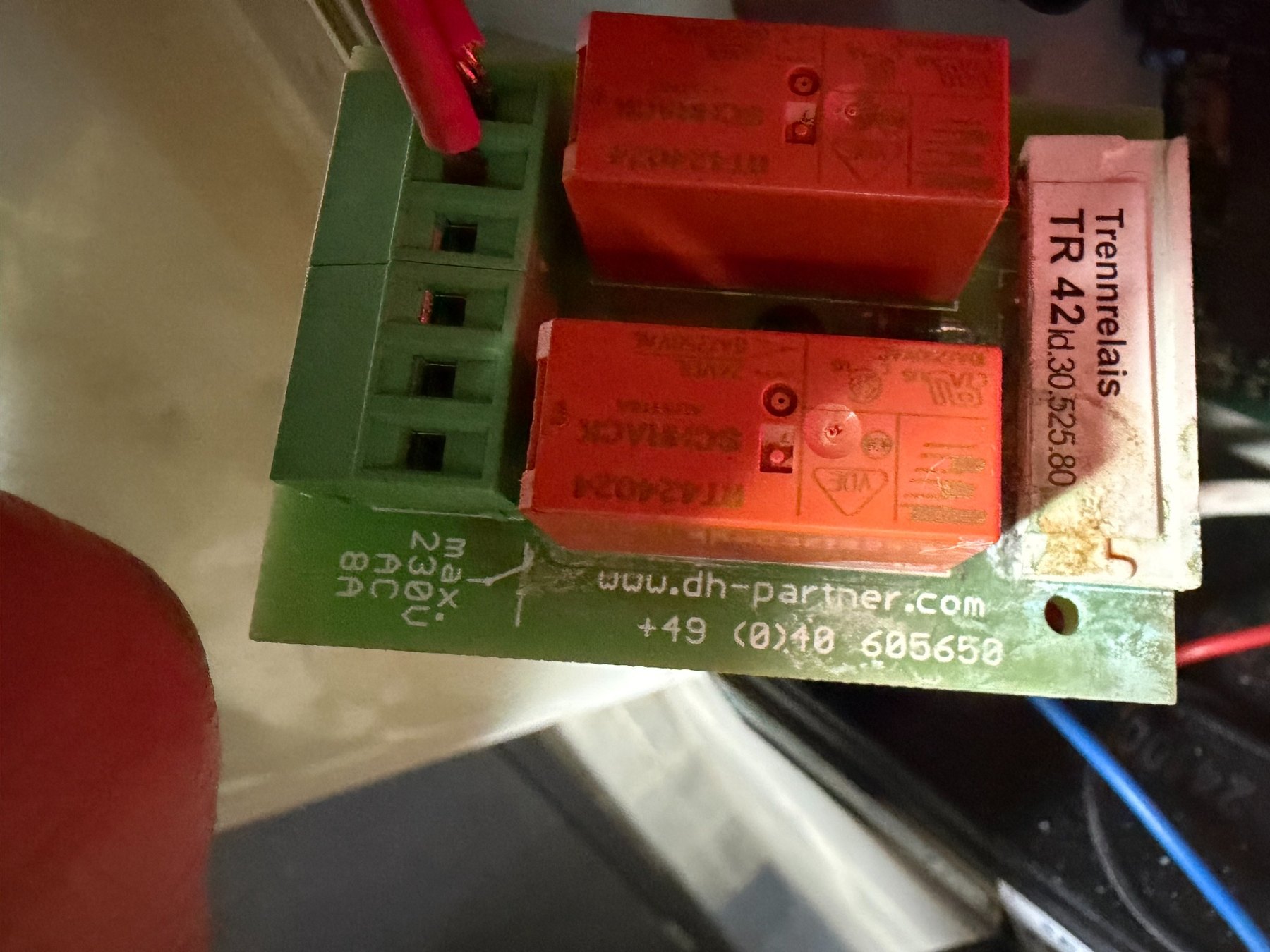
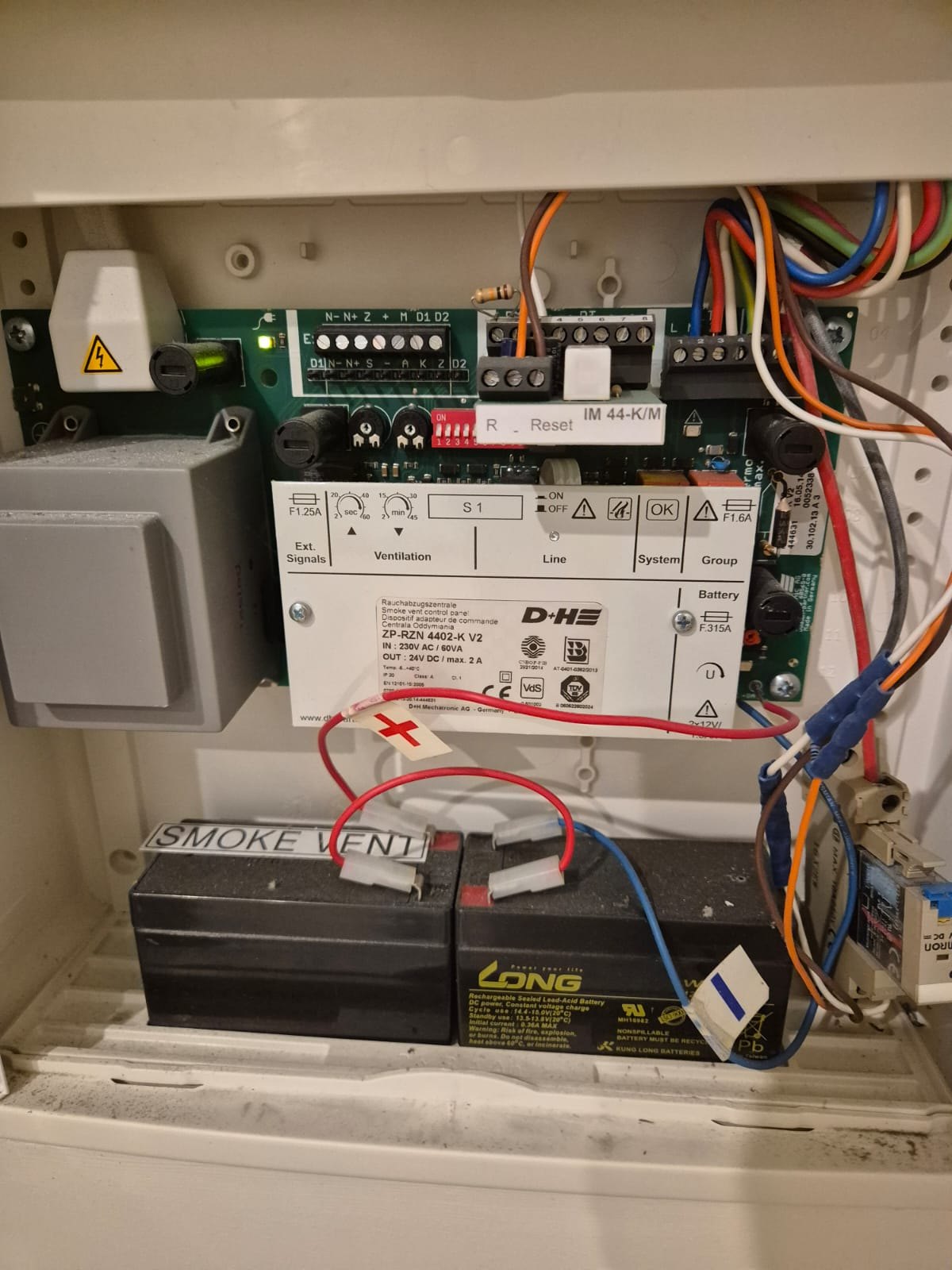
An older smoke control panel does not automatically require wholesale replacement. Depending on its condition and the project requirements, the appropriate pathway may be service and testing, component replacement, limited upgrade or replacement with a current RZN or CPS-M control system.
Smoke control systems should be reviewed as complete systems. The panel, batteries, actuators, manual controls, detectors, fire alarm interfaces, field cabling and required operating sequence all affect the service or replacement decision.
Where the original model or a compatible current configuration remains available, EBSA can confirm the required product code and installation considerations.
A current actuator may provide the required function but use different frame or sash brackets. EBSA can review and schedule the replacement components together.
Voltage, current, synchronisation, feedback and panel technology must be compatible with the replacement drive. A similar-looking actuator is not sufficient evidence.
Where equipment is obsolete, damaged or no longer aligned with the building's needs, EBSA can develop a staged or complete upgrade using current D+H technology.
EBSA can also review failed, obsolete or unsupported window actuators from other manufacturers. In many cases, the existing arrangement can be upgraded to a high-quality German-made D+H drive and control solution.
The replacement is assessed against the window type, sash size and weight, opening direction, required stroke, available fixing space, bracket geometry, control voltage and any synchronisation or monitoring requirements.
A replacement from another brand is not assumed to be mechanically or electrically interchangeable. EBSA reviews the complete opening and control arrangement before recommending a D+H upgrade pathway.
Usually, yes. Start with a clear photograph of the complete product label and an overall photo of the installed actuator or panel. Bracket, window and control-panel photos may also be required before the replacement is confirmed.
EBSA interprets the complete production information shown on the product label and checks it against D+H product records and model history. The manufacturing year is not determined by applying one simple rule to the final digits on every label.
No. Product age is only one consideration. Condition, test results, reliability, application, availability of parts and the importance of the system all influence whether continued service, repair, upgrade or replacement is appropriate.
Yes. EBSA can identify and support existing D+H equipment regardless of who supplied the original system. Clear product and installation information is required before compatibility and scope can be confirmed.
Not necessarily. The panel should be assessed with its batteries, connected devices, interfaces, cabling, maintenance history and required smoke-control operation. EBSA can advise whether service, component replacement, upgrade or complete replacement is appropriate.
The normal current replacement for a 24 V DC VCD 22/25 is the D+H VCD 203/250. It provides 200 N force and a 250 mm stroke.
The complete product label, frame bracket, sash bracket and chain connection should still be reviewed before ordering.
The current 230 V replacement pathway is the D+H VCD 204/250-K, providing 200 N force and a 250 mm stroke.
Replacement normally requires new frame brackets and may also require a new sash bracket. EBSA reviews the original actuator, mounting arrangement, opening geometry and switching before confirming the final replacement package.
EBSA's normal replacement model is the CDC-0252-1-350-ACB-STH-R. This is a specific EBSA-selected configuration with 350 mm stroke and ACB communication.
EBSA should confirm the chain exit, handing, brackets, cable arrangement and compatibility with the existing control system before supply.
Older KA 30 variants are replaced by the current KA 34 family. This applies across the earlier KA 30 versions and stroke lengths, subject to confirmation of the original stroke, mounting arrangement, control technology and cable exit.
Older KA 50 variants are replaced by the current KA 54 family. This applies across the earlier KA 50 versions and stroke lengths, subject to confirmation of the original force, stroke, mounting arrangement, synchronisation, control technology and cable exit.
These are replacement pathways, not automatic like-for-like substitutions. Product age, brackets, control voltage, synchronisation, chain exit and window geometry all need to be checked before a replacement is confirmed.
Contact EBSA for identification of an older D+H drive, smoke control panel or control component. Include the complete label, overall product, brackets, window arrangement and control panel wherever possible.



© 2026 EBSA | All Rights Reserved. | Developed by Procloud
EBSA and the EBSA logo are both registered trademarks of EBSA Holdings Pty Ltd