D+H Window Automation NZ

D+H Chain Drives
Commercial-grade German-made D+H chain drives for automated windows, natural ventilation, smoke ventilation and façade automation projects in New Zealand.
EBSA New Zealand supplies and supports D+H Mechatronic chain drives for automated window and façade opening applications, including awning windows, casement windows, roof windows, skylights and selected project-specific opening elements.
Chain drives are compact electric actuators used where controlled opening, closing, ventilation control or integration with a wider building system is required. They are commonly used with EBSA NZ window control panels, natural ventilation systems, smoke ventilation systems, weather sensors, switches and BMS interfaces.
EBSA NZ can assist with drive selection, stroke, force, bracketry, synchronisation, control panel compatibility, field cabling requirements, programming, commissioning and replacement support.
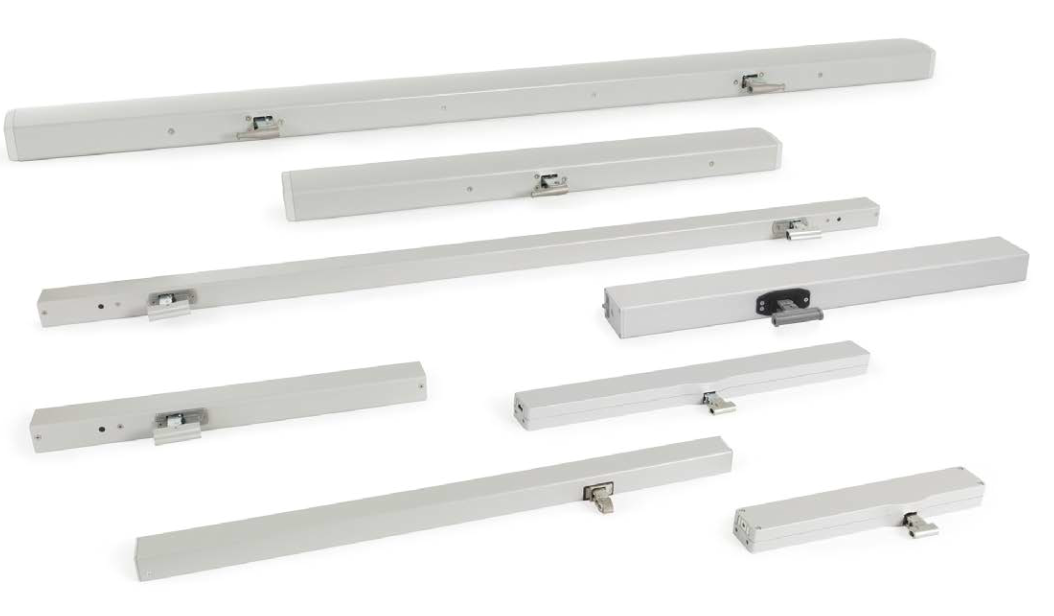
Commercial-grade German-made window actuators
EBSA NZ uses the term commercial-grade because D+H chain drives are not generic low-cost window openers. They are German-made actuators designed for reliable use in commercial window automation, natural ventilation, smoke ventilation and façade automation applications.
D+H quality control is a key part of the product offering. Each actuator is factory-tested before release, and once it passes the required production test parameters it receives its serial number and product markings.
This level of manufacturing control is important on commercial projects, especially where drives are installed in hard-to-access façade locations, high-level windows, roof windows, skylights or smoke ventilation openings.
Commercial-grade does not mean the products can only be used on commercial buildings. Suitable D+H drives can also be used on residential or high-end residential projects where quality, reliability, quiet operation or control integration is important.
Compact electric drives for automated window openings
Chain drives are one of the most widely used actuator types for window automation. They provide a compact drive solution where the actuator needs to be integrated with the window frame, sash, bracket arrangement and control system.
The correct chain drive depends on the opening type, sash weight, required stroke, opening angle, actuator force, available fixing space, control strategy and whether synchronised or monitored operation is required.
Natural ventilation and daily control
Chain drives can be used with wall switches, sensors, ventilation controllers, BMS interfaces and programmed control logic to support natural ventilation and mixed-mode ventilation strategies.
Smoke ventilation coordination
Suitable D+H chain drives can form part of smoke ventilation opening systems when selected and coordinated with the project fire strategy, certified control panel, field cabling, installation details and commissioning process.
Key benefits
- German-made D+H chain drives with factory production testing
- Commercial-grade actuator families for suitable window and façade openings
- Compact options for visible, concealed or semi-integrated window automation applications
- Drive options for economical ventilation, quiet occupied-space operation and heavy-duty opening requirements
- Available with different D+H control technologies including PLP, TMS+, BSY+ and ACB depending on model and configuration
- Suitable for natural ventilation, smoke ventilation and façade automation applications where correctly selected
- Supported by EBSA NZ with product selection, system design, installation coordination and commissioning support
D+H chain drive families
EBSA NZ supplies a range of D+H chain drive families to suit different window types, loads, strokes, control requirements and project applications. The correct product selection depends on the window design, access, required duty, control strategy and level of feedback or synchronisation required.
| Drive family | Typical role |
|---|---|
| VCD Chain Drives | Entry-level D+H ventilation chain drives for suitable automated window applications. VCD drives are a strong option where a compact, economical and reliable commercial-grade drive is required, while still allowing more advanced functions such as ACB where selected. |
| CDC Chain Drives | Very compact D+H chain drives with a small actuator profile of approximately 30 x 35 mm. CDC drives are well suited to applications where appearance, integration and quiet operation matter, including classrooms, offices and other occupied spaces. |
| KA Chain Drives | Heavy-duty D+H chain drives with a long service history across commercial window automation, roof windows, skylights and more demanding façade applications. KA drives are often selected where reliability, proven performance and access for future replacement are important. |
| CDM Chain Drives | Extra heavy-duty D+H chain drives for larger or more demanding opening applications. CDM drives can provide high force and long stroke options, including configurations up to 1,000 N and 1,000 mm stroke where suitable for the project. |
| CDP Chain Drives | Extreme-duty D+H chain drives for very heavy ventilation flaps, smoke hatches, roof openings and demanding applications. CDP drives can provide very high force and long stroke options, including configurations up to 1,500 N and 1,500 mm stroke where suitable for the project. |
Product names, available strokes, force ratings, control options and approvals should be checked against current D+H and EBSA NZ product data before final selection.
How chain drives are selected
Chain drive selection is not based on the window size alone. The actuator needs to suit the full opening arrangement, including sash weight, centre of gravity, hinge position, opening angle, stroke, bracket geometry, operating load, access and control requirements.
EBSA NZ can assist with reviewing the window type and intended function so the selected drive, brackets and control system are coordinated with the project design.
| Selection item | Why it matters |
|---|---|
| Opening type | Awning, casement, roof and façade openings place different loads and movement requirements on the actuator. |
| Required stroke | The drive stroke affects achievable opening distance, ventilation area, clearance, bracket geometry and system function. |
| Actuator force | The drive must be suitable for the sash weight, friction, wind effects, opening geometry and intended operating conditions. |
| Bracket arrangement | Brackets need to suit the frame, sash, fixing points, opening direction, reveal conditions and available installation space. |
| Access for service | Hard-to-access locations place greater importance on product quality, proven service history and future replacement planning. |
| Synchronisation | Larger or wider openings may require multiple drives operating together, depending on the sash design and control requirements. |
| Number of drives and groups | The number of drives per window and the number of windows per control group must be coordinated with the selected drive family, control panel capacity, cable lengths and operating logic. |
| Control system | The drive must be compatible with the required control panel, switching, sensors, monitoring, BMS interface or smoke ventilation strategy. |
| Maintenance access | Drive locations should allow practical installation, testing, adjustment, servicing and future replacement where required. |
Standard 24 V DC operation and D+H control technology
D+H chain drives are available with different control technologies depending on the drive family and project requirements. The correct option depends on whether the system needs simple open/close control, local stroke setting, basic synchronisation, advanced digital synchronisation or live drive communication with the control panel.
EBSA NZ generally prefers 24 V DC drive systems for most controlled window automation projects because they are easier to integrate with rain sensors, wind sensors, control panels, BMS interfaces and smoke or natural ventilation logic. 230 V AC chain drives are available for suitable simple applications, particularly where the requirement is basic wall-switch operation without broader system integration.
Standard 24 V DC / PLP operation
PLP is the standard D+H drive technology used for basic open and close operation through a suitable 24 V DC control arrangement. PLP allows basic drive functions such as stroke to be programmed by an EBSA technician using a PLP programmer.
On supported PLP drives, stroke can also be set using the D+H magnet-based programming process by following the manufacturer’s instructions.
TMS+ synchronisation
Selected PLP drive arrangements can use TMS+ to synchronise two compatible drives on one window, allowing them to operate together where the sash design requires a paired-drive arrangement.
TMS+ is a practical solution because synchronisation is achieved through the drive connection arrangement and does not require a separate synchronisation module to be installed in an additional junction box.
BSY+ digital synchronisation
BSY+ provides a higher level of digital synchronisation and programming between compatible D+H drives. It can support coordinated movement, sequencing and programmed delay functions where the opening geometry requires more controlled operation.
ACB live communication
ACB-capable D+H drives can communicate live status information to compatible control equipment. When combined with a suitable CPS-M control panel, the system can identify drive faults, position errors and incomplete movement conditions.
Selecting an ACB-capable drive does not by itself provide ACB functionality. The drive must be connected to compatible ACB control equipment and the system architecture must be designed to support communication, feedback and fault reporting.
Natural ventilation applications
Chain drives are commonly used in natural ventilation systems where automated openings need to respond to occupant input, room conditions, weather sensors, BMS commands or programmed control logic.
EBSA NZ can assist with drive selection, control panel configuration, switch and sensor selection, BMS interface requirements and commissioning support for natural ventilation or mixed-mode ventilation systems.
Smoke ventilation coordination
Where chain drives are used as part of a smoke ventilation or smoke control system, actuator selection must be coordinated with the certified smoke ventilation control panel, project fire strategy, opening type, actuator load, field cabling, installation details and commissioning process.
D+H RZN and CPS-M smoke ventilation control panels are certified to EN 12101-10 / ISO 21927-9 for smoke control power supply equipment. These standards address critical smoke-control panel functions including 72-hour standby battery operation, monitored/failsafe power supply behaviour, fault monitoring and integrated protective safety features such as thermal fuse protection.
The selected chain drive, control panel, field cabling, interface requirements and commissioning process should be coordinated as part of the project smoke ventilation design and delivery scope.
Installation, wiring and commissioning support
Chain drive projects require coordination between the window supplier, aluminium joiner, façade contractor, electrician, builder, control system provider and commissioning team. EBSA NZ can assist with practical coordination so that the selected drives can be installed, wired, programmed and commissioned correctly.
Where the field cabling is installed by the project electrician, EBSA NZ can prepare project-specific wiring schematics to assist with cable rough-in, cable pulls, field device locations, control panel connections and termination planning.
- Drive selection and product family review
- Stroke, force and opening geometry review
- Bracket and fixing coordination
- Control panel and drive group coordination
- Switch, sensor and interface requirements
- Project-specific wiring schematics where applicable
- Drive programming and addressing where required
- Operational testing, commissioning and handover support
Technical notes for specifiers
Early selection of the chain drive family helps avoid later coordination issues with window design, control panel capacity, cabling, access and commissioning.
- Confirm the window type, sash size, sash weight and required opening distance.
- Confirm whether the project requires single-drive, twin-drive or synchronised operation.
- Confirm whether PLP, TMS+, BSY+ or ACB technology is required.
- Confirm voltage, current draw, cable length and control panel capacity.
- Confirm the number of drives per window and the number of windows per control group.
- Confirm whether the system is for natural ventilation, smoke ventilation, BMS integration or simple local control.
- Confirm installation access, bracket fixing points, commissioning access and future service access.
EBSA NZ can provide project-specific technical input for specifications, drive schedules, control panel arrangements, operating strategy, interfaces and coordination requirements.
Replacing older D+H chain drives
Many existing buildings contain earlier D+H chain drives that have been in service for years. A replacement is not selected from the housing length or appearance alone. The original model code, voltage, stroke, force, chain exit, bracket arrangement, control technology and any synchronisation requirements must be checked against the current product range.
EBSA can review product labels, photographs, opening dimensions and the existing control arrangement to identify the installed actuator and recommend a current replacement pathway. Depending on the original product, this may involve a direct successor, a current equivalent, revised brackets or changes to the control system.
- Photograph the complete product label and serial information
- Record the window type and opening direction
- Confirm the number of actuators fitted to each sash
- Photograph the actuator, brackets and chain connection in the closed position
- Identify the existing control panel or local switching arrangement
- Do not assume that a visually similar drive is electrically or mechanically compatible
Use the legacy D+H product support guide to identify the information EBSA needs to review an older or discontinued actuator, control panel or related D+H product. Clear photographs of the complete product label, installed actuator, brackets and window arrangement help EBSA assess the existing system and recommend an appropriate replacement pathway.
Related systems and services
| Related page | Typical relevance |
|---|---|
| Window Automation | Broader automated window system information including actuators, controls, sensors and building interfaces. |
| D+H Window Automation NZ | D+H drives, smoke ventilation control panels, sensors and related equipment supplied and supported by EBSA NZ. |
| Window Control Panels | Natural ventilation, smoke ventilation and project-specific control panel solutions for automated opening systems. |
| Natural Ventilation Systems | Automated openings used for airflow, occupant comfort, purge ventilation or project-specific ventilation logic. |
| Smoke Ventilation and Smoke Control Systems | Automated openings and control interfaces that may form part of a project-specific smoke ventilation strategy. |
| Design & Consultation | Early support with actuator selection, control strategy, interface coordination and specification input. |
| Project Delivery Options | Guidance on supply-only, supported supply, defined installation scope and turnkey EBSA delivery models. |
Frequently asked questions
What are chain drives used for?
Chain drives are electric window actuators used to open and close suitable awning windows, casement windows, roof windows, skylights, façade openings and other compatible operable elements.
Can EBSA NZ help select the right chain drive?
Yes. EBSA NZ can assist with drive selection by reviewing the opening type, sash size, sash weight, required stroke, actuator force, bracket requirements, control strategy and installation conditions.
Are D+H chain drives suitable for residential projects?
Yes, where the drive is suitable for the window and project requirements. EBSA NZ uses commercial-grade D+H products, but that does not prevent them being used on residential or high-end residential projects where quality, reliability, quiet operation or control integration is important.
The VCD drive is often a good option for suitable residential or light commercial ventilation applications because it provides a compact and economical D+H chain drive solution.
Are D+H chain drives quiet?
Selected D+H chain drives are very quiet compared with many standard actuator options. The CDC drive is a particularly compact and quiet chain drive, with operating noise below 35 dB depending on configuration and installation conditions.
This can be important in classrooms, offices, meeting rooms and occupied spaces where multiple windows may operate at the same time.
Which chain drive should be used where access is difficult?
Where actuators are difficult to access after installation, EBSA NZ will generally place greater emphasis on product quality, proven service history and suitability for the operating conditions.
KA, CDM and CDP drives may be considered for more demanding applications depending on the window type, load, stroke, access, control requirements and maintenance expectations.
Can chain drives be used for natural ventilation?
Yes. Chain drives are commonly used in natural ventilation systems where windows need to open automatically or by switch, sensor, BMS command or programmed ventilation logic.
Can chain drives be used for smoke ventilation?
Yes, where the selected chain drive, control panel, field cabling, opening type and commissioning process are coordinated with the project smoke ventilation strategy. EBSA NZ can support product and system selection for suitable D+H smoke ventilation opening systems.
What is the difference between PLP, TMS+, BSY+ and ACB?
PLP is the standard D+H drive technology for basic open and close operation, with power line programming available for selected basic functions such as stroke setting.
TMS+ can support synchronisation of two compatible drives in selected PLP arrangements and does not require a separate synchronisation module.
BSY+ provides a higher level of digital synchronisation and programming between compatible drives. ACB adds live communication and status feedback when used with suitable control equipment.
Should I use 24 V DC or 230 V AC chain drives?
EBSA NZ generally prefers 24 V DC chain drive systems for most commercial window automation projects because they are easier to integrate with rain sensors, wind sensors, control panels, BMS interfaces, natural ventilation logic and smoke ventilation control systems.
230 V AC chain drives are available and can be suitable for simple applications where the requirement is basic open and close control from a wall switch, without broader sensor or control panel integration.
For most EBSA NZ projects, 24 V DC provides the more flexible system platform and is usually the preferred option for integrated façade automation.
What does ACB feedback provide?
ACB-capable D+H drives can provide live communication between the drive and compatible control equipment. When used with suitable control panels such as CPS-M, the system can identify drive faults, incomplete movement and position errors.
For example, if a window is instructed to close but does not reach the expected closed position, the control system can identify that the required position has not been achieved and report a fault condition.
Can multiple chain drives operate one window?
Yes, where the selected drive family, sash design and control arrangement support synchronised operation. EBSA NZ can assist with reviewing whether a single-drive or multi-drive arrangement is more suitable for the opening.
Does EBSA NZ provide wiring diagrams for chain drive systems?
Yes. Where EBSA NZ designs and supplies the control system, EBSA can prepare project-specific wiring schematics to assist with control panel connections, field cabling, field device locations and termination planning.
Can EBSA NZ install and commission chain drive systems?
Yes, where included in the agreed project scope. EBSA NZ can support installation, field terminations, drive programming, control panel setup, operational testing, commissioning and handover for selected chain drive systems.
Can EBSA support replacement or discontinued chain drives?
Yes. EBSA can review the original product label, voltage, stroke, force, brackets, chain arrangement, synchronisation and control-panel compatibility to identify an appropriate replacement pathway for existing D+H and selected other window automation systems.
A visually similar actuator is not necessarily compatible. Clear photographs of the complete label, installed drive, brackets and window arrangement should be provided before a replacement is selected. See the legacy D+H product support guide for the information required for an identification or replacement review.
Discuss D+H chain drives with EBSA
Contact EBSA to discuss D+H chain drive selection, stroke, force, bracketry, synchronisation, control panels, field cabling, installation or commissioning requirements for your project.



© 2026 EBSA | All Rights Reserved. | Developed by Procloud
EBSA and the EBSA logo are both registered trademarks of EBSA Holdings Pty Ltd