D+H Window Automation NZ

Rack & Pinion Drives
Robust German-made D+H linear window drives for natural ventilation, smoke control, roof windows, façade openings and demanding commercial automation projects.
EBSA New Zealand supplies and supports D+H Mechatronic ZA and DXD rack and pinion drives for compatible façade windows, roof windows, skylights and other demanding commercial openings.
Rack and pinion drives provide rigid linear movement and are commonly selected where the window requires high force, long stroke, external mounting or an operating environment that makes a chain drive less suitable.
EBSA can assist with drive-family selection, force and stroke review, environmental version selection, bracket coordination, control-panel compatibility, field cabling, synchronisation, commissioning and replacement support.
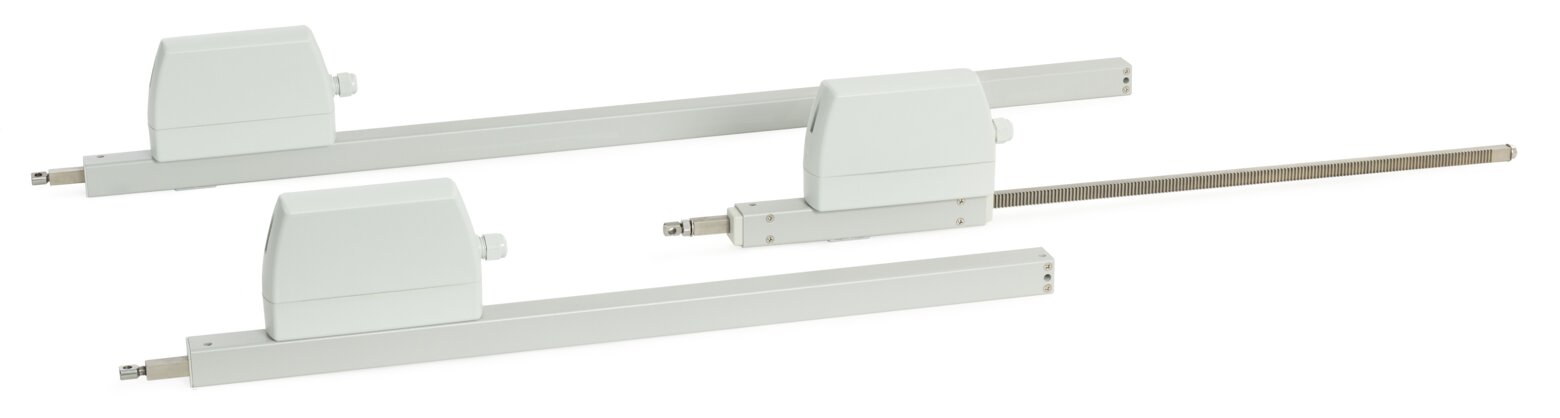
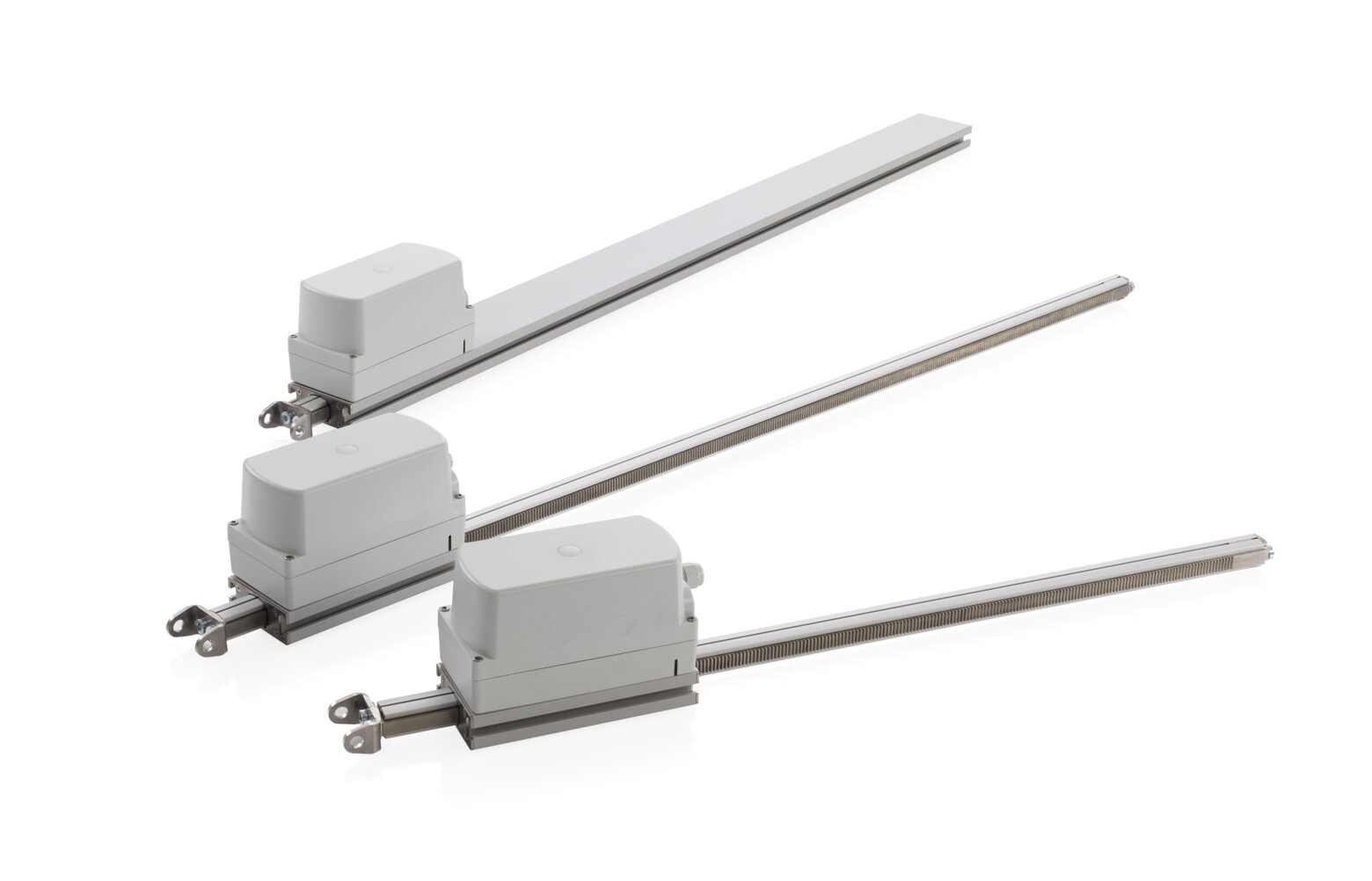
Robust linear drives for demanding window applications
Rack and pinion drives use a rigid toothed rack to transfer force between the actuator and opening sash. This provides strong, direct movement that can be particularly useful for large windows, long strokes, exposed installations and demanding opening geometries.
The drive body, rack, brackets and window structure must be selected as one coordinated arrangement. The correct solution depends on the required force, opening distance, mounting position, available rack path, environmental exposure and control requirements.
Rack and pinion drives are not limited to exceptionally large windows. They may also provide the best technical arrangement where the mounting position, external exposure, required rack path or window geometry favours a rigid linear actuator.
Key benefits
- Rigid linear movement for strong and controlled window operation
- Force options ranging from commercial window operation to very high-load applications
- Long-stroke options for roof windows, skylights and large façade openings
- Suitable configurations for internal, external and harsh-environment installations
- 24 V DC and 230 V AC options depending on drive family and model
- PLP, BSY+ and ACB control technologies available across the wider range
- Synchronised arrangements for windows requiring multiple drive points
- Supported by EBSA with drive selection, bracket coordination and system design
ZA and DXD rack and pinion drive families
The D+H rack and pinion range supplied by EBSA is centred on the ZA and DXD families. Each family covers a different range of force, stroke, mounting and application requirements.
ZA rack and pinion drives
ZA is the principal D+H rack and pinion drive family for commercial façade windows, roof windows, skylights, natural ventilation and smoke control openings.
The wider ZA range includes 300 N, 800 N, 1000 N and 1500 N options, with multiple strokes, control technologies and environmental configurations depending on the selected model.
DXD rack and pinion drives
DXD is a specialist high-capacity rack and pinion drive family for heavy roof windows, skylights and other demanding openings.
Selected DXD configurations provide up to 3000 N pressure force and 2000 N tensile force, with strokes extending to 1500 mm.
When rack and pinion drives are used
- Large or heavy façade windows
- Roof windows and commercial skylights
- Natural ventilation and mixed-mode ventilation systems
- Smoke control openings
- Outward-opening windows requiring rigid pushing movement
- Applications requiring long operating strokes
- Externally mounted or exposed drive arrangements
- Openings where chain pressure-load capacity is not suitable
- Windows requiring two or more synchronised drive points
- Harsh or humid environments requiring a specialist drive version
Rack and pinion drives compared with chain drives
Chain drives provide a compact actuator arrangement and are well suited to a broad range of automated windows. A rack and pinion drive instead uses a rigid toothed rack to transfer force between the drive and opening sash.
The rigid rack provides stable pressure movement and can be particularly effective for long-stroke, high-load or externally mounted applications. The correct drive type depends on the actual window geometry, required opening, available space and structural fixing arrangement.
| Selection factor | Chain drive | Rack and pinion drive |
|---|---|---|
| Drive movement | Flexible chain extending from a compact actuator body | Rigid linear rack extending from the actuator |
| Compact installation | Generally the principal advantage | Requires space for the actuator body and rack path |
| Long pressure stroke | Chain pressure-load capacity must be checked | Well suited to rigid long-stroke pushing |
| External installation | Depends on the selected model and installation conditions | Specialist external versions are available within the ZA range |
| Heavy or demanding openings | KA, CDM or CDP may suit the application | ZA or DXD may provide a more suitable linear arrangement |
External and harsh-environment drive options
Rack and pinion drives are often selected for externally mounted or exposed window applications, including façade openings, roof windows, skylights and high-level commercial windows.
W version for external applications
Selected ZA drives are available in a W version for exposed outdoor installations.
The W configuration includes a hardened stainless steel pinion, pressure-release ventilation and condensation protection for externally mounted or weather-exposed applications.
WS version for swimming pools
Selected ZA drives are available in a WS version for indoor swimming pools and other highly humid or aggressive internal environments.
The WS configuration includes the W upgrades together with A4 stainless steel rack, pinion and eyebolt components for increased resistance in humid and chlorinated environments.
The correct environmental version depends on the mounting position, weather exposure, humidity, chemical environment, bracket materials, fixing method and maintenance access. These requirements should be reviewed before the drive is ordered.
Natural ventilation and smoke control
ZA and DXD drives can form part of natural ventilation, general window automation and smoke control systems when coordinated with compatible control equipment, field cabling, interfaces and project-specific commissioning.
Natural ventilation functions may include local wall-switch control, temperature response, rain and weather response, timers, BMS interfaces and programmed ventilation sequences.
For smoke control applications, the window, actuator, brackets, control panel, fire alarm interface, power supply and field cabling must be coordinated as one complete system.
Drive, bracket and structural coordination
Rack and pinion drives transfer direct linear loads into the opening sash and supporting frame. The brackets, fasteners, window profiles and internal reinforcement must therefore carry the actuator loads throughout the full opening and closing cycle.
The rack path, drive position and bracket geometry must also remain clear through the full window movement.
EBSA can review window drawings, aluminium profiles, required opening geometry and available fixing points to select the drive family and develop an appropriate bracket arrangement.
Standard D+H brackets suit many applications. Commercial window systems may also require project-specific steel or aluminium brackets designed around the glazing suite and available structural support.
Control technology and system options
Depending on the selected model, ZA and DXD drives may be used with compatible 24 V DC or 230 V AC control arrangements.
EBSA generally prefers 24 V DC systems where the project requires sensors, timers, automated ventilation, feedback, smoke control, battery-backed operation or broader building-system integration.
PLP operation
PLP models provide conventional 24 V DC reverse-polarity operation and allow selected drive functions to be configured using compatible D+H programming equipment.
BSY+ synchronisation
BSY+ coordinates compatible drives operating together on the same window or opening so that movement and load distribution remain controlled.
ACB communication
ACB models add digital configuration, addressing, status feedback and communication when connected to a compatible D+H ACB control system.
The controller and power supply must be selected for the drive voltage, current demand, number of drives, cable length, synchronisation requirements and required operating functions.
Project coordination checklist
- Window type and opening direction
- Sash dimensions, weight and stiffness
- Required opening distance and angle
- Required actuator force and stroke
- Internal or external installation position
- Available space for the actuator body and rack travel
- Bracket locations and structural fixing points
- Environmental exposure and required drive version
- Number of drives required per opening
- Synchronisation requirements
- Control-panel and power-supply capacity
- Field cabling routes and cable lengths
- Natural ventilation, smoke control or combined operation
- Commissioning and future maintenance access
Installation, wiring and commissioning support
Rack and pinion drive projects require coordination between the window supplier, aluminium joiner, façade contractor, electrician, builder, control-system provider and commissioning team.
EBSA can support drive and bracket selection, control-panel coordination, project-specific wiring schematics, programming, synchronisation, operational testing and commissioning.
Frequently asked questions
What is a rack and pinion window drive?
A rack and pinion window drive is a linear actuator that uses a rigid toothed rack to push or pull an opening sash.
The rigid rack makes this drive type well suited to demanding pressure loads, long strokes and applications where a flexible chain actuator is not the preferred arrangement.
What is the difference between ZA and DXD drives?
ZA and DXD are separate D+H rack and pinion drive families with different force, stroke, size and application ranges.
ZA covers a broad range of commercial façade, roof, natural ventilation and smoke control applications. DXD is used for specialist high-capacity arrangements requiring substantial force or long travel.
When should a rack and pinion drive be selected instead of a chain drive?
A rack and pinion drive may be preferred where the opening requires rigid push movement, a long pressure stroke, external installation, substantial structural loads or a mounting arrangement better suited to a linear rack.
EBSA can compare ZA and DXD against KA, CDM and CDP chain-drive options using the actual window arrangement.
Can rack and pinion drives be used for smoke control?
Yes. ZA and DXD drive arrangements can be used within D+H smoke control systems.
The actuator, window, brackets, control panel, fire interface, field cabling and commissioning requirements must be coordinated as one system.
Can multiple rack and pinion drives operate on one window?
Yes. Multiple compatible drives can be configured for synchronised operation where one opening requires more than one drive point.
The drives, controller, brackets and sash structure must be designed and commissioned as one coordinated set.
Are rack and pinion drives suitable for external installation?
Yes. Selected ZA drives are available in specialist W configurations for externally mounted and exposed applications.
Final selection depends on the mounting orientation, weather exposure, condensation risk, protection requirements, brackets and maintenance access.
Are rack and pinion drives suitable for indoor swimming pools?
Selected ZA drives are available in WS versions intended for highly humid environments such as indoor swimming pools.
The complete installation should also account for bracket materials, fasteners, electrical equipment, local chemical exposure and future inspection access.
Can EBSA help select the correct rack and pinion drive?
Yes. EBSA can review the window type, sash dimensions, force, stroke, mounting position, environmental exposure, brackets, control system and field-cabling requirements before the drive is ordered.
Related window automation pages
| Page | What it covers |
|---|---|
| ZA Rack & Pinion Drives | Commercial D+H rack drives for façade windows, roof windows, natural ventilation, exposed installations and smoke control systems. |
| DXD Rack & Pinion Drives | Specialist high-capacity D+H rack drives for demanding loads, long travel and heavy roof or skylight openings. |
| Chain Drives | VCD, CDC, KA, CDM and CDP chain-drive families. |
| Window Control Panels | Natural ventilation, smoke control and project-specific control-panel solutions. |
| Window Automation | Automated window systems, drives, controls, sensors and building interfaces. |
Discuss rack and pinion drives with EBSA
Correct rack-drive selection depends on the window type, opening geometry, required force and stroke, installation position, environmental exposure, bracket arrangement, structural fixings, control system and field wiring.
Contact EBSA to discuss ZA or DXD drive selection, control panels, brackets, wiring, installation or commissioning requirements for your project.



© 2026 EBSA | All Rights Reserved. | Developed by Procloud
EBSA and the EBSA logo are both registered trademarks of EBSA Holdings Pty Ltd