PS-VFM1
Compact single-group controller for smaller natural ventilation systems using compatible 24 V DC drives.

Automated natural ventilation systems using controlled windows, skylights, façade openings and operable louvres for New Zealand building projects.
EBSA NZ Ltd designs, supplies and supports automated natural ventilation systems for buildings across New Zealand. These systems use controlled windows, skylights, façade openings or operable louvres to support day-to-day ventilation, occupant comfort and building operation.
Natural ventilation is most effective when the opening elements, drives, control panels, sensors, weather response, control logic and commissioning strategy are considered together. EBSA can assist architects, engineers, builders, façade contractors, aluminium joiners and electrical contractors with practical system selection and project-specific coordination.
Depending on the building design and selected control architecture, natural ventilation functionality may include local switching, grouped control, temperature-based ventilation, CO2 response, night purge, weather response, window modulation and BMS integration.
Ventilation is an important part of New Zealand building design. For occupied spaces, the New Zealand Building Code requires adequate ventilation for the intended use and expected occupancy of the space. Natural ventilation is one method that may be used by the project design team as part of a compliant ventilation strategy where the building layout, opening areas, airflow paths, weather exposure, occupancy and operating conditions support that approach.
EBSA designs, supplies and supports the automated opening system that forms part of the wider ventilation solution. This can include window drives, control panels, sensors, switching, interfaces and control logic for suitable windows, skylights, façade openings and operable louvres.
Natural ventilation should be reviewed as part of the wider building design. Opening location, airflow path, user control, weather exposure, mechanical services strategy and commissioning requirements all affect the final system.
Natural ventilation may be used to support outdoor air supply, indoor air quality, occupant comfort, passive cooling, night purge strategies or reduced reliance on mechanical cooling where the project design and operating conditions allow.
Uses openings on one side of a room or space. This can be suitable for some simpler spaces, but performance depends on opening size, room depth, wind conditions and temperature differences.
Uses openings on different sides of a space or building to allow air to move through the occupied area. This strategy depends on wind pressure, façade exposure, internal layout and the available flow path.
Uses the natural rise of warmer air to draw air through lower-level and higher-level openings. This can be useful in buildings with atria, high-level openings, roof vents, stair zones or other vertical flow paths.
Combines natural ventilation openings with mechanical ventilation, heating, cooling or BMS control. The building may use natural ventilation when conditions are suitable and mechanical systems when required.
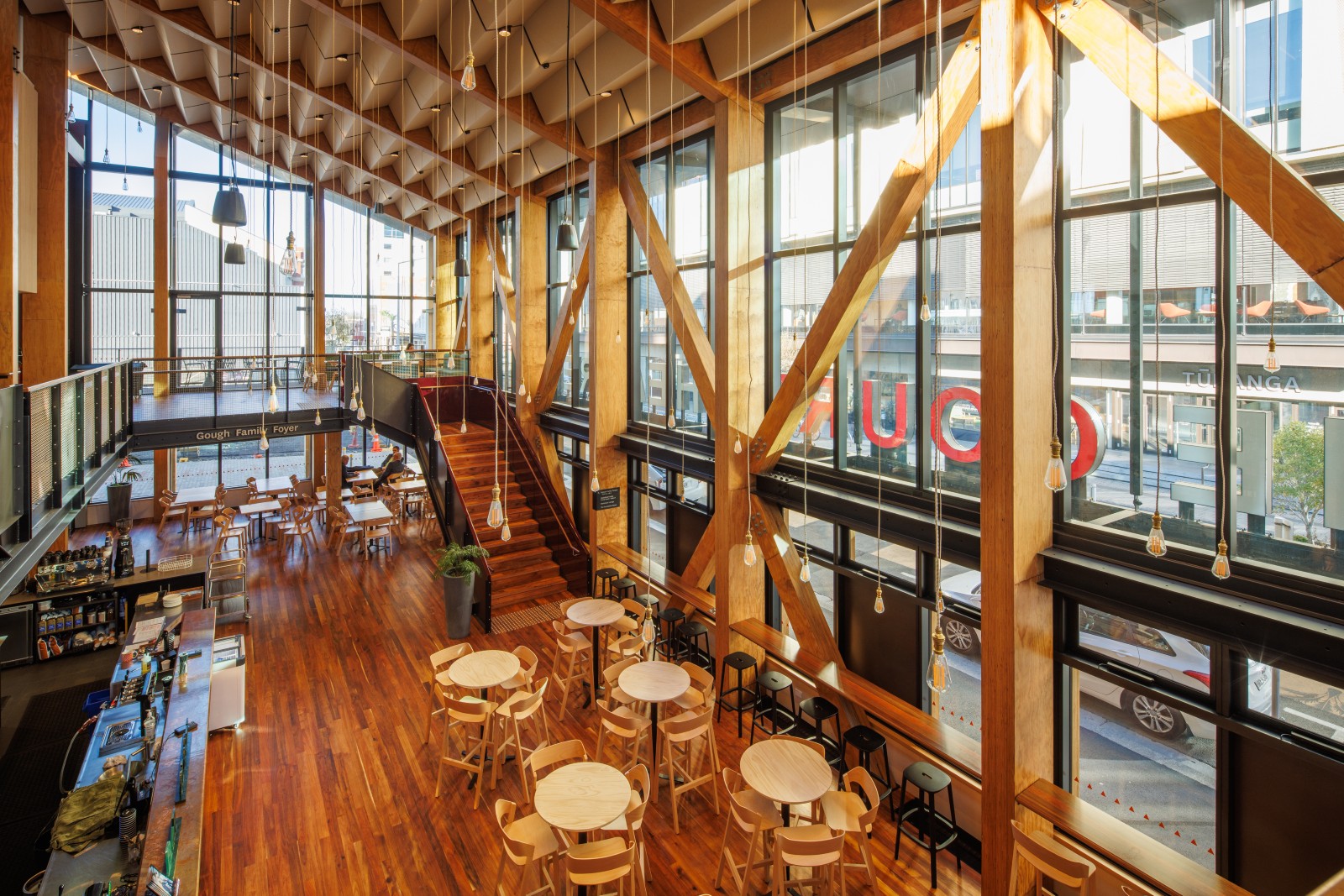
An automated natural ventilation system normally combines operable façade elements with electric drives, control panels, sensors and project-specific operating logic. The final system arrangement depends on the opening type, required control function, number of ventilation zones, power supply, sensor strategy, user override requirements and interface requirements.
Electric drives operate compatible awning windows, casement windows, roof windows, skylights, façade openings or louvre systems.
Control panels supply power to the drives, manage control inputs and provide the operating strategy for natural ventilation zones.
Switches, rain sensors, wind sensors, temperature sensors, CO2 sensors and room sensors support local operation and automated response.
BMS and mechanical services interfaces may also be included where the natural ventilation system needs to coordinate with building management systems, mechanical plant or project-specific control logic.
Compact single-group controller for smaller natural ventilation systems using compatible 24 V DC drives.
Compact 2 A, 4 A and 6 A power supplies for straightforward natural ventilation applications using external switching.
Natural ventilation controllers in 1 A, 4 A and 8 A configurations for single-group and higher-capacity applications.
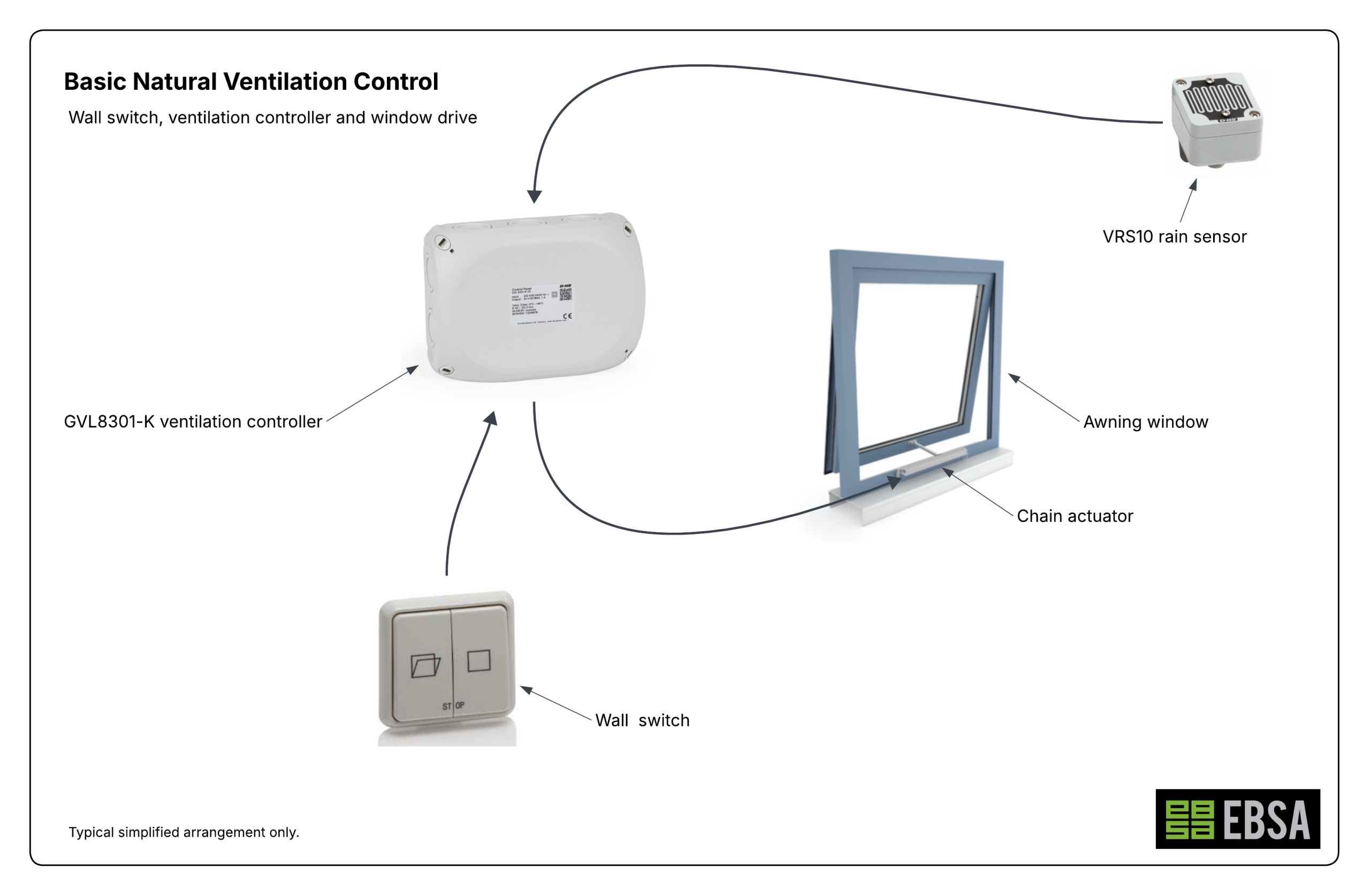
The simplified schematic below shows a basic natural ventilation control arrangement using a wall switch, GVL ventilation controller, rain sensor and window drive. Final system design, wiring and product selection are project-specific.
This is a general arrangement only. Actual projects may require different drives, control panels, sensors, field wiring, grouping, interfaces or commissioning requirements.
Standard PS-VFM1, PS-VE and GVL natural ventilation systems do not include standby batteries.
If the 230 V AC mains supply fails while windows, rooflights or louvres are open, the openings remain in their existing position because the controller no longer has power to operate the drives. A connected rain sensor also cannot command the openings to close while operating power is unavailable.
Where automatic close on loss of mains power is required, use a battery-backed D+H RZN or CPS-M control panel. The panel remains powered from its standby batteries and commands the connected openings to close according to the configured sequence.
Mains-failure behaviour should be confirmed during system design, particularly for night-purge ventilation, skylights, roof openings and other weather-exposed openings.
Natural ventilation systems can range from simple manually switched window groups through to multi-zone systems with sensors, weather response and BMS integration. The available functionality depends on the selected drives, control panel, sensors, wiring arrangement and programmed control strategy.
Many commercial buildings do not rely on natural ventilation alone. A mixed-mode ventilation strategy combines automated natural ventilation openings with mechanical ventilation, heating, cooling or building control systems. This allows the building to use outdoor air when conditions are suitable, while retaining mechanical systems for periods where temperature, air quality, weather, noise, security or occupancy requirements make natural ventilation unsuitable.
In a mixed-mode building, automated windows or louvres may need to coordinate with the mechanical services strategy. This can include temperature set points, CO2 inputs, time schedules, rain and wind response, façade zoning, mechanical plant interlocks and user override requirements.
Correct mixed-mode operation depends on clear control logic and early coordination. EBSA can assist with the automated opening system, CPS-M control-panel configuration, BMS and mechanical-services interfaces, operating sequences and commissioning support.
The value of an automated natural ventilation system is often in the control logic, not just the hardware. A simple natural ventilation controller may provide basic open, close and weather response functionality. A project-specific CPS-M control panel can support more advanced sequencing, grouping, feedback and integration requirements.
For example, a CPS-M control panel can be configured to respond to wind-driven rain by closing only the windows on the affected elevation, rather than closing every window in the building. In some project-specific natural ventilation strategies, windows may also be programmed to partially close where the conditions, awning geometry and agreed control logic allow a protected ventilation position to remain open.
These control strategies should be reviewed during design and confirmed during commissioning so the system response matches the building’s ventilation intent, user expectations, weather exposure and maintenance requirements.
Night purge ventilation uses controlled opening outside normal occupied hours to help release warm internal air and support passive cooling strategies. It is typically considered for buildings where the design, climate, security approach, weather response and operating schedule make overnight ventilation practical.
Weather response is a key part of most automated natural ventilation systems. The required response may be simple, such as closing all windows when rain is detected, or more advanced, such as responding differently by elevation, zone, wind direction or control mode.
The correct weather strategy depends on the building design, window type, awning protection, exposure, sensor location and control panel capability. Weather response should be treated as part of the complete system design rather than as an isolated sensor selection.
Natural ventilation should be coordinated early in the project. The type of window, sash weight, required opening distance, bracket arrangement, cable route, panel location, sensor location and control interface requirements can all affect the final system selection.
For New Zealand projects, EBSA can assist with reviewing:
| Product group | Typical use |
|---|---|
| Natural Ventilation Control Panels | PS-VFM1, PS-VE and GVL products for compact, straightforward and higher-capacity natural ventilation systems. |
| Battery-Backed Control Panels | RZN and CPS-M panels for systems requiring automatic close on loss of mains power or combined smoke-control functionality. |
| Window Automation | Chain drives, rack drives and other actuator options for compatible windows, roof openings, louvres and façade openings. |
| Sensors and Switches | Wall switches, rain sensors, wind sensors, room sensors and control inputs used in natural ventilation systems. |
| Specialty Drives | Specialist or project-specific drive solutions, including louvre drive options, where the application does not suit a standard chain drive or rack and pinion drive. |
Some buildings use automated openings for both day-to-day natural ventilation and smoke control-related functions. These systems require careful review because normal ventilation operation and fire-mode operation may require different control priorities, interfaces, power supplies, commissioning checks and approval pathways.
Where natural ventilation and smoke-control functions overlap, EBSA can coordinate the automated openings, actuator selection, battery-backed control panels, fire and BMS interfaces, normal-mode priorities, fire-mode logic and commissioning requirements with the project team.
EBSA NZ Ltd directly imports, supplies, installs and supports D+H Mechatronic window automation equipment in New Zealand. D+H drives, control panels, sensors and switching equipment may be used as part of suitable natural ventilation, mixed-mode ventilation and smoke control opening systems.
Product selection should be reviewed against the opening type, required stroke, actuator load, control panel arrangement, field cabling and intended control strategy.
An automated natural ventilation system uses electric drives, control panels, switches, sensors and control logic to open and close suitable windows, louvres, skylights or façade openings. The system may support everyday ventilation, mixed-mode operation, night purge or building control integration where suitable for the project.
Natural ventilation may form part of a building ventilation strategy where the design, opening areas, airflow paths, weather exposure and operating conditions support that approach. Whether it can replace or reduce mechanical ventilation is a project design decision for the relevant design team.
Yes. EBSA can assist with control-panel selection, sensor inputs, grouping, interface coordination and commissioning support for project-specific natural ventilation control logic.
Yes. In a simple mixed-mode arrangement, EBSA window automation systems can interface with mechanical services so that heat pumps or mechanical cooling systems are disabled when windows are opened, where this is required by the project control strategy.
For more advanced projects, EBSA-supplied and programmed CPS-M ventilation controllers can be configured to assess suitable inputs and determine when conditions are appropriate for heating, cooling or natural ventilation. The system can then apply the relevant control functionality to support occupant comfort, subject to the project design, sensor inputs, mechanical services interface and agreed commissioning requirements.
EBSA should be involved early by consultants and the project design team to assist with planning, confirm that the desired natural ventilation outcome is achievable, and provide practical input on implementation, coordination and buildability.
During the design phase, early involvement helps confirm the opening type, actuator selection, control panel requirements, field cabling strategy, sensor locations, bracket requirements, interfaces with mechanical or BMS systems, and commissioning expectations.
For installation works, EBSA should be involved as early as possible. Field cabling often needs to be roughed in before walls and ceilings are sheeted, and coordination with electricians, builders, façade contractors, aluminium joiners and other trades is best resolved before site works are too advanced.
Natural ventilation system selection depends on the building design, opening type, required functionality, weather exposure, user control requirements and integration strategy.
EBSA can assist with reviewing the system arrangement before products are selected, specified or ordered.



© 2026 EBSA | All Rights Reserved. | Developed by Procloud
EBSA and the EBSA logo are both registered trademarks of EBSA Holdings Pty Ltd