
Overview
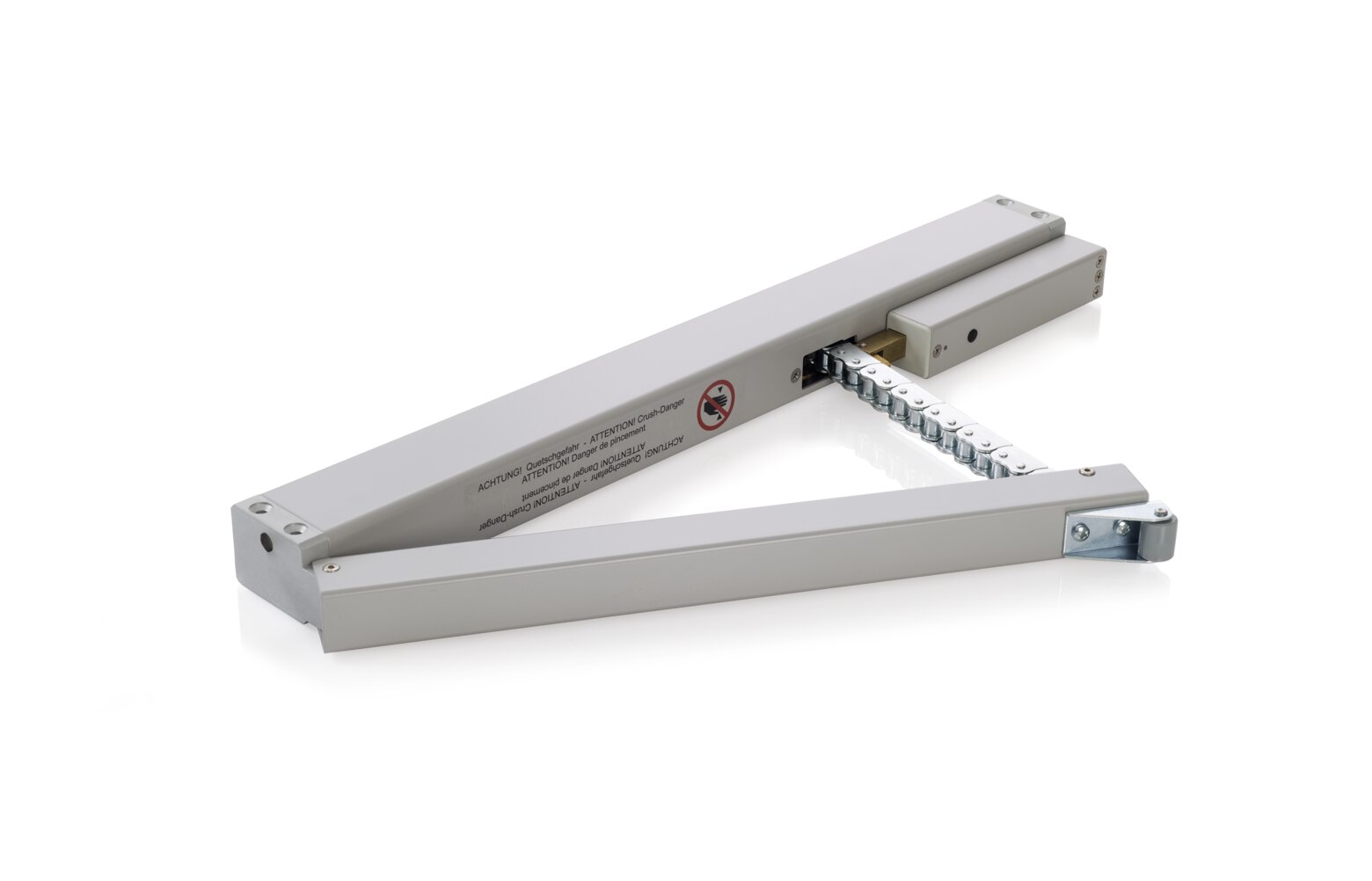
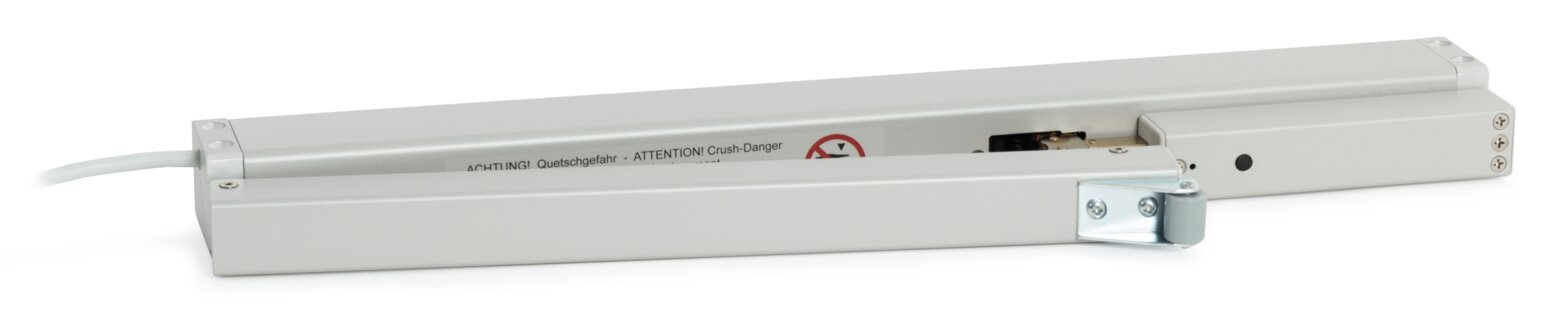
The D+H DDS 54/500 is a specialist door-opening drive for compatible single-leaf doors.
Unlike a conventional automatic door operator intended to open the door during everyday use, the DDS 54/500 can remain inactive while the door continues to be used manually. When a fire alarm, smoke control command or another configured signal is received, the drive releases the applicable door locking arrangement and opens the door automatically.
This operating principle makes the DDS 54/500 suitable for doors that must function normally as access-controlled or manually operated doors but also provide a defined opening function as part of a smoke control, smoke make-up air or emergency ventilation system.
The DDS drive is not rigidly connected to the door leaf during normal manual operation. The door can therefore continue to be opened and closed by hand, subject to the complete door, locking and access-control arrangement.
DDS 54/500 at a glance
| Product type | Specialist door-opening drive |
|---|---|
| Model | DDS 54/500 |
| Supply voltage | 24 V DC ±15% |
| Application | Compatible single-leaf doors opening up to approximately 90° |
| Primary function | Automatic door opening following a fire, smoke control or other configured signal |
| Normal door use | Manual operation remains possible |
| Control integration | D+H smoke control or ventilation panel, fire alarm interface and compatible door-release arrangements |
| Programming | Programmable using D+H PLP1 or SCS tools |
| Installation position | Internal installation above the door frame |
Normal manual use with automatic emergency opening
A key feature of the DDS 54/500 is that the door remains available for normal manual use while the drive is inactive.
In a typical installation:
- The door operates normally for everyday access.
- Access may be controlled by swipe card, keypad, building access system or another approved device.
- An electromagnetic lock, electric strike or other compatible locking device secures the door where required.
- The DDS drive remains in its normal parked position and is not directly engaged with the door leaf.
- A fire alarm or other configured control signal initiates the emergency opening sequence.
- The door-release device is energised or released as required.
- The DDS drive then opens the door to its configured position.
The final system arrangement depends on the door hardware, lock type, access-control requirements, fire alarm interface and smoke control design.
Typical fire and smoke control operation
The DDS 54/500 is commonly used where a normally closed door must open automatically to provide smoke make-up air, smoke relief air or an open route required by the building’s smoke control strategy.
A typical sequence may include:
- The fire alarm or smoke control system issues an open command.
- The DDS control output releases the compatible electronic door lock.
- A programmed opening delay allows the lock to disengage.
- The DDS drive opens the door.
- The door remains in the required open position while the smoke control command remains active.
- Following system reset, the door may close through the coordinated door-closing arrangement.
The exact sequence must be coordinated with the fire engineer, door hardware supplier, access-control contractor, electrical contractor and smoke control system designer.
Access control, magnets and swipe-card systems
DDS installations are often associated with access-controlled doors using swipe cards, electric locks, magnetic locks or building security interfaces.
The everyday access-control system and the emergency opening system must be coordinated so that:
- The door can be used normally during everyday operation.
- The DDS drive does not interfere with normal manual opening.
- The locking device releases before the DDS begins opening the door.
- Fire and smoke control commands override normal access-control restrictions where required.
- The applicable emergency egress requirements remain available.
- Reset and relocking occur in the correct sequence.
The DDS 54/500 includes a control output for a compatible on-site electronic door-release device. The instructions identify a 24 V DC door-release connection rated up to 1 A continuous duty. :contentReference[oaicite:0]{index=0}
Manual door operation
The DDS drive is not directly connected to the door leaf during normal use. This allows the door to remain manually operable rather than functioning as a conventional powered automatic door throughout the day.
Manual operation remains subject to:
- The door closer and hinge arrangement.
- The selected electric lock or magnetic lock.
- The access-control system.
- The door hardware and latch configuration.
- The applicable emergency egress requirements.
For entrance or escape doors, the complete system must preserve the required manual opening function, including where electrically operated locking is installed. :contentReference[oaicite:1]{index=1}
Technical data
| Model | DDS 54/500 |
|---|---|
| Supply | 24 V DC ±15% |
| Nominal current | 1 A |
| Stroke | 500 mm |
| Opening angle | Approximately 90° on a compatible single-leaf door |
| Pressure force | 500 N |
| Tensile force | 150 N according to the installation instructions |
| Opening time | Approximately 43 seconds, programmable |
| Opening delay | Approximately 3 seconds for door release |
| Closing time | Approximately 52 seconds |
| Duty cycle | 30% with a 10-minute cycle time |
| Service life | More than 20,000 double strokes |
| Ingress protection | IP32 |
| Temperature range | -5°C to +75°C |
| Fire stability | B300 — 30 minutes at 300°C |
| Housing | Powder-coated aluminium |
| Standard colour | White aluminium, approximately RAL 9006 |
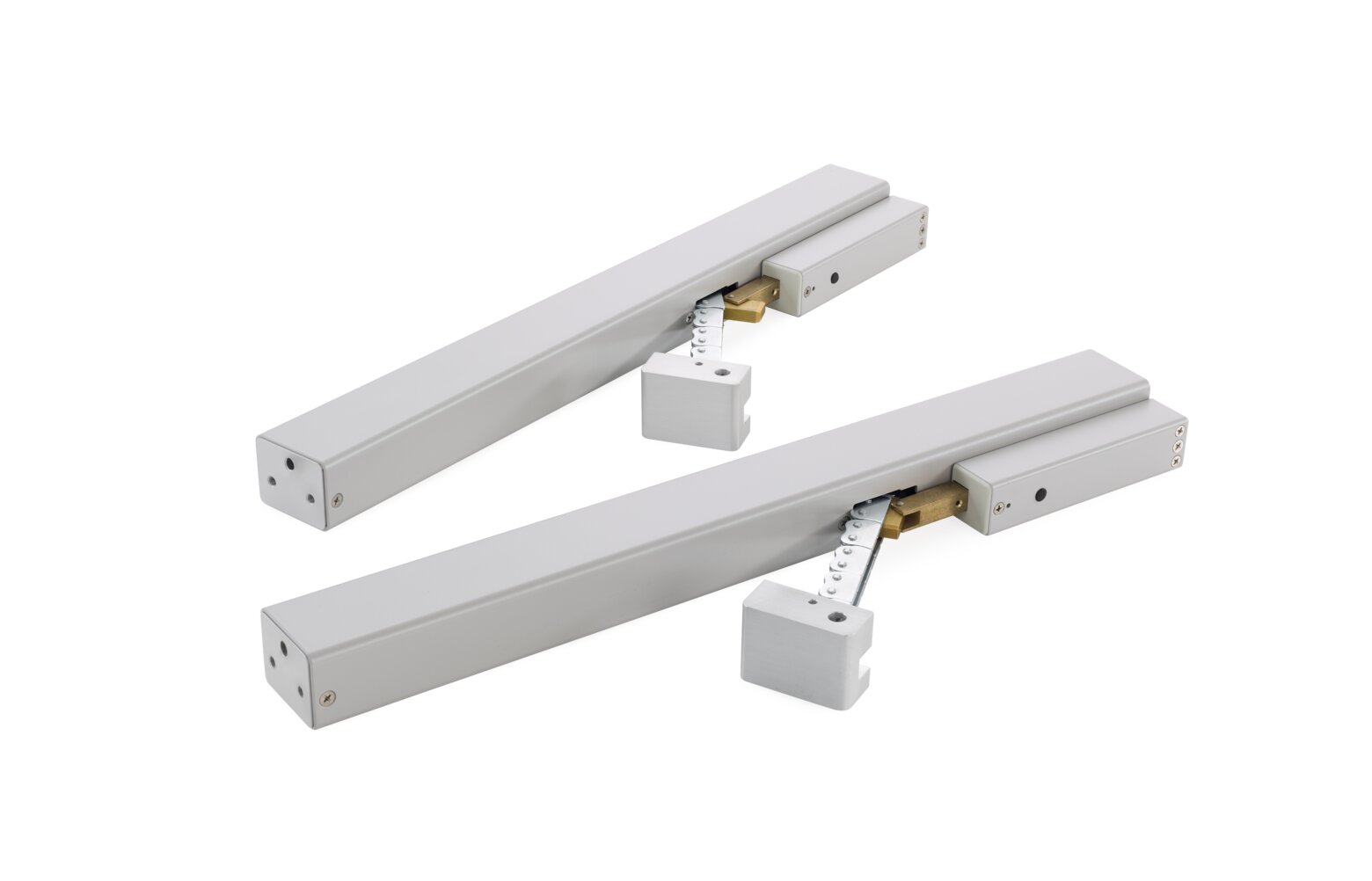
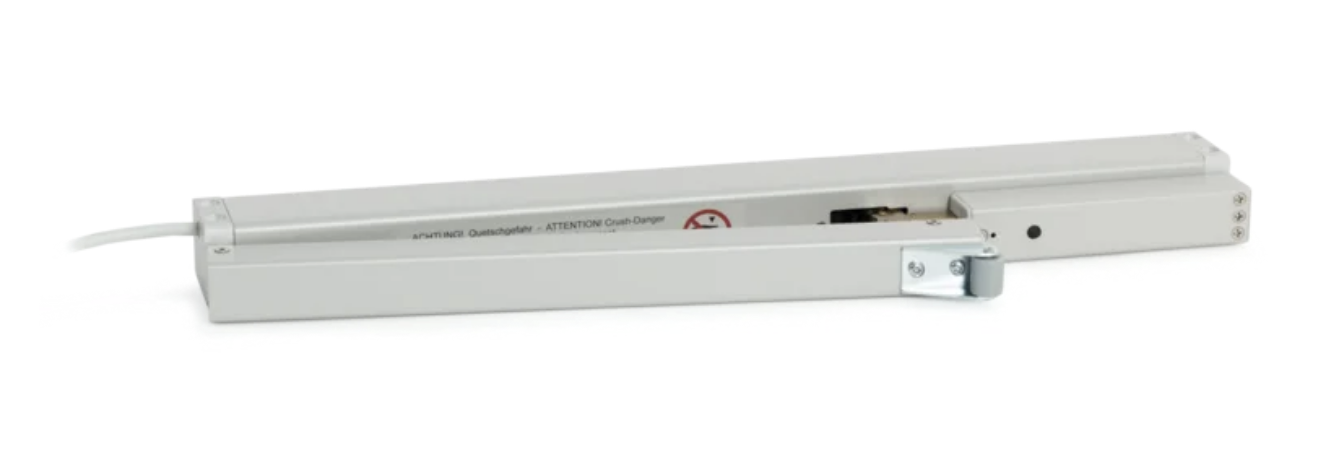
| Dimensions | 522 × 40 × 80 mm |
| Weight | Approximately 2 kg |
| Connection | 2.5 m silicone cable |
The current D+H data sheet lists 500 N pressure and tensile force, while the detailed installation instructions list 500 N nominal pressure force and 150 N nominal tensile force. EBSA should confirm the applicable current configuration when selecting the drive for a project. :contentReference[oaicite:2]{index=2} :contentReference[oaicite:3]{index=3}
Door-release sequencing
The DDS drive includes a dedicated output for coordinating a compatible electrical door-release device.
The standard sequence includes an opening delay so that the lock can release before the drive applies opening force to the door.
Correct coordination is particularly important where the door includes:
- Electromagnetic locks.
- Electric strikes.
- Motorised locking systems.
- Swipe-card access control.
- Security interlocks.
- Fire alarm override functions.
The lock, control panel and DDS drive must be tested together as one operating system.
Mounting arrangement
The DDS 54/500 is mounted internally above the door frame using the supplied mounting and door brackets.
The chain and operating arm engage with the door when the drive is activated. The geometry allows the door to remain manually usable when the DDS is not operating.
Before installation, EBSA reviews:
- Door width and opening direction.
- Single-leaf door configuration.
- Door-frame construction.
- Available headroom above the frame.
- Door closer location.
- Hinge position and opening geometry.
- Locking and access-control hardware.
- Required opening angle.
- Required smoke control opening position.
- Structural fixing provisions.
Opening and closing forces
The drive uses a stabilised chain arrangement to provide high opening force while maintaining the required operating geometry.
Force selection must account for:
- Door weight and width.
- Door closer resistance.
- Seal resistance.
- Latch and locking forces.
- Pressure differentials across the door.
- Wind exposure where applicable.
- Changing leverage through the opening cycle.
A free-moving door is essential. The drive should not be used to overcome defective hinges, excessive closer force, misalignment or binding hardware.
Pinch protection and closing speed
The DDS 54/500 includes programmable active pinch-protection functions.
For safety reasons, the drive reduces speed over the final approximately 100 mm of closing travel. A change in operating sound during this reduced-speed section is normal.
The complete installation must still assess accessible closing edges, finger-trap locations and other potential crushing or shearing hazards. The actuator’s internal functions do not remove the need for a complete door-safety review.
Control system integration
The DDS 54/500 can be integrated with compatible D+H smoke control and ventilation panels.
System interfaces may include:
- Fire alarm input.
- Smoke control command.
- Building management system signal.
- Access-control override.
- Electrical door-release output.
- Open and closed position monitoring.
- Fault monitoring.
- Manual reset.
- Emergency opening control.
EBSA can design and coordinate the drive, control panel, interfaces, field wiring, programming and commissioning requirements.
Applications
The DDS 54/500 may be used for compatible:
- Smoke make-up air doors.
- Smoke relief doors.
- Smoke ventilation doors.
- Access-controlled doors requiring emergency automatic opening.
- Doors used normally by swipe-card access.
- Doors secured by compatible electromagnetic or electronic locks.
- Single-leaf doors forming part of a smoke control strategy.
- Doors that must remain manually operable during everyday use.
Not a conventional automatic door operator
The DDS 54/500 should not be confused with a conventional automatic door operator used to open a door every time a person approaches or presents an access card.
Its typical role is to remain inactive during normal use and automatically open the door only when a fire, smoke control or other configured building-system signal requires it.
The everyday door operation may continue to rely on manual opening, swipe-card access, an electric lock, door closer and standard door hardware.
Natural ventilation and smoke control
Where the DDS forms part of a smoke control system, the complete arrangement should be reviewed against the project fire engineering requirements.
This includes:
- The required door opening area.
- The required opening angle.
- The smoke control cause-and-effect sequence.
- The fire alarm interface.
- The door-release arrangement.
- The access-control override.
- The D+H control panel.
- The field wiring and power supply.
- The door closer and return sequence.
- The required commissioning tests.
The DDS drive is one component of the complete door and smoke control system.
Information required for product selection
Provide the following information when requesting DDS 54/500 support:
- Door drawings and elevations.
- Clear opening dimensions.
- Door leaf width and approximate weight.
- Opening direction and hinge location.
- Door-frame construction.
- Door closer make and model.
- Locking hardware details.
- Swipe-card or access-control arrangement.
- Fire alarm and smoke control requirements.
- Required opening angle.
- Required open and reset sequence.
- Available mounting space above the frame.
- Photographs of existing doors where applicable.
Installation and commissioning
DDS installation requires coordination between the door contractor, access-control contractor, electrical contractor, fire alarm contractor and smoke control specialist.
Commissioning should include:
- Verification of free manual door movement.
- Confirmation of door closer operation.
- Testing of the electronic lock or magnetic lock.
- Verification of the DDS door-release output.
- Confirmation of the programmed release delay.
- Testing of automatic opening from the fire or smoke control signal.
- Confirmation of the required opening angle.
- Testing of pinch-protection functions.
- Testing of reduced-speed closing.
- Verification of access-control override.
- Testing of reset and return-to-normal operation.
- Recording of final programming and interface settings.
Product downloads
| Model | Product data | Instructions |
|---|---|---|
| DDS 54/500 |
Download DDS 54/500 data sheet |
Download DDS 54/500 instructions |
Frequently asked questions
Does the DDS 54/500 operate the door during normal everyday use?
Not necessarily. In a typical smoke control application, the door continues to be opened manually during normal use and the DDS remains inactive.
The drive opens the door automatically only when a fire alarm, smoke control command or another configured signal requires it.
Can the door still be opened by hand?
Yes. The DDS is designed so the door can remain manually operable when the drive is not activated.
The complete locking and access-control arrangement must also permit the required manual operation.
Can the DDS work with swipe-card access?
Yes. It may be integrated with compatible swipe-card, access-control and electronic locking systems.
The fire or smoke control command must override the normal access-control condition where required and release the door before automatic opening begins.
Can the DDS work with an electromagnetic lock?
Yes, subject to system design. The DDS includes an output for coordinating a compatible electrical door-release device.
The magnetic lock, power supply, fire alarm release, access-control system and DDS opening sequence must be coordinated and tested together.
Is the DDS a standard automatic door operator?
No. It is primarily a specialist emergency or smoke control door-opening drive.
It is generally not intended to open the door for every normal pedestrian movement.
What signal can open the door?
The opening command may come from a fire alarm, smoke control panel, building management system or another configured control input.
The acceptable signal and sequence depend on the complete system design.
How far can the DDS open a door?
It is designed for compatible single-leaf doors opening to approximately 90°, subject to the door geometry and mounting arrangement.
Can EBSA provide the control system?
Yes. EBSA can provide the applicable D+H control panel, interfaces, programming, door-release coordination and commissioning support.
Can the DDS be used on an escape door?
Potentially, but the complete door and locking system must preserve all required manual egress and emergency opening functions.
The project fire engineer, door hardware specialist and relevant approval parties should confirm the final arrangement.
Can EBSA replace an existing DDS drive?
Yes. EBSA can inspect the installed drive, control panel, door hardware, electronic lock, wiring and programming before confirming the applicable replacement and recommissioning requirements.
Related drive pages
- Specialty Drives: locking, door, heavy-duty and skylight drives.
- FRA and VLD Locking Drives: powered multipoint window locking systems.
- Window Automation: complete D+H control and automation systems.
- Smoke Ventilation: coordinated smoke relief and make-up air systems.
Discuss a DDS door-opening application
Provide EBSA with the door drawings, closer and lock details, access-control arrangement, required fire or smoke control sequence and control-panel information. We can review the complete application and coordinate the DDS drive, door release, interfaces and commissioning requirements.