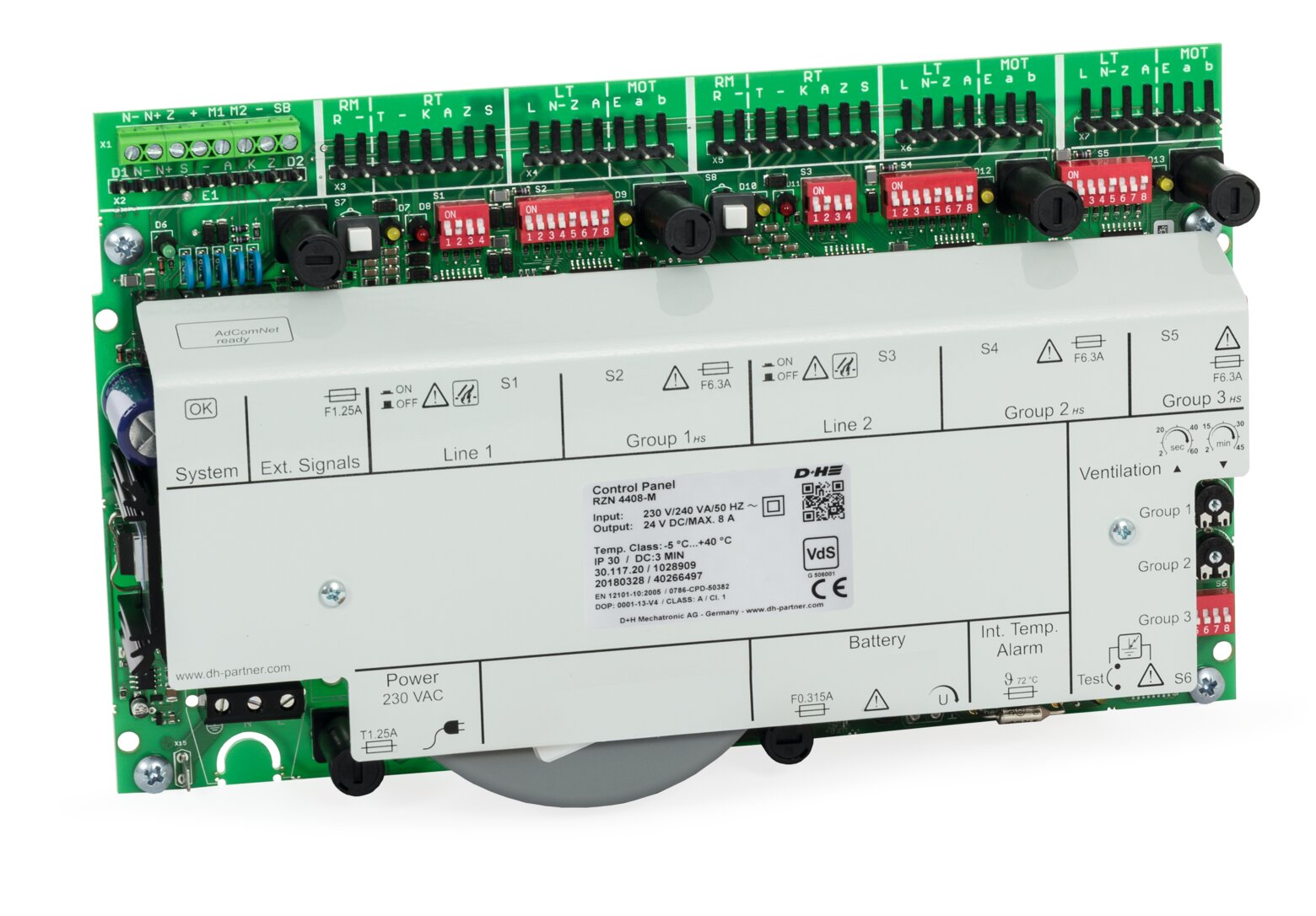

Flexible 8 A smoke and natural ventilation control panel
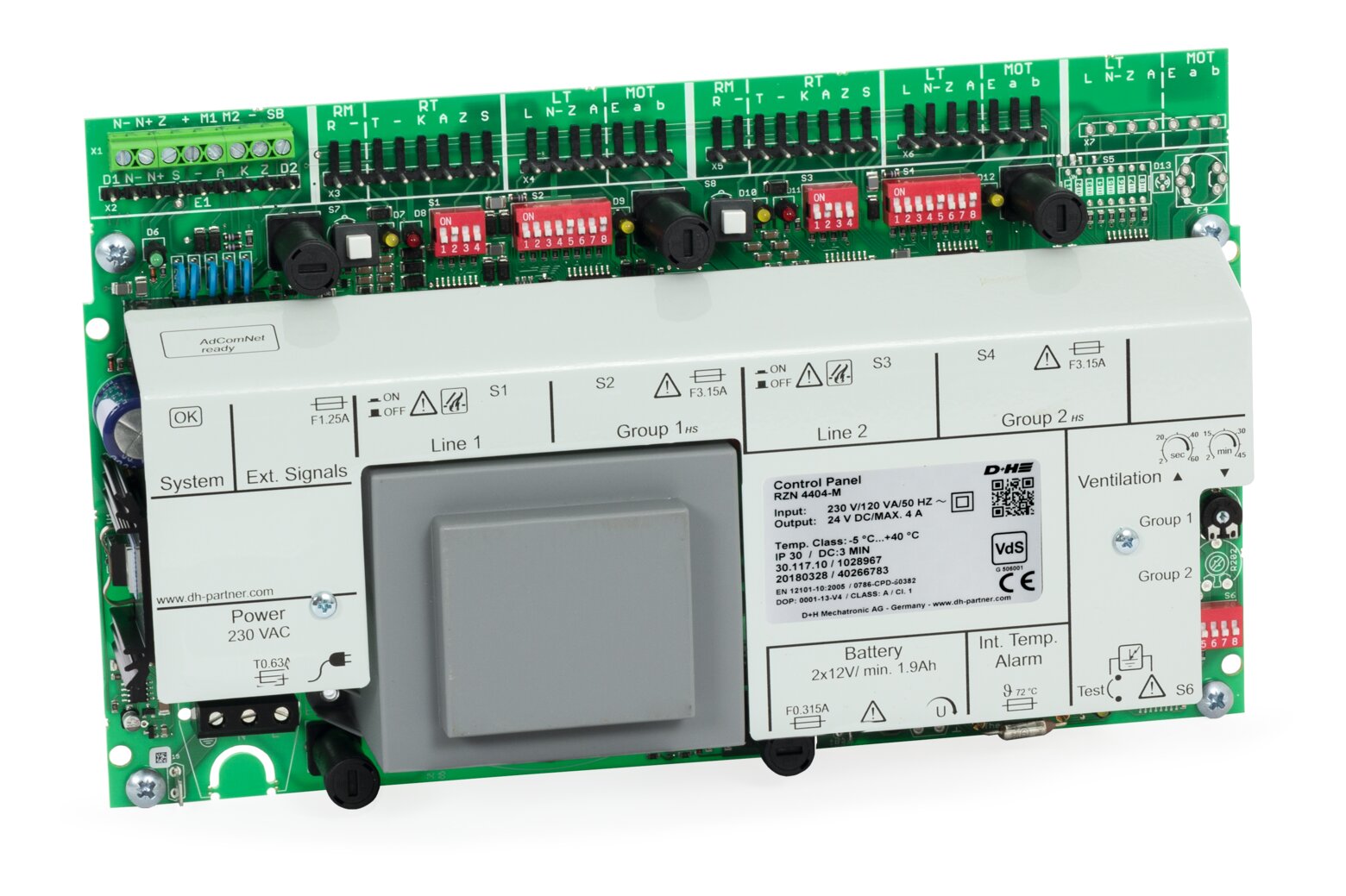
The D+H RZN 4408-M is a battery-backed 24 V DC smoke and natural ventilation control panel for medium automated window, louvre and roof-opening systems.
It provides 8 A total drive current, three ventilation groups and two monitored fire lines. This combination provides greater grouping and fire-input flexibility than the RZN 4408-K while retaining a compact standard panel platform.
During normal building operation, the panel can provide day-to-day natural ventilation using wall switches, weather sensors, temperature controls, low-level BMS interfaces or other compatible inputs. When a fire signal is received, fire-mode operation takes priority and the connected openings move according to the agreed cause-and-effect sequence.
Typical applications
- Medium smoke ventilation systems
- Automated windows, louvres and roof openings
- Systems requiring up to 8 A total drive current
- Systems requiring three ventilation groups
- Systems requiring two monitored fire lines
- Combined smoke control and day-to-day natural ventilation
- Natural ventilation systems requiring battery-backed close on loss of mains power
- Applications requiring several independently controlled window groups
- Local wall-switch operation with weather protection
- Fire-alarm and low-level BMS interfaces
Key features
- 24 V DC stabilised output
- 8 A total drive current
- Three ventilation groups
- Two monitored fire lines
- Monitored standby battery operation
- Minimum 72-hour battery backup
- Fire-alarm and manual smoke-control inputs
- Integrated natural ventilation functions
- Direct rain or wind/rain sensor connection
- Low-level BMS interface capability
- Automatic close on loss of mains power where configured
- AdComNet connectivity available using a compatible D+H interface module
Technical information
| Product type | Smoke and natural ventilation control panel |
|---|---|
| Application | Smoke control, smoke ventilation and natural ventilation |
| Mains supply | 230 V AC / 50 Hz / 240 VA |
| Standby consumption | 5 W |
| Panel output | 24 V DC / 8 A total drive current |
| Output ripple | Less than 2 Vss |
| Ventilation groups | 3 |
| Fire zones / lines | 2 monitored fire lines |
| Control inputs | Wall switches, weather sensors, fire-alarm signals, low-level BMS interfaces and compatible external controls |
| Network capability | AdComNet connectivity available using a compatible D+H interface module |
| Standby operation | Monitored battery-backed operation with a minimum 72-hour standby period |
| Operating duty | Continuous monitoring; alarm and ventilation drive operation at 30% short-time duty |
| Operating temperature | −5°C to +40°C |
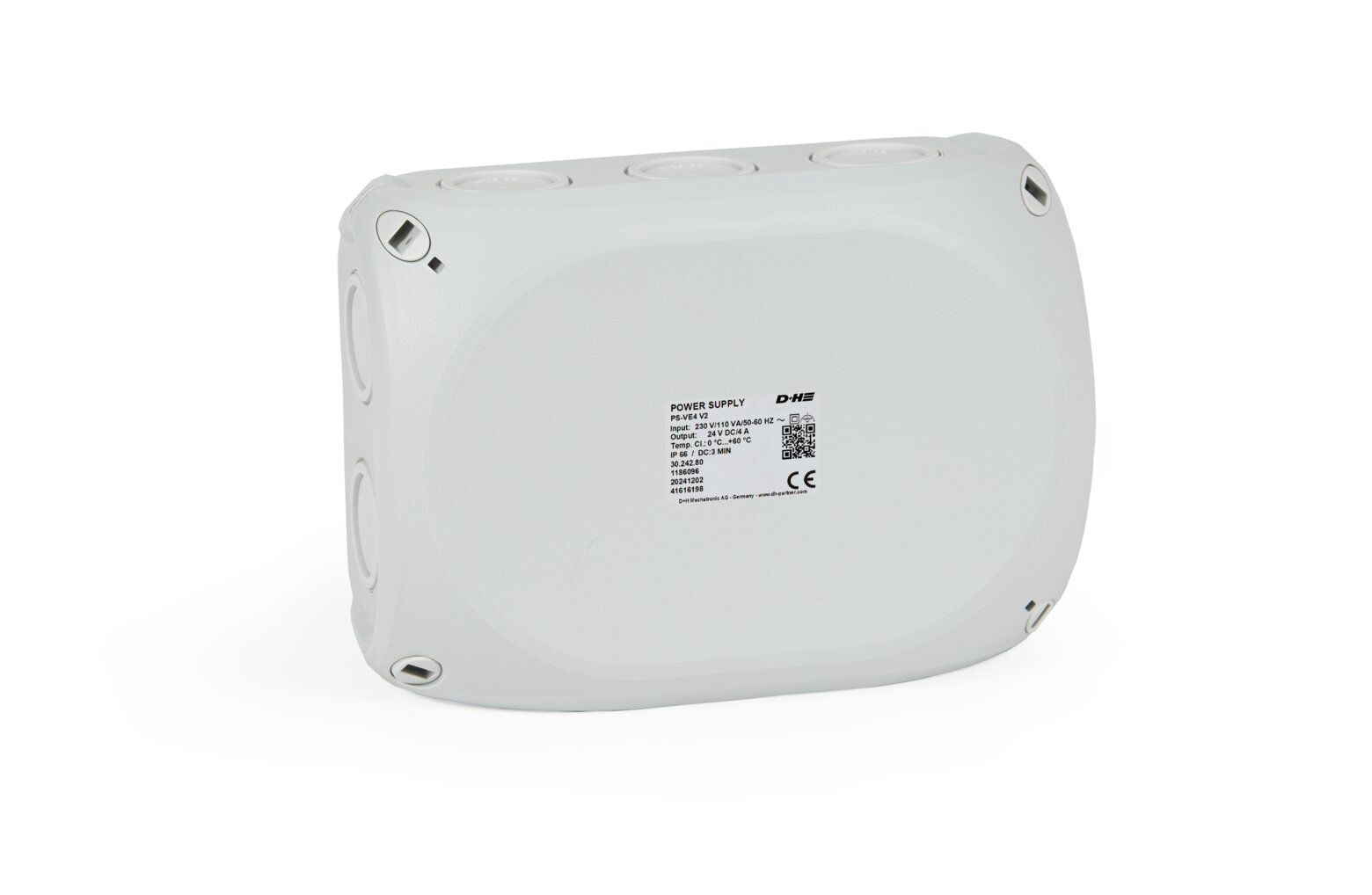
| Housing | Installed in a separately selected GEH-KST plastic enclosure or GEH-S-RWA metal enclosure |
| Panel weight | 2.9 kg, excluding the selected enclosure |
| Article number | 30.117.20 |
| Manufacturer | D+H Mechatronic |
Smoke-control certification and safety functions
The RZN 4408-M is tested and certified as smoke-control power-supply equipment to ISO 21927-9 and EN 12101-10.
The panel supports configurable smoke-control functions including monitored fire operation, fault handling, fire-mode retriggering and integration with compatible fire-alarm and building-management systems.
Fire-mode operation
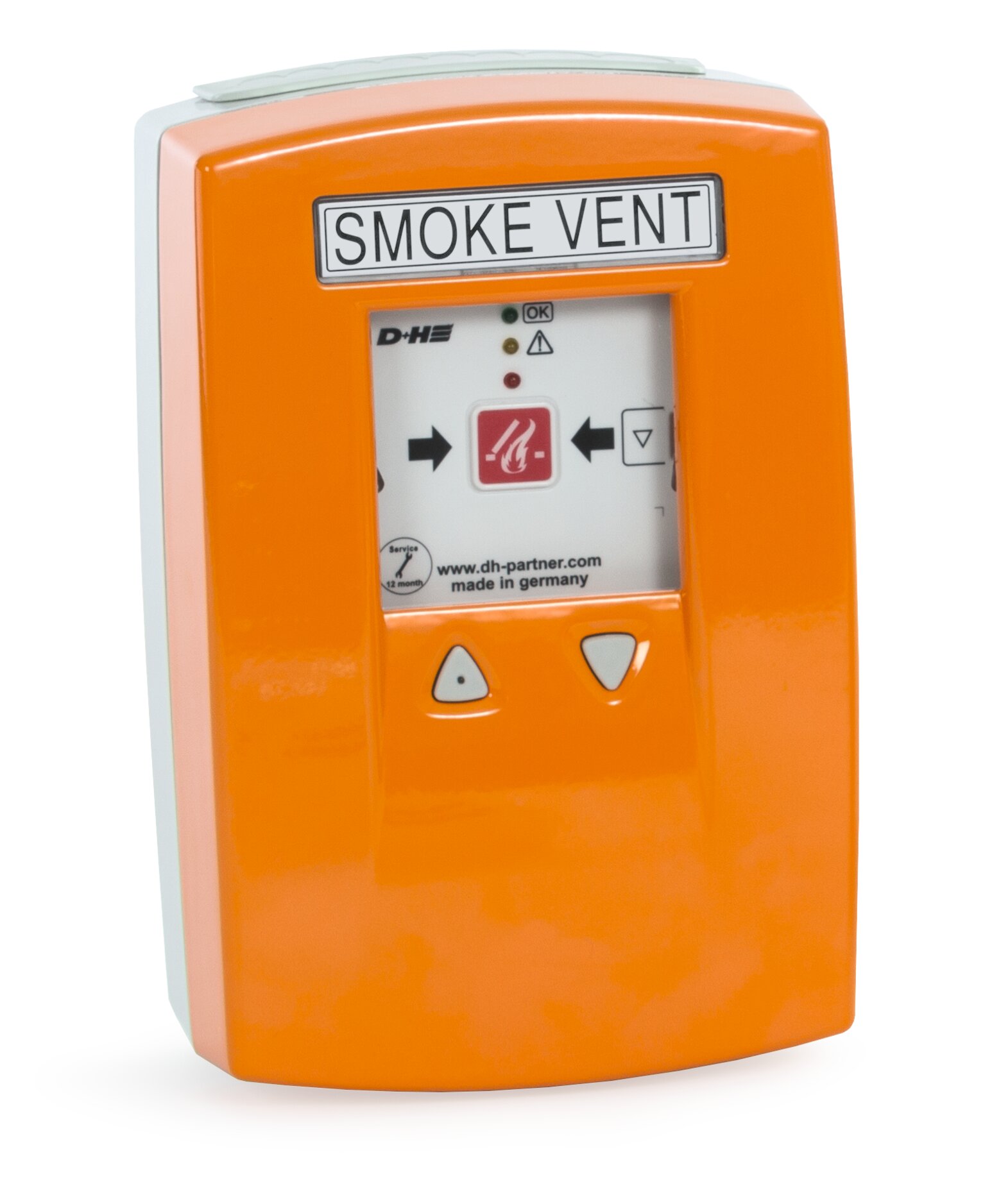
The RZN 4408-M can receive fire-alarm or compatible manual smoke-control inputs through its two monitored fire lines.
When a fire signal is received, the panel gives priority to the programmed fire-mode operation and commands the nominated windows, louvres or roof openings to move to their required smoke-control position.
The two fire lines allow separate fire inputs or fire zones to be coordinated with the three ventilation groups where this suits the project fire strategy and cause-and-effect sequence.
The final fire-mode operation is established through the project fire strategy and coordinated with the relevant fire, mechanical, electrical and façade requirements.
Natural ventilation operation
The panel can provide normal day-to-day ventilation through three independently controlled ventilation groups.
Compatible control inputs can include:
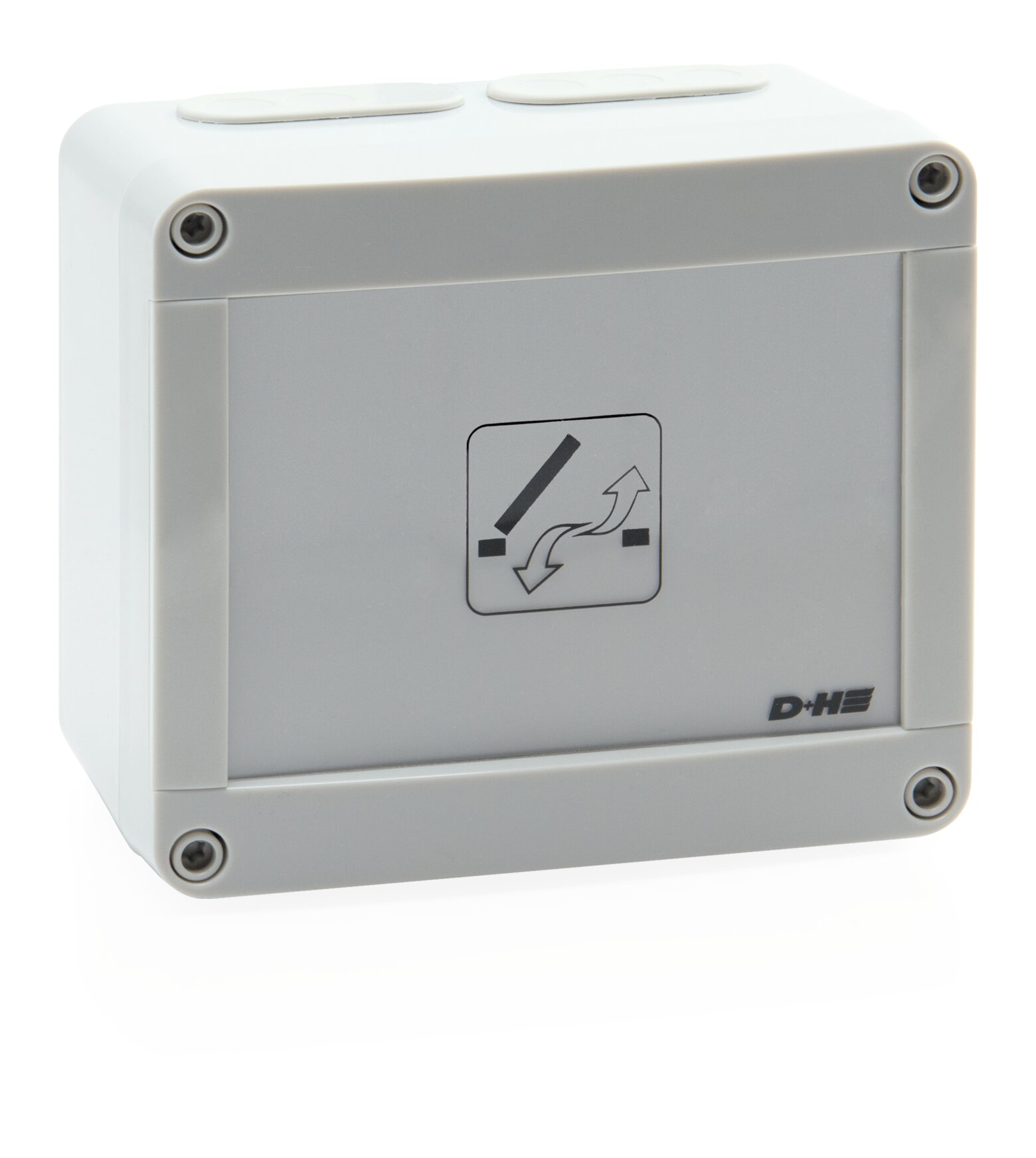
- open and close wall switches;
- rain sensors;
- wind/rain sensors;
- temperature controls;
- low-level BMS interfaces; and
- other approved external control signals.
The three-group arrangement allows different floors, rooms, façades or opening types to be operated independently while using one control panel.
Fire-mode commands retain priority over normal ventilation controls.
Standby batteries and mains power failure
The RZN 4408-M uses monitored standby batteries to maintain the control system when the normal 230 V AC mains supply fails.
Where automatic close on loss of mains power is required, the panel remains powered from its standby batteries and commands the connected openings to close.
The panel remains available during the standby period to respond to a subsequent fire signal and operate the nominated openings to their required smoke-control position.
The battery capacity is selected for the connected actuator load, required standby period, operating sequence and project requirements.
Typical system arrangement
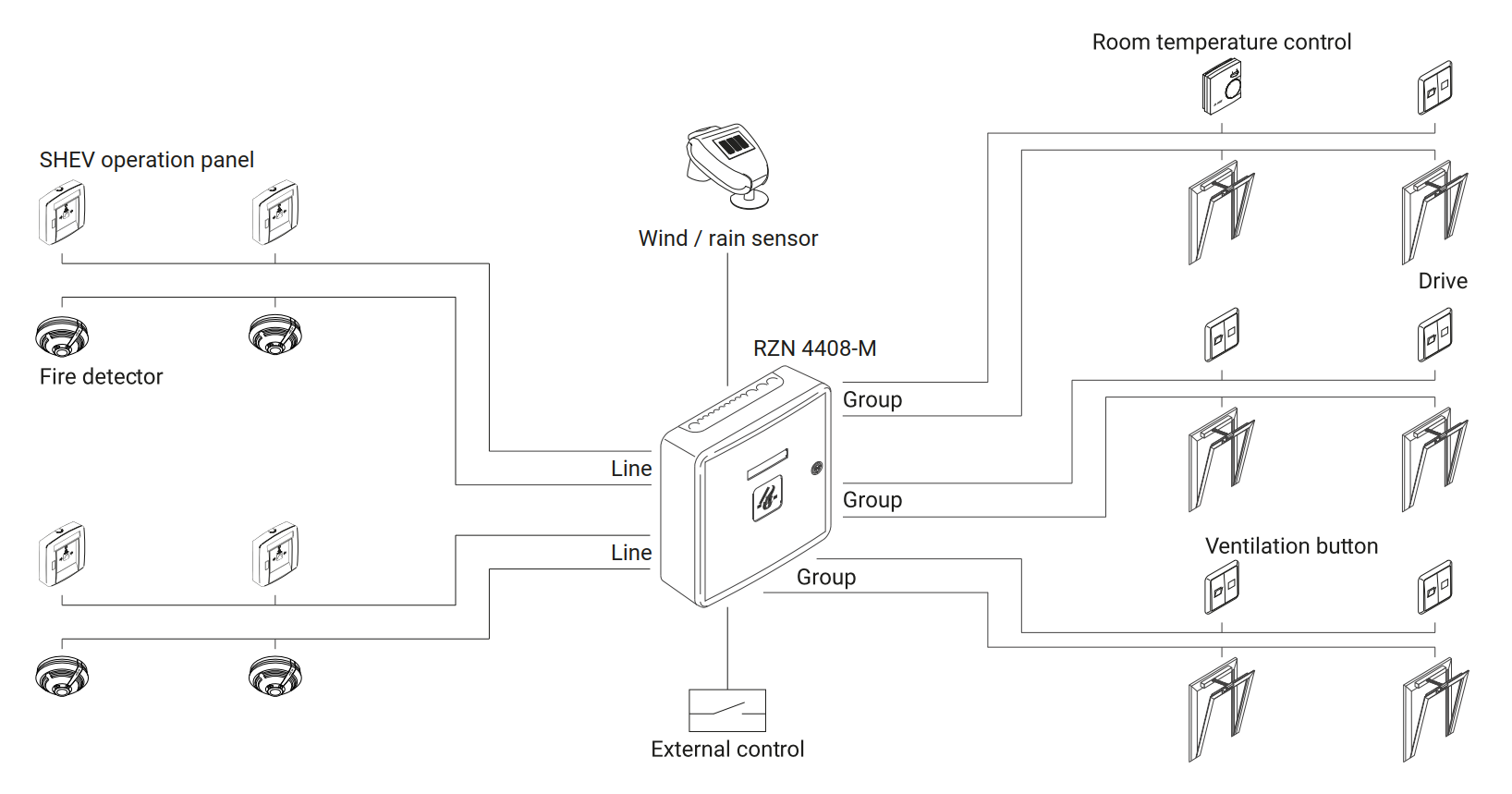
Normal ventilation:
Wall switch or approved external control → RZN 4408-M → selected ventilation group opens or closes
Weather protection:
Wind or rain sensor → RZN 4408-M → connected openings close during normal ventilation operation
Fire operation:
Fire-alarm input → RZN 4408-M → nominated openings move to the required smoke-control position
Loss of mains power:
Standby batteries maintain panel operation → connected openings follow the configured power-failure sequence
Drive capacity and system selection
The total connected actuator load must remain within the panel’s 8 A output capacity.
Panel selection should account for:
- the selected actuator models;
- the rated and starting current of each actuator;
- the number of actuators connected to each group;
- the total connected load;
- simultaneous operating requirements;
- cable length and voltage drop;
- the three ventilation-group arrangement;
- the two monitored fire-line arrangement;
- the relationship between fire lines and operating groups;
- the required standby period; and
- the approved cause-and-effect sequence.
Housing selection
The RZN 4408-M is installed in a separately selected GEH-KST plastic enclosure or GEH-S-RWA metal enclosure.
The appropriate housing is selected to suit:
- the panel configuration;
- standby battery size;
- internal component requirements;
- installation environment;
- cable-entry arrangement;
- mounting location; and
- access for testing and maintenance.
System coordination
The control panel forms part of a complete smoke-control and window automation system.
The project team should coordinate:
- the fire strategy and required smoke-control function;
- fire-alarm inputs and monitored fire lines;
- the allocation of openings to the three ventilation groups;
- the relationship between fire lines and ventilation groups;
- the required opening and closing sequence;
- window and actuator selection;
- weather-sensor operation;
- BMS and mechanical-services interfaces;
- standby battery calculations;
- field-cable type and routing;
- voltage drop;
- panel and enclosure location;
- termination responsibilities; and
- commissioning and maintenance requirements.
Information for builders and electrical contractors
- Allow for the required 230 V AC supply to the panel.
- Allow for the selected enclosure and mounting location.
- Allow cabling between the panel, actuators, switches, sensors and fire-alarm interfaces.
- Confirm any fire-rated cabling or protected cable-pathway requirements.
- Confirm fire-alarm interfaces and manual control locations before wiring.
- Confirm the required grouping and control arrangement before field cabling is completed.
- Provide suitable access for testing, commissioning and future maintenance.
- Confirm termination and commissioning responsibilities before installation.
Information for aluminium joiners
- Confirm actuator compatibility before window fabrication.
- Allow suitable fixing points for the selected actuators and brackets.
- Provide concealed cable pathways within the framing where practical.
- Confirm the required actuator colour and cable-tail length.
- Coordinate window hardware, opening geometry and actuator requirements with EBSA.
- Confirm how the openings will be divided between the three ventilation groups.
Compatible equipment
The RZN 4408-M can be used with suitable:
- D+H 24 V DC window drives;
- fire-alarm interface contacts;
- manual smoke-control switches;
- open and close ventilation switches;
- rain and wind/rain sensors;
- temperature controls;
- low-level BMS interfaces;
- AdComNet interface modules;
- GEH-KST plastic or GEH-S-RWA metal enclosures;
- mounting brackets;
- field cabling; and
- compatible smoke and natural ventilation accessories.
Compatibility is confirmed against the selected drives, connected load, group arrangement, fire inputs and required operating sequence.
When to consider another control panel
Another panel arrangement may provide a better fit where the project requires:
- more than 8 A total drive current;
- more than three ventilation groups;
- more than two monitored fire lines;
- high-capacity roof or industrial opening systems;
- multiple software-defined smoke-control zones;
- cascading operation between levels;
- smoke protection link logic;
- advanced BMS or mechanical-services integration;
- ACB drive networks and diagnostic feedback; or
- project-specific cause-and-effect logic.
The RZN 4408-K suits 8 A systems requiring two ventilation groups and one monitored fire line. The RZN 4416-M provides increased drive capacity within the standard RZN range. CPS-P provides higher-capacity packaged configurations, while CPS-M supports larger and more project-specific smoke-control systems.
Compare smoke control panels
The RZN 4408-M is one of several smoke and natural ventilation control-panel options available from EBSA.
Compare the RZN 4408-M with other RZN, CPS-B, CPS-P and CPS-M smoke control panels
Inspection, testing and maintenance
Smoke-control systems should be inspected, functionally tested and maintained in accordance with the manufacturer’s requirements, the project maintenance regime and the building’s life-safety system procedures.
EBSA provides inspection, testing, fault diagnosis, repairs and planned maintenance for new and existing D+H smoke and natural ventilation systems throughout New Zealand.
EBSA technical support
EBSA can assist with actuator selection, connected-load calculations, ventilation-group and fire-line planning, panel and enclosure selection, fire and ventilation interfaces, field-cabling coordination, cause-and-effect development, commissioning support and ongoing maintenance.