
Project-specific smoke control and façade automation
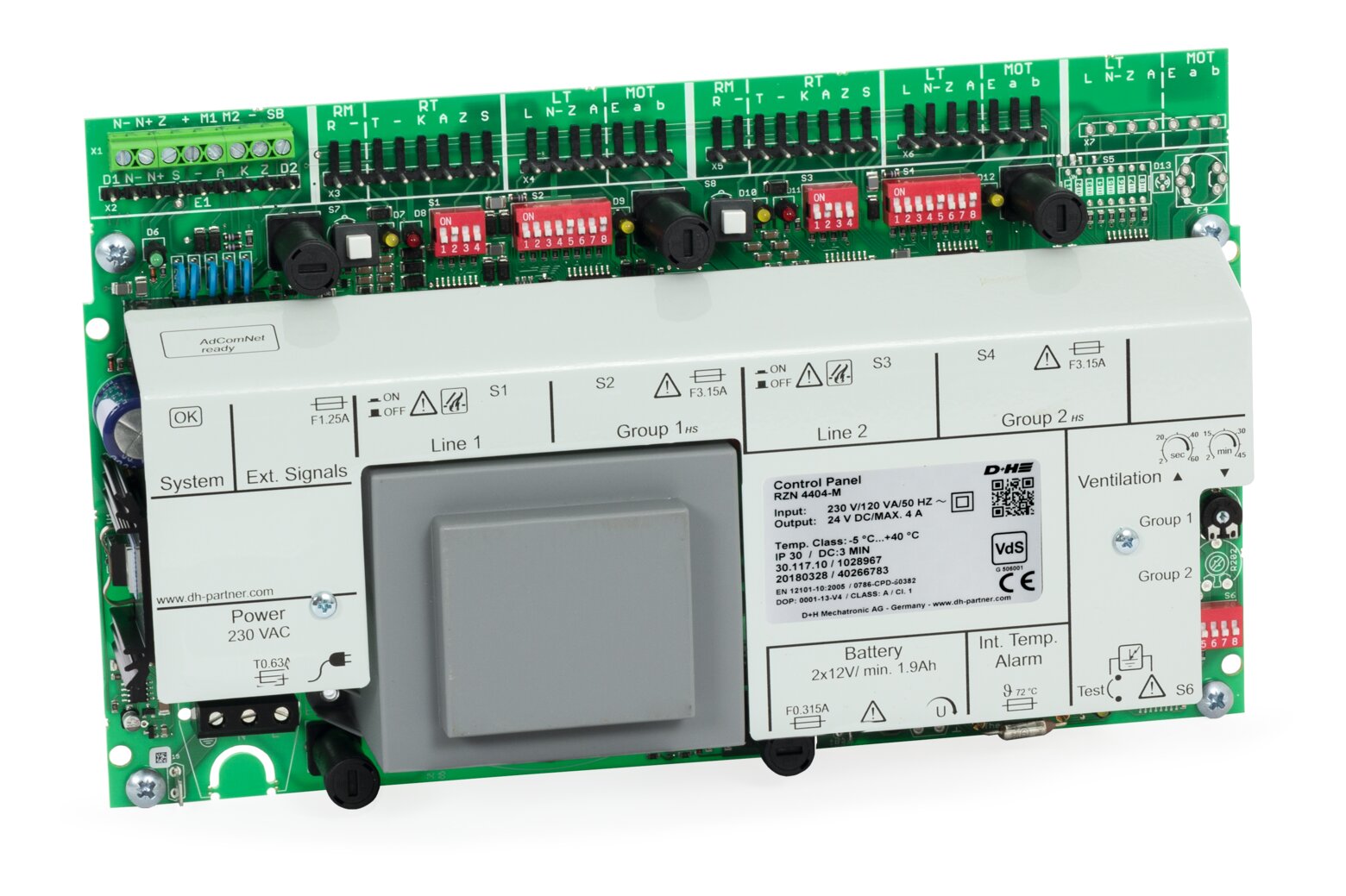
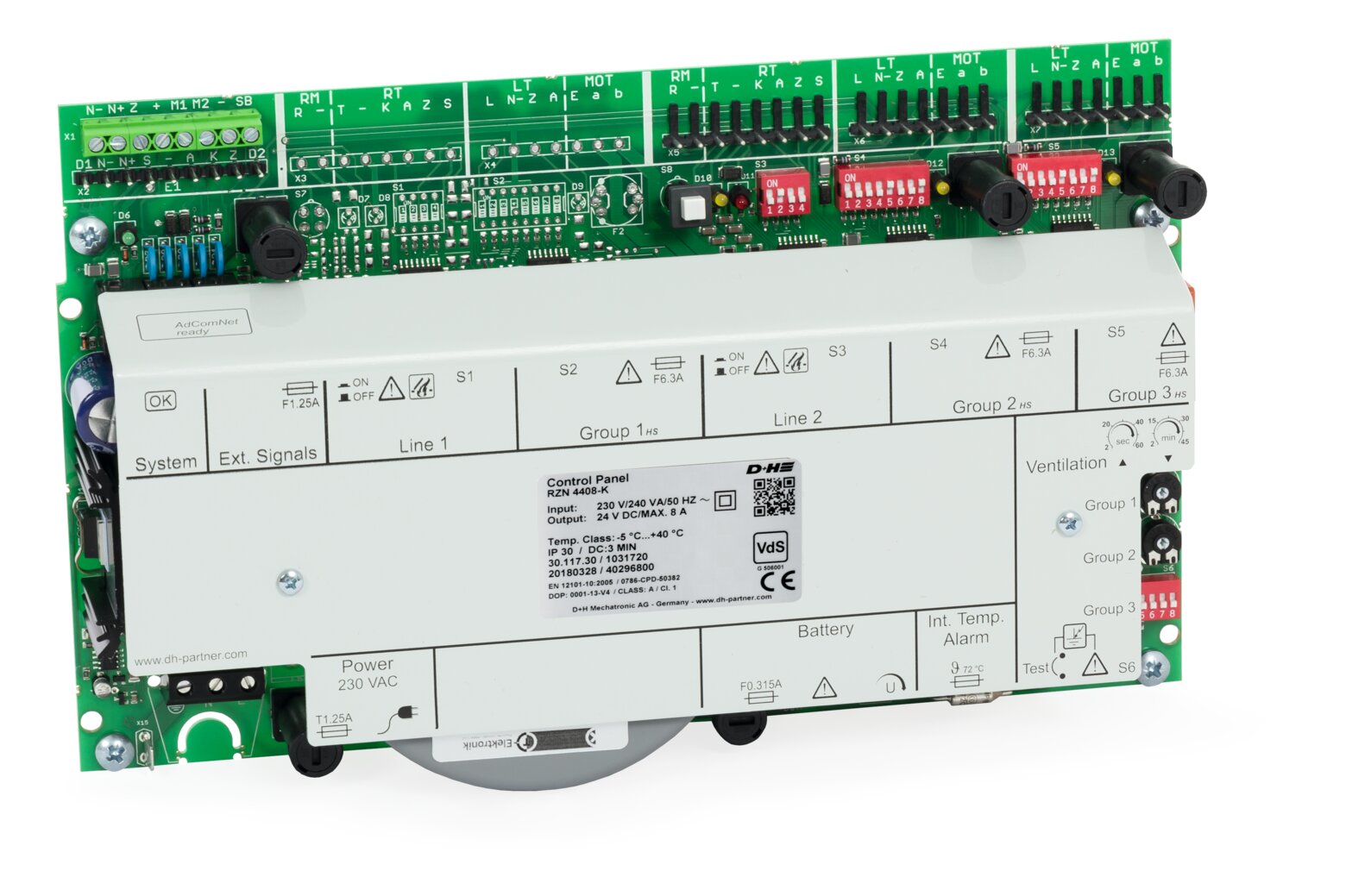
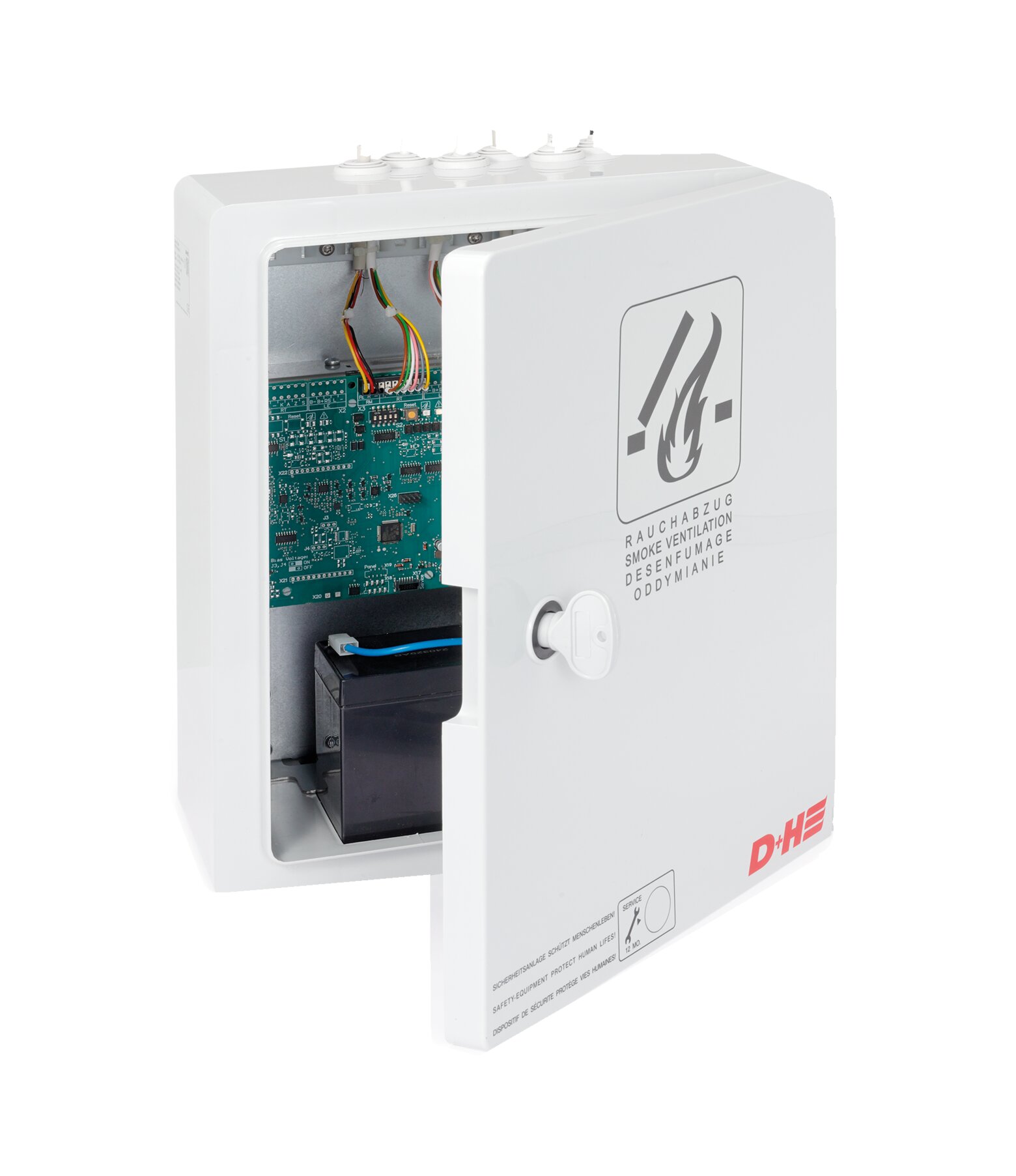
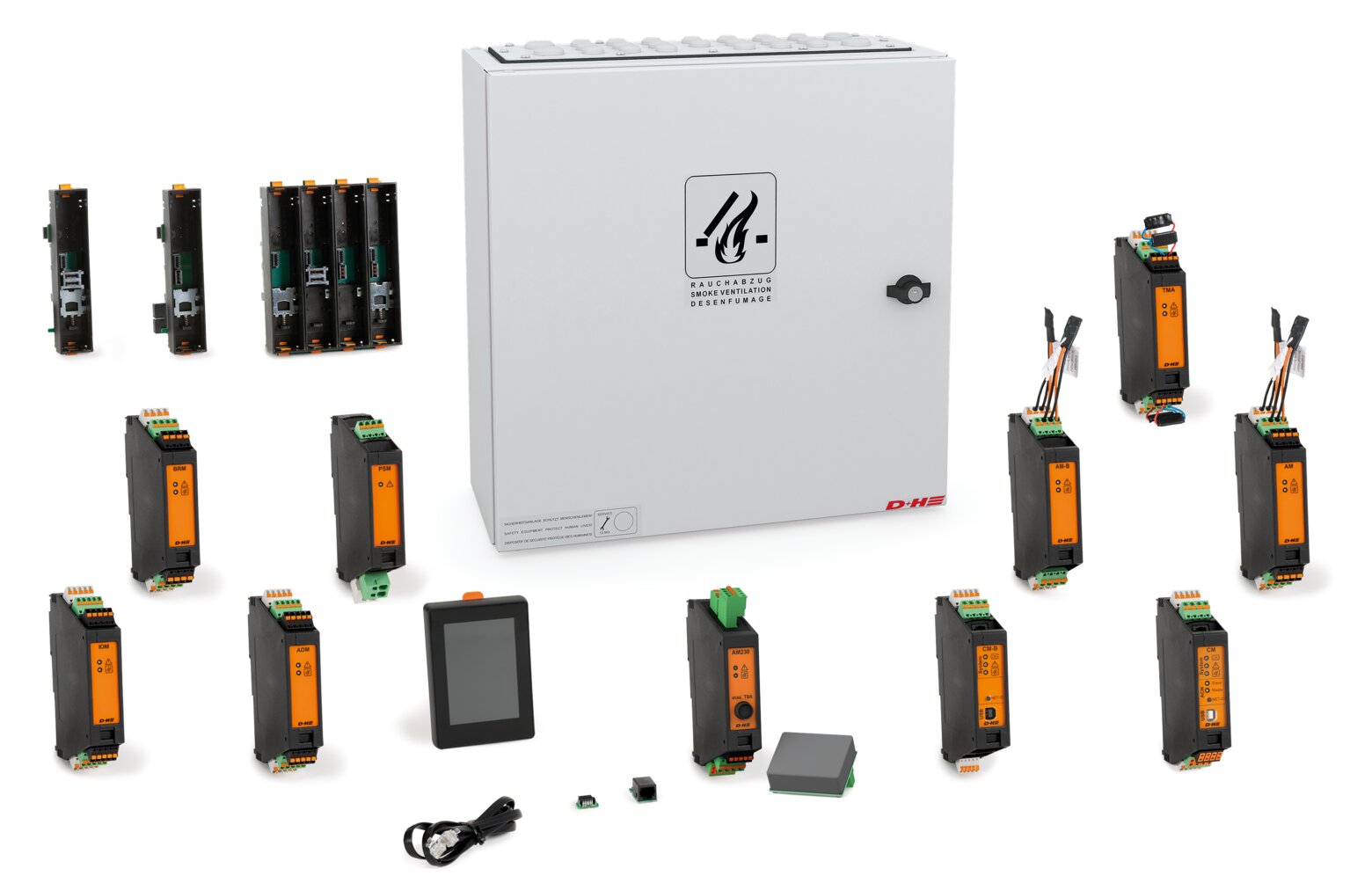
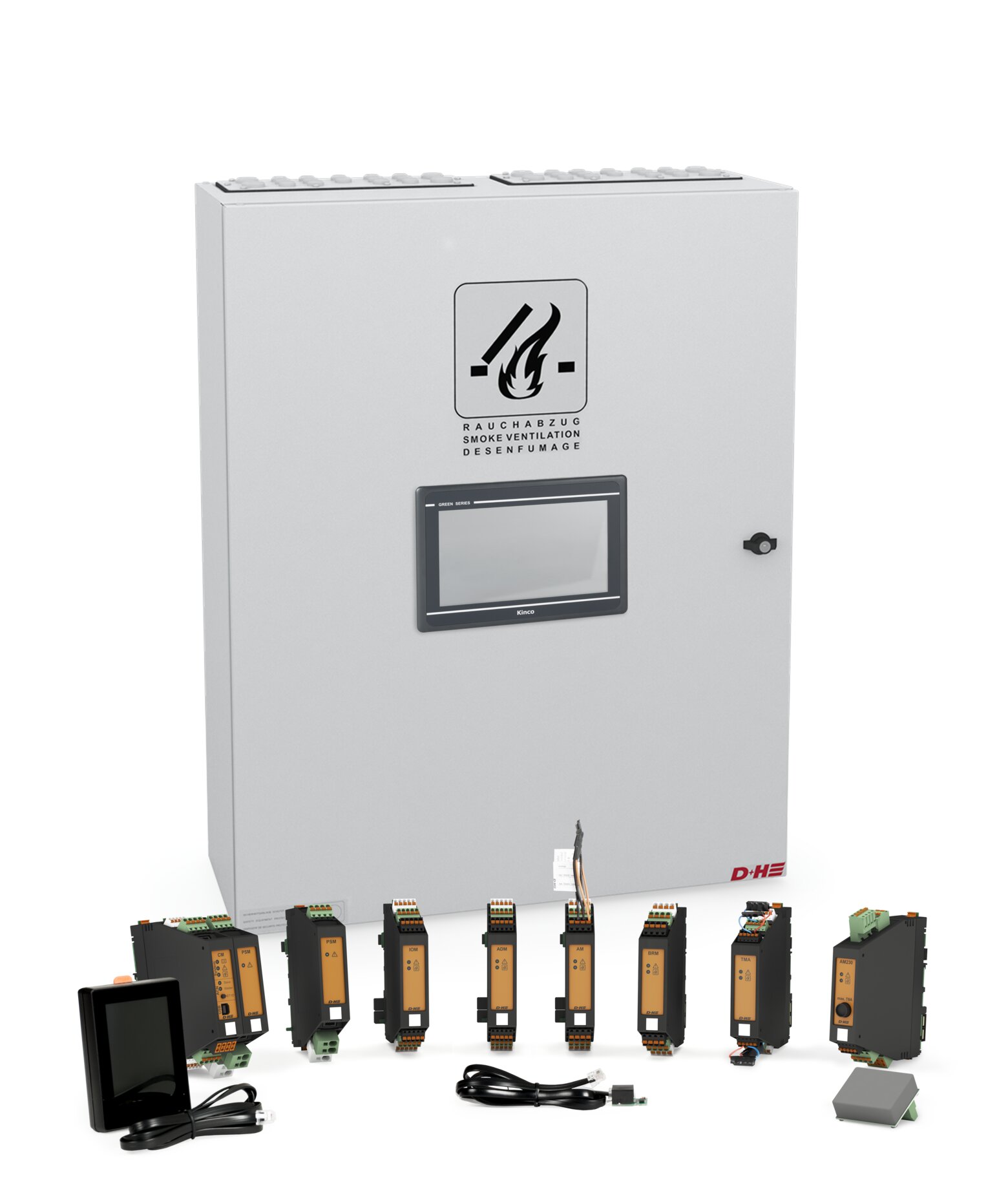
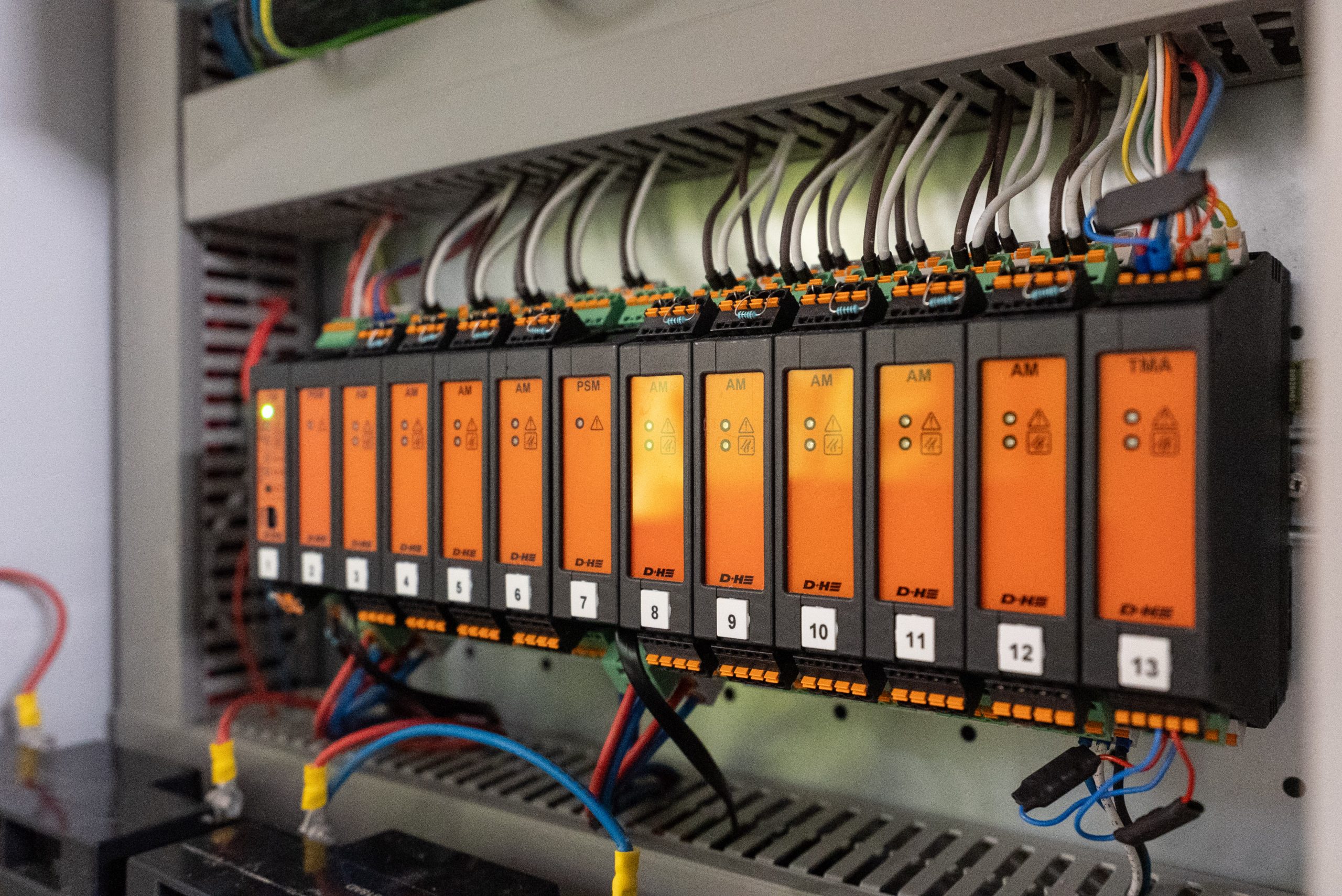
The D+H CPS-M is a modular control-panel platform for smoke control, natural ventilation and automated façade systems.
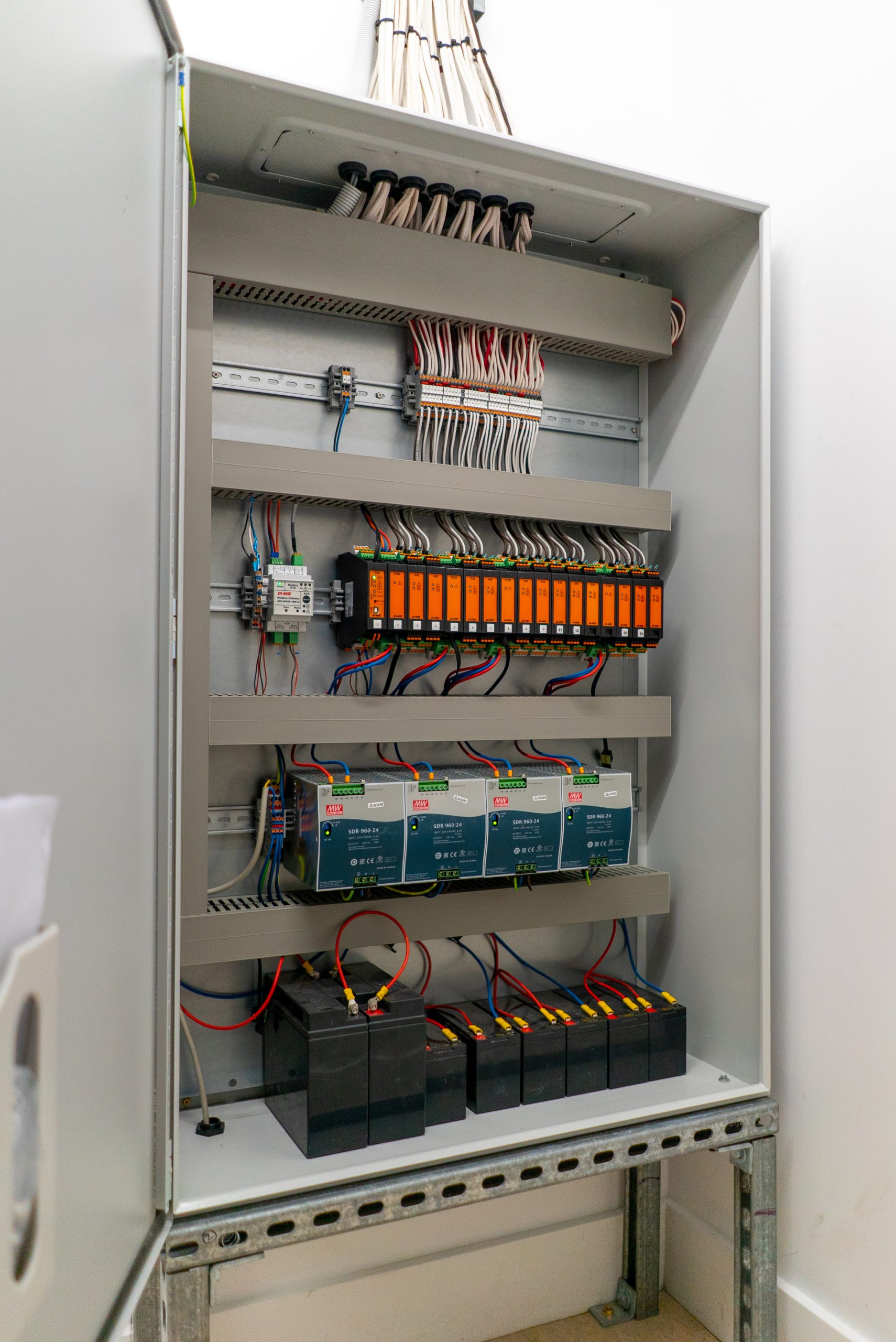
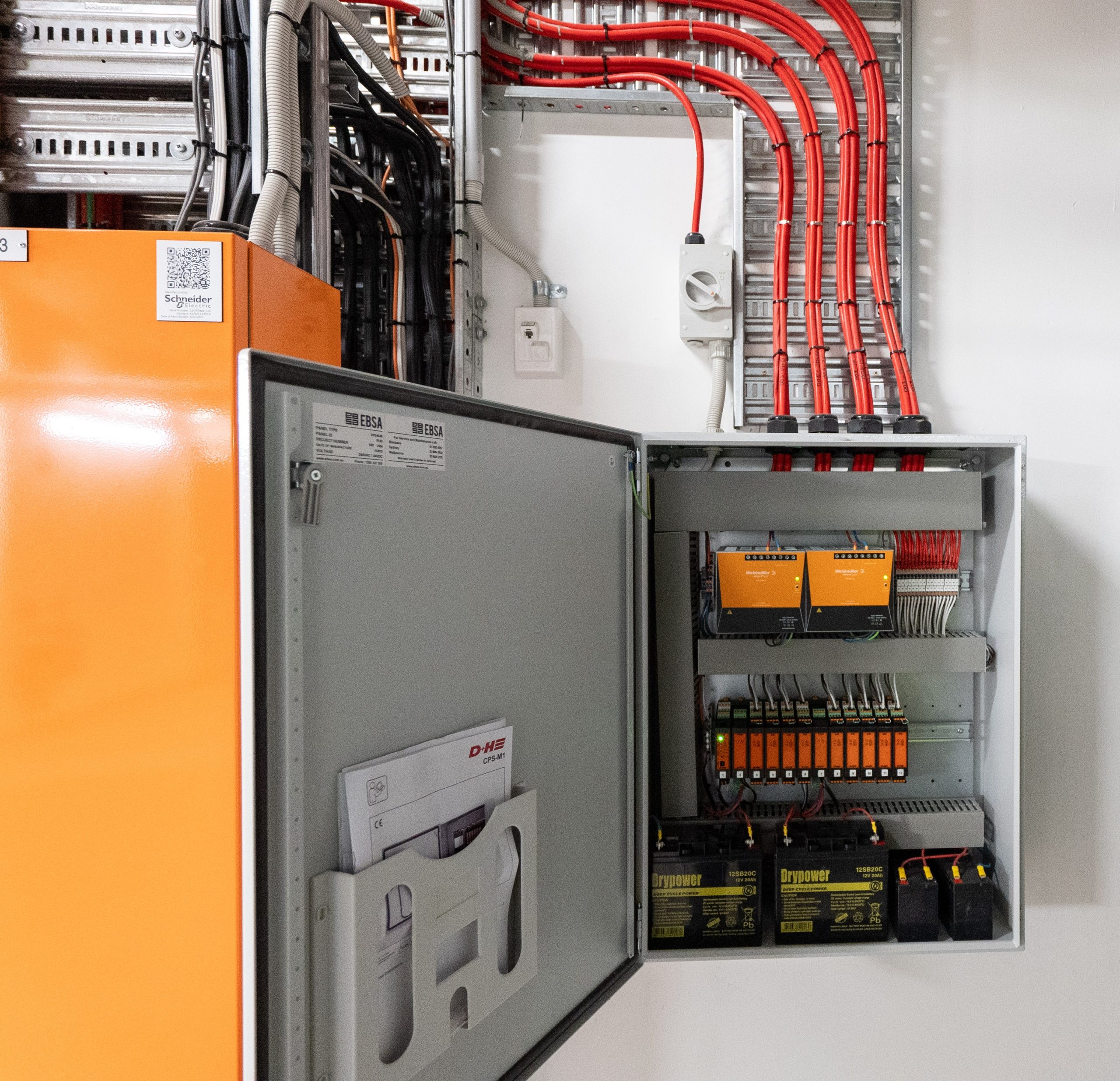
Each CPS-M panel is designed around the required building functions rather than supplied as a fixed catalogue configuration. EBSA develops the panel architecture, actuator capacity, ventilation groups, smoke-control zones, interfaces, programmed sequences and operator controls to suit the project.
CPS-M can be used for a compact standalone system controlling the windows in a classroom or façade zone, or for a large multi-panel network controlling smoke and natural ventilation across a multi-storey building.
EBSA configures, assembles and programs CPS-M panels locally in New Zealand using D+H modular control technology. Project documentation includes panel arrangements, wiring schematics and the agreed control logic.
Functions that can be created with CPS-M
The CPS-M platform allows EBSA to develop project-specific operating functions for the building, including:
- day-to-day natural ventilation;
- night purge and pre-occupancy purge ventilation;
- CO₂-responsive ventilation;
- room and zone temperature control;
- staged winter ventilation;
- rain and wind protection;
- security lockout outside nominated operating hours;
- teacher, occupant or facilities-manager overrides;
- automatic close on loss of mains power;
- smoke-control cause-and-effect sequences;
- multiple fire zones and fire-alarm inputs;
- cascading smoke-control operation between levels;
- smoke protection link operation;
- equipment interlocks and permissive signals;
- fault, position and operating-status reporting;
- local HMI touchscreen control; and
- remote system access and diagnostics where specified.
Typical applications
- Commercial natural ventilation systems
- Smoke ventilation and smoke-relief systems
- Automated windows, louvres and roof openings
- Schools, universities and learning environments
- Hospitals and healthcare buildings
- Commercial offices and mixed-use developments
- Airports, transport infrastructure and public buildings
- Multi-storey façade automation
- Industrial buildings and large roof-opening systems
- Projects requiring combined smoke control and natural ventilation
Key features
- Project-specific modular control-panel architecture
- 24 V DC actuator capacity from 10 A to 200 A per panel
- Project-specific ventilation groups and smoke-control zones
- Monitored standby battery operation
- Software-defined cause-and-effect logic
- Standalone control without dependence on a BMS
- Low-level and high-level building-system interfaces
- Distributed and networked panel arrangements
- Two-way communication with compatible D+H ACB drives
- Individual drive addressing, positioning and fault feedback
- Optional HMI touchscreen and status interfaces
- Remote access capability where included
- Locally configured, assembled and programmed by EBSA
Technical information
| Product type | Project-specific modular smoke, natural ventilation and façade automation control panel |
|---|---|
| Control platform | D+H CPS-M modular control system |
| Applications | Smoke control, natural ventilation and general façade automation |
| Panel output | Project-specific modular 24 V DC actuator output from 10 A to 200 A per panel |
| Actuator control | 24 V DC actuator control, with 230 V AC actuator control available where required by the project |
| Ventilation groups | Software-configured to suit the natural ventilation strategy, façade zones and user controls |
| Fire zones / lines | Project-specific fire inputs and software-defined smoke-control zones configured to suit the fire strategy |
| Control logic | Project-specific sequences, cause-and-effect operation, lockouts, interlocks, overrides and status reporting |
| Control inputs | Fire alarm, wall switches, rain, wind, temperature, CO₂, security, time schedule, BMS and other project inputs |
| Control outputs | Actuator commands, system status, faults, position feedback, relay outputs and building-system signals |
| BMS integration | Low-level digital and analogue inputs and outputs, or high-level Modbus, BACnet and KNX interfaces where specified |
| ACB drive communication | Two-way communication with compatible D+H ACB drives for individual control, position feedback, fault reporting and configuration |
| Networked panels | Multiple CPS-M panels can be connected as a distributed control system |
| Operator interface | Optional HMI touchscreen, local status panel or building-management interface |
| Remote access | Remote system access and diagnostics available where included in the project design |
| Panel enclosure | Project-specific enclosure sized and arranged for the approved CPS-M configuration |
| Configuration software | D+H Service and Configuration Suite |
| Local delivery | Configured, assembled and programmed by EBSA using D+H CPS-M technology |
Natural ventilation control
CPS-M can operate as the primary natural ventilation controller for the building without relying on the BMS to make each day-to-day operating decision.
Environmental sensors, schedules and local controls can be combined with programmed logic to automatically manage window and louvre operation.
Typical natural ventilation sequences include:
- opening windows in response to room temperature;
- increasing ventilation when CO₂ levels rise;
- pre-purging rooms before normal occupancy;
- night purge using cooler external air;
- staged opening to limit heat loss during winter;
- closing exposed openings during rain or high wind;
- locking out selected windows during security periods;
- limiting opening positions according to weather or occupancy;
- local occupant override within programmed limits; and
- coordinated operation across rooms, floors or façade zones.
Night purge and pre-purge ventilation
CPS-M can automatically open nominated windows or louvres during approved periods to purge heat and stale air from the building.
A night-purge sequence can respond to time schedules, internal temperature, external temperature, rain, wind and security conditions. The system can then close the openings before occupancy or when any programmed weather or security limit is reached.
Pre-purge operation can ventilate classrooms, offices and shared spaces before occupants arrive, helping to improve indoor air quality at the start of the day.
CO₂ and temperature-responsive ventilation
CO₂ and temperature sensors can be assigned to individual rooms, groups or wider building zones.
The programmed sequence can progressively increase the opening position as CO₂ or temperature rises, then reduce or close the openings as conditions return to the selected range.
Different operating limits can be used for winter, summer, occupied, unoccupied or night-purge modes.
Weather protection and security lockout
Rain and wind sensors can apply project-wide or zone-specific weather protection.
Openings can be closed automatically when rain is detected or when wind speed exceeds the programmed limit. Different façades can be given different wind thresholds or operating permissions to reflect their orientation and exposure.
Security lockout can prevent nominated openings from operating outside approved times, while retaining authorised facilities-management and fire-mode control.
Smoke-control operation
CPS-M can manage multiple fire-alarm inputs, fire zones, smoke-control groups and project-specific cause-and-effect sequences.
When a fire signal is received, fire-mode operation takes priority over natural ventilation, weather, security and normal BMS commands. The nominated openings then move to their programmed smoke-control position.
Fire inputs and smoke-control zones can be configured independently, allowing the panel network to coordinate the required response across windows, louvres, roof openings and associated building systems.
Cascading fire-zone operation
CPS-M can be programmed so that a fire signal on one level also operates selected openings on another level.
For example, a Level 2 fire signal can operate the Level 2 smoke-control openings and simultaneously command selected Level 3 openings to move to their required position. Level 3 is operated as part of the programmed response to the originating Level 2 fire signal.
The cascading sequence can be configured around the approved fire strategy and cause-and-effect requirements for the building.
Smoke protection link
A smoke protection link can automatically close windows that are open for natural ventilation when a fire signal occurs.
When a floor enters fire mode, the system can close nominated windows across the other non-fire levels while allowing the active fire level to follow its required smoke-control sequence.
A dedicated fire input can also be configured to trigger a project-wide close command. Individual floor fire inputs can then operate the smoke-control openings required for the affected level.
Automatic close on loss of mains power
CPS-M panels use monitored standby batteries to maintain the control system when the normal mains supply fails.
Where automatic close on loss of mains power is included in the operating strategy, the panel commands the connected openings to close and remains ready to respond to a subsequent fire signal during the standby period.
The battery arrangement is designed around the panel capacity, connected actuator load, required operating sequence and project standby requirements.
Standalone control and BMS integration
CPS-M can operate as a standalone building-control solution for smoke control and natural ventilation.
The panel can process sensor readings, local controls, schedules, fire inputs and programmed logic internally, reducing the number of ventilation functions that need to be created within the BMS.
Where integration is required, CPS-M can exchange commands, status and fault information with the BMS through:
- low-level digital inputs and outputs;
- analogue inputs and outputs;
- Modbus;
- BACnet;
- KNX; and
- project-specific relay and status interfaces.
Distributed and networked panels
Multiple CPS-M panels can be networked together as one coordinated control system.
Distributed panels can be located closer to the windows, louvres or roof openings they operate. This can reduce long high-current actuator cable runs, simplify field cabling and provide practical local distribution throughout a large or spread-out building.
The networked architecture can coordinate smoke-control zones, ventilation groups, system status, control logic and building interfaces across the project.
ACB intelligent actuator control
Compatible D+H ACB drives provide two-way communication between the actuators and the CPS-M panel.
Each compatible drive can be individually addressed, assigned to software groups and controlled to specific opening positions.
The system can receive:
- open and closed status;
- current opening position;
- drive fault information;
- configuration information; and
- operating feedback from individual drives.
This provides detailed system visibility and allows many configuration and diagnostic tasks to be completed from the control-panel interface.
HMI touchscreen and system visibility
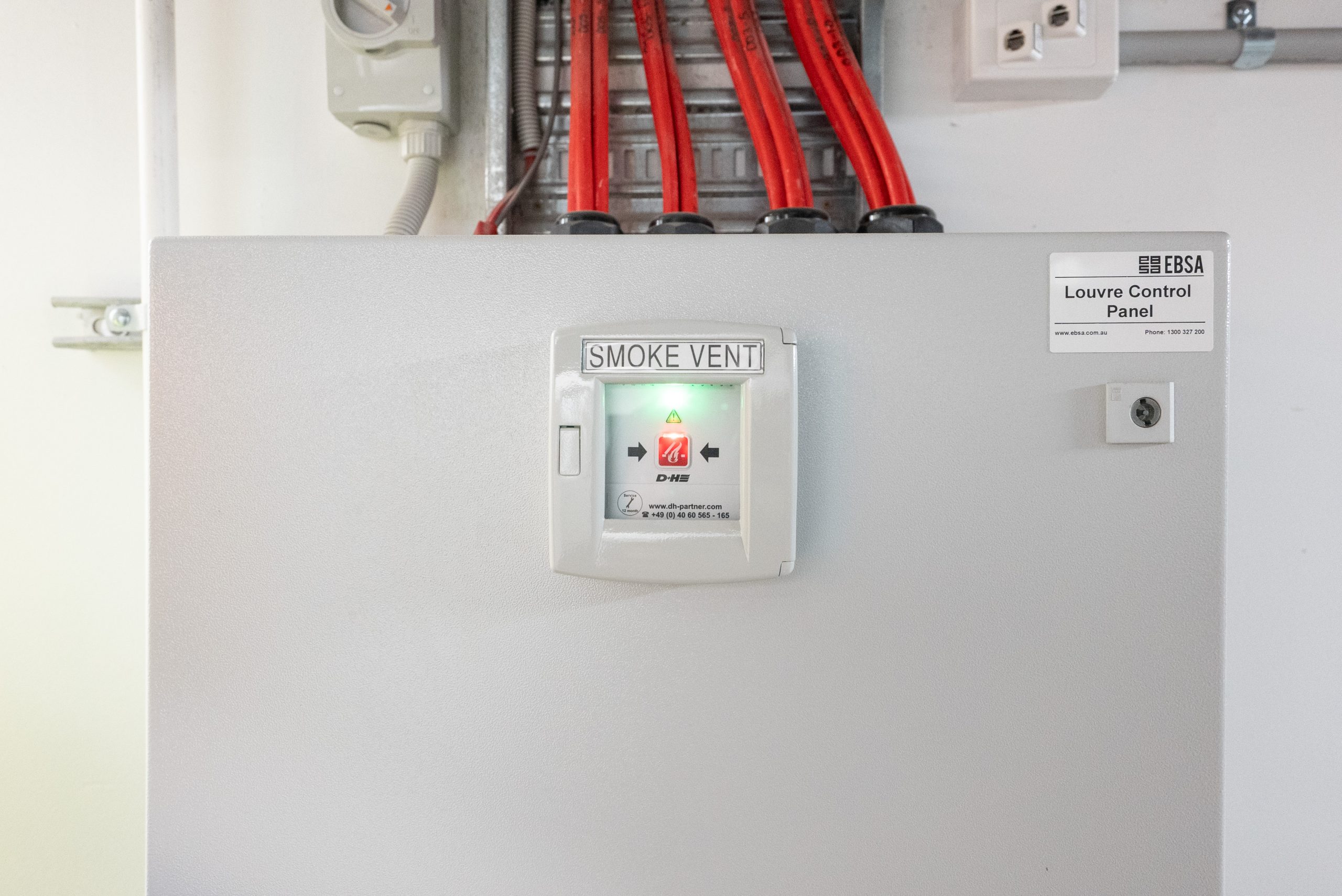
An HMI touchscreen can provide an intuitive local interface for authorised building operators.
Depending on the project configuration, the display can show:
- panel and network status;
- ventilation-group status;
- smoke-control zone status;
- window and actuator positions;
- active operating modes;
- weather and sensor conditions;
- system faults and alarms;
- manual overrides; and
- maintenance and test functions.
Remote access and diagnostics
A remote access gateway can be incorporated to provide authorised remote connection to the CPS-M system.
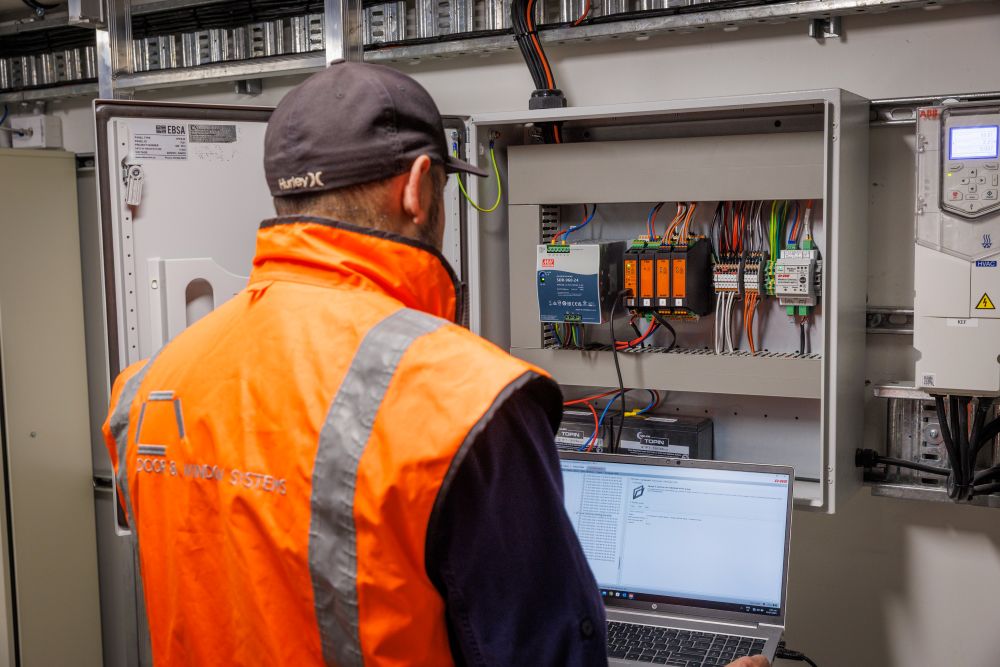
Remote access can support system review, fault diagnosis, software configuration, status checking and technical assistance without waiting for the next scheduled site visit.
The remote-access arrangement is incorporated into the project design and coordinated with the client’s network and cybersecurity requirements.
Typical system arrangement
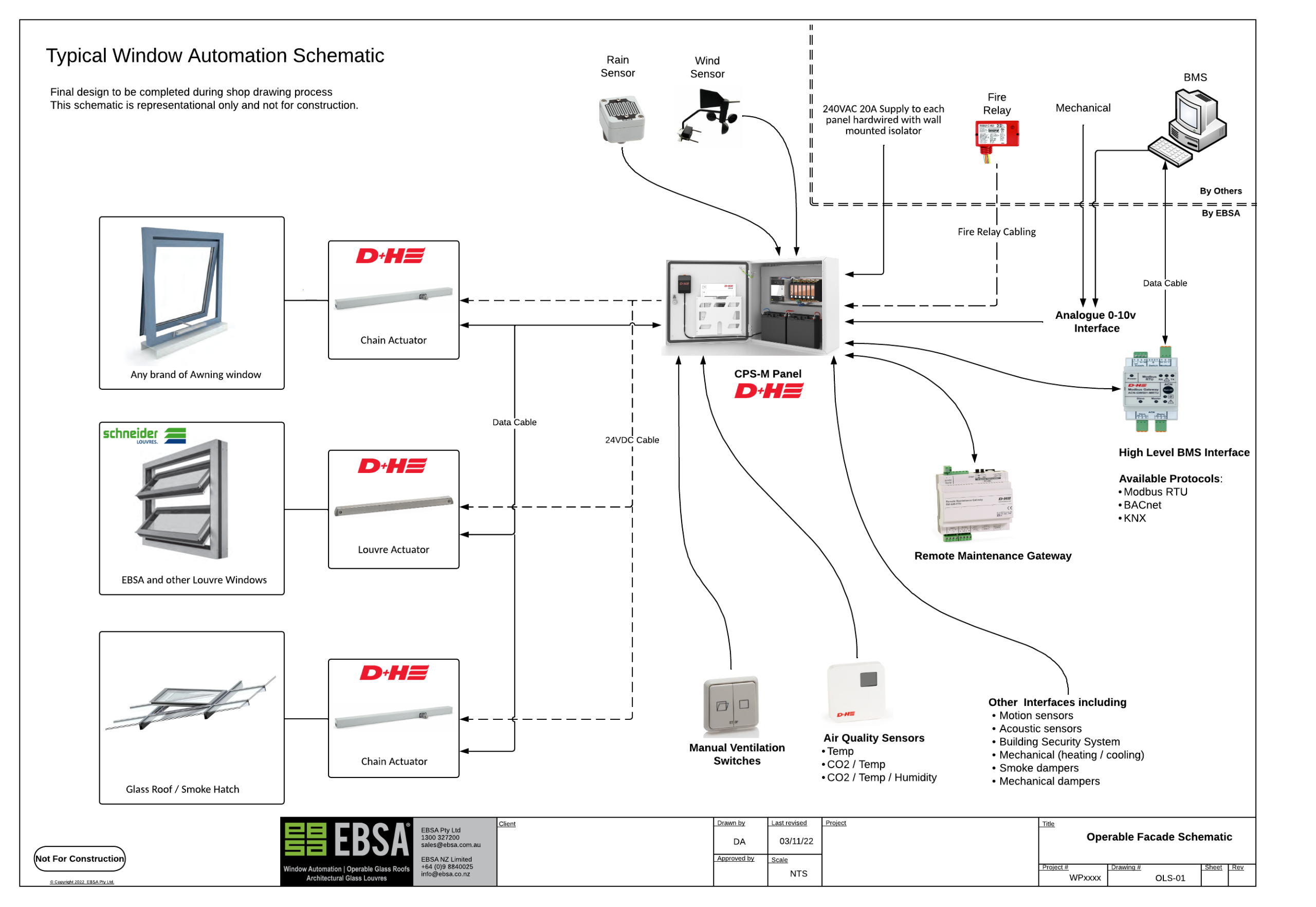
Natural ventilation:
Wall switches, temperature, CO₂, weather sensors or schedules → CPS-M → programmed window and louvre operation
Smoke control:
Fire-alarm input → CPS-M → nominated smoke-control openings move to their required position
Building integration:
BMS, Modbus, BACnet or KNX → CPS-M → commands, status, faults and operating feedback
Project-specific logic:
CPS-M software → night purge, lockouts, cascading operation, smoke protection links, staged control and other agreed functions
Small systems through to large buildings
CPS-M can be configured for a wide range of project scales.
A compact standalone cabinet may control one classroom, one bank of windows or one façade zone. Larger cabinets can provide substantial actuator capacity, multiple zones and comprehensive building interfaces.
Networked CPS-M panels can distribute the system across a multi-storey building while operating as one coordinated control platform.
Design and delivery process
- Requirements review: EBSA reviews the drawings, specifications, fire strategy, control philosophy, façade openings and actuator loads.
- System architecture: The panel capacity, zones, groups, interfaces, network arrangement and operating functions are established.
- Control logic: EBSA develops the natural ventilation sequences, smoke-control cause-and-effect, lockouts, overrides and status requirements.
- Shop drawings: Panel layouts, wiring schematics and interface details are prepared for project coordination.
- Local panel build: The CPS-M panel is assembled, configured and programmed by EBSA using D+H modular technology.
- Installation coordination: Field cabling, interfaces, actuator connections and panel locations are coordinated with the project team.
- Commissioning: The completed system is tested against the approved sequences and project requirements.
- Handover and support: EBSA provides project documentation, training and ongoing technical support within the agreed scope.
Information required for system design
EBSA develops the CPS-M arrangement using the project information, including:
- the smoke-control and natural ventilation requirements;
- the project fire strategy and cause-and-effect sequence;
- actuator models, quantities and current loads;
- opening locations and façade zones;
- ventilation groups and fire zones;
- CO₂, temperature, rain and wind control requirements;
- night-purge and time-schedule requirements;
- security and local-override requirements;
- BMS points and communication protocols;
- required system feedback and reporting;
- panel locations and network architecture;
- field-cable routes and voltage drop;
- standby power and mains-failure operation;
- commissioning and witness-testing requirements; and
- maintenance and remote-access requirements.
Information for builders and project teams
- Allow time for control-philosophy development and panel coordination.
- Coordinate fire, mechanical, electrical, façade, BMS and security requirements.
- Confirm panel locations, enclosure sizes, access and mounting provisions.
- Confirm shop-drawing review and approval timeframes.
- Confirm commissioning, witness testing, training and handover requirements.
- Coordinate access for future testing, servicing and battery replacement.
Information for electrical contractors
- Install power, actuator, control, sensor, fire-alarm and BMS cabling in accordance with the EBSA drawings.
- Coordinate cable routes, sizes, voltage drop and fire-rating requirements.
- Provide network cabling between distributed CPS-M panels where shown.
- Coordinate panel cable entry and termination arrangements before installation.
- Label field cables and devices to match the approved schematics.
- Confirm installation, termination and commissioning responsibilities.
Information for façade contractors and aluminium joiners
- Confirm actuator selection and bracketry before fabrication.
- Provide suitable actuator fixing points.
- Provide concealed cable pathways within the framing where practical.
- Coordinate the allocation of openings to operating groups and fire zones.
- Confirm actuator colour, cable-tail length and access requirements.
- Coordinate opening geometry, hardware and actuator access with EBSA.
Compatible equipment and interfaces
CPS-M can be configured with suitable:
- D+H 24 V DC window and façade drives;
- D+H ACB actuators;
- 230 V AC actuators where incorporated into the panel design;
- automated windows, louvres and roof openings;
- EBSA operable glass louvre systems;
- fire-alarm interfaces;
- manual smoke-control controls;
- wall switches and local override controls;
- rain and wind sensors;
- temperature and CO₂ sensors;
- security and access-control interfaces;
- low-level BMS inputs and outputs;
- Modbus, BACnet and KNX interfaces;
- HMI touchscreens;
- remote access gateways; and
- project-specific status and fault outputs.
Compare smoke control panels
CPS-M provides the greatest configuration flexibility within the EBSA smoke-control panel range.
Compare CPS-M with RZN, CPS-B and CPS-P smoke control panels
Inspection, testing and maintenance
EBSA provides inspection, functional testing, fault diagnosis, system adjustments, repairs and planned maintenance for new and existing CPS-M systems throughout New Zealand.
Maintenance can include control-panel inspection, standby-battery testing, actuator operation, sensor testing, fire-alarm interface testing, BMS interface checks, cause-and-effect testing and review of system faults and operating history.
EBSA technical support
EBSA can assist with control philosophy, panel architecture, actuator selection, connected-load calculations, smoke-control zoning, natural ventilation sequences, BMS integration, ACB drive networks, shop drawings, local panel assembly, software configuration, commissioning and ongoing service support.